 Available 24 Hours a Day, 7 Days A Week
  027 424 0600

Speed Humps Methven

Available 24 Hours a Day, 7 Days A Week

100% Client Satisfaction

Full Range of Premier Services

High-Quality Products
Get A Free Quote

When the speed through the north end of Methven needed fixing, nobody installed speed humps. NZ Transport Agency cut a 600 m section of State Highway 77 from 100 km/h to 60 km/h in July 2024, tying it into the existing 50 km/h zone and running past the entrance to Ōpuke Thermal Pools. A sign, not a device. That is the clearest illustration you will get of who controls a public road: the state highway belongs to NZTA, the local streets to Ashburton District Council, and both choose the treatment on their own evidence. A speed hump, for the record, is a raised profile across a lane built so crossing it at speed is uncomfortable, and on land you own you can put one in this week. Group One New Zealand designs, manufactures and installs traffic calming, with crews driving inland from Foremans Road in Islington, Christchurch. Sydney Chappell founded the New Zealand company in 2026.
What the authorities are actually doing around the township
Recent Methven Community Board reports discuss continuing traffic and speed monitoring on roads such as Forest Drive and Methven Chertsey Road. Monitoring, not installation: no new hump projects are indicated in those locations.
The district has also seen public conflict over bollards at Upper Hakatere Reserve, which is worth knowing for what it says about the process. Any physical device on public land is somebody’s view spoiled, somebody’s access changed and somebody’s submission, and that is before the engineering. It is a slow road, and it is not the one most people asking this question actually need.
Call 027 424 0600 to Request a Free Quote
Industries We Serve
We proudly serve clients across a range of sectors, including:

Hospitals

Aviation Surfaces

Schools

Sporting Surfaces

Factory Safety Lines

Body Corporate
Your car park does not need a speed review
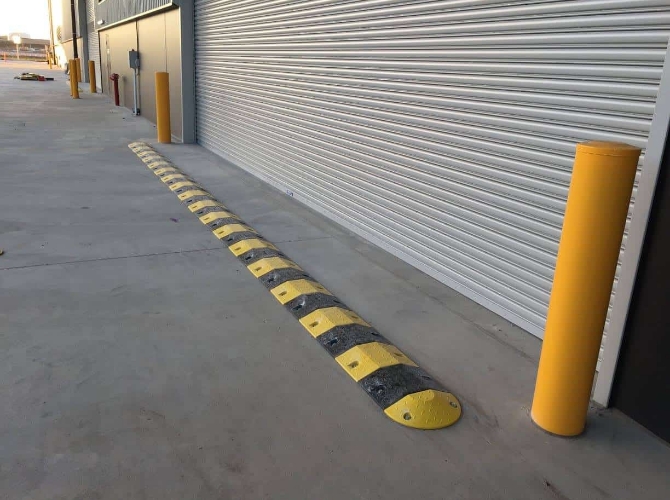
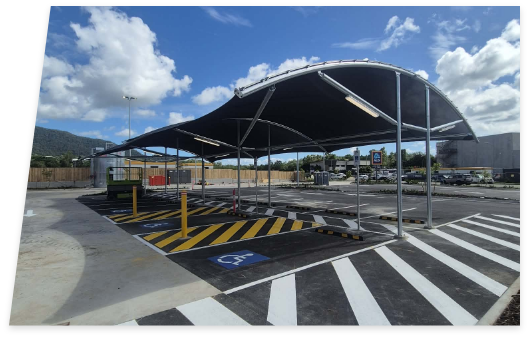
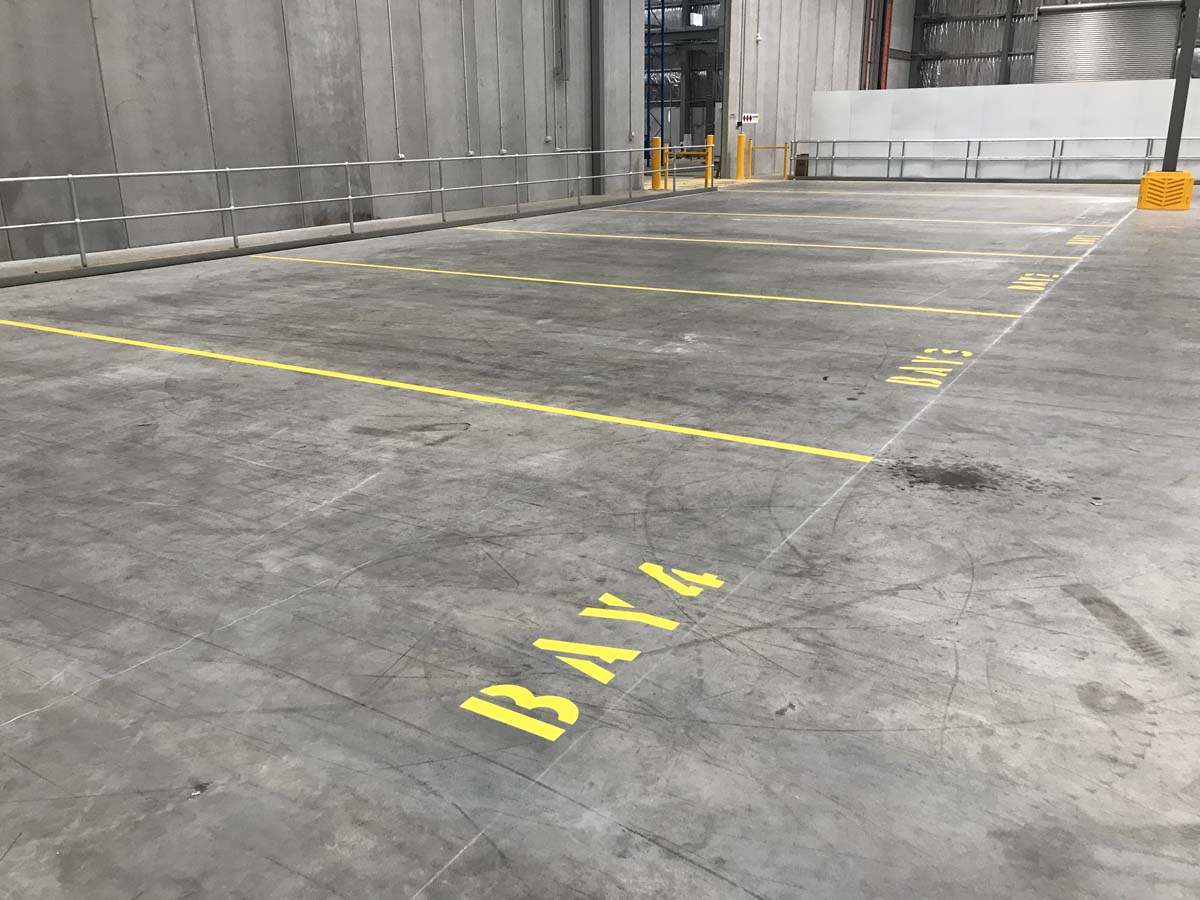
Draw the boundary and the whole picture changes. On the highway or a public street, the decision belongs to NZTA or Ashburton District Council, and your part is a request into a monitoring and consultation process. Inside your own boundary it is a straight decision by the owner or the manager. A lodge car park, a motel forecourt, a farm race or yard, a stockyard approach, a plant entrance, a body corporate accessway: you choose whether calming goes in, exactly where, and what it is made of. Where the entrance runs , say so at the visit, because a vehicle that has just waited at a gate picks up its speed further in. Nothing is lodged and nobody objects.
Drivers who have never been on your site before
Methven runs on visitors. Around 1,500 to 1,700 people live here permanently, and the town fills every winter with Mt Hutt traffic spread across dozens of holiday homes, apartments, lodges, farm stays and backpacker accommodation, with Business D zoned land out on Line Road for light industrial and service sites.
That mix creates a specific problem. A driver arriving after dark, in a hire car, towing skis, with no idea where the pedestrian route through your car park runs, is not slowing down for a painted line. They will slow down for a hump, because it is the only control that does not rely on the driver already knowing the site.

Which device suits which job
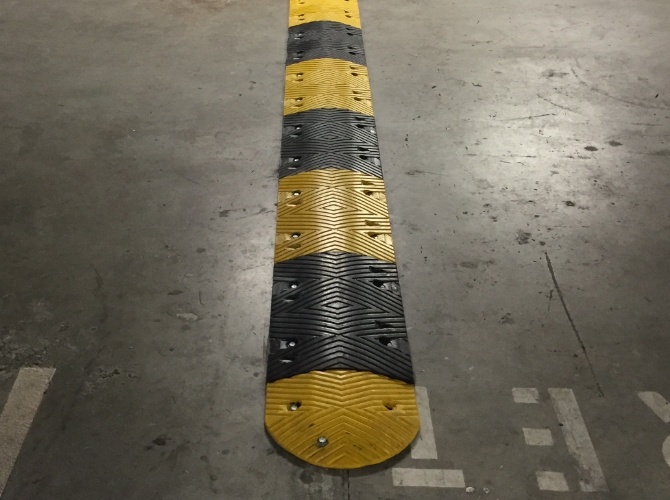
- Full-width humps: entrance approaches and car park aisles where every vehicle should slow.
- Speed cushions: farm and service routes where tractors, trucks and stock trucks straddle rather than climb.
- Raised tables and raised pedestrian crossings: where guests or staff cross between a car park and a door.
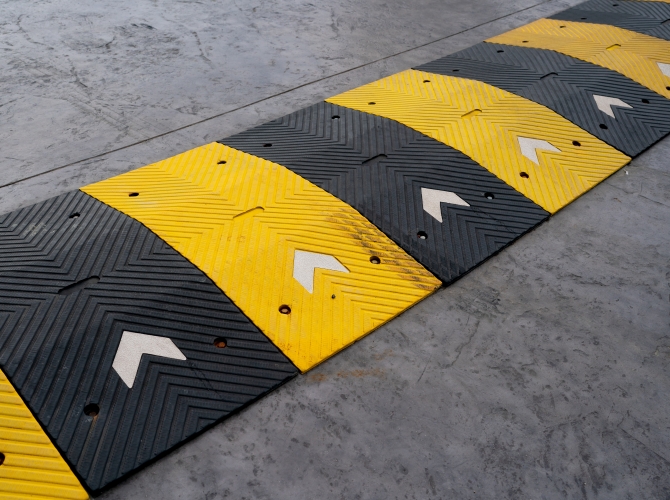
- Modular rubber and bolt-down units: sound asphalt or concrete, fixed and finished in one visit.
- Deployable and temporary units: seasonal traffic, events and works.
- Formed asphalt or concrete profiles: permanent, laid into the surface as it is built.
Ice at 7am, and what that means for the design
Methven sits at about 320 m, close to the foothills, where overnight temperatures drop below freezing and rain turns to snow. A hump under a skin of ice or a centimetre of overnight snow is a hump a driver cannot see, and the same conditions decide when a crew can safely bond, seal or mark anything.
Two things follow. Marking and edge definition matter more here than on a sheltered urban site, because visibility is what makes the device work. And if your yard or car park gets scraped or ploughed through winter, say so at the site visit, because the profile and the fixings have to survive that as well as the traffic.
Need Professional Line Marking or Safety Products?
Contact Group One today – reliable, accredited, and available 24/7.

Client Testimonials


5.0 Stars / 21 + reviews
The team from Group One were exceptional.
They arrived on time, did a fantastic job and made our childcare centre carpark look like new . Thankyou
Prompt and efficient service.
Very professional and experienced. Syd always answers his phone otherwise calls you back. Highly recommended.
Highly recommended.
Competitive price, quality work and even helped me put up the customer parking signs. Went above and beyond. Thanks very much, Syd and Blake.
Great job and no complaints!
Wonderful to work with and helping us get our line marking completed. Would definitely use again and refer to others.
Highly Recommend Group 1 Linemarking!
We recently hired Group 1 Linemarking for a few of our residential strata projects, and the results exceeded our expectations. The team was punctual, professional, and clearly experienced. The line marking was crisp, precise, and done exactly to spec. Communication throughout the process was smooth, and they were flexible with scheduling, which made things a lot easier on our end. If you need reliable, high-quality line marking services, I wouldn’t hesitate to recommend Group 1. Great job!
Working with Syd and his team is always a pleasure
The quality of work is always to a high standard. The Group One team is always professional, they apply a high standard for safety ensuring their SWMS is tailored for the job and their equipment is serviced and well maintained. I highly recommend Group One and if you use them you won’t be disappointed.
What the quote is built from, and how the job runs
Everything is on quote. The number follows the device and how many, the surface it fixes into or is formed onto, access and when the area can be handed over, the traffic volumes and vehicle types crossing it, drainage, the marking and signage around it, and any reinstatement afterwards.
The work runs as design, manufacture and installation. Design is a site visit and a measure-up. Manufacture is the unit or profile for that layout. Installation covers fixing or forming, making the surface good, and marking the hump so an unfamiliar driver picks it up in the headlights.
Group One New Zealand, and the drive inland
Methven is a drive, and the crews make it from Islington in Christchurch, which mostly matters for scheduling around a site that fills every winter. On SH77 the decision belongs to NZ Transport Agency, and on the township streets to Ashburton District Council; at a lodge forecourt, a holiday-home accessway or a farm-stay entrance it belongs to whoever owns the ground. That second category is the one we work in. Sydney Chappell started the company in 2026 and it stays deliberately small. The Australian arm carries the longer story, told this way: “Although Group 1 Line Marking has just started here in New Zealand, as a group we have been operating in Australia for almost 25 years.” The page runs through the options.
Call 027 424 0600 to Request a Free Quote




Before the season starts
The time to sort a car park out is not the first busy weekend. Get it looked at while the site is quiet, so the surface is warm and dry enough to install and mark properly, and the calming is in and cured before a hundred unfamiliar drivers arrive at once.
Phone us on 027 424 0600 or email info@groupone.co.nz, 7am to 3pm Monday to Friday. Group One New Zealand, Unit 1, 37 Foremans Road, Islington, Christchurch 8042. NZBN 9429053752833.
Call 027 424 0600 to Request a Free Quote
Comprehensive Line Marking & Safety Services
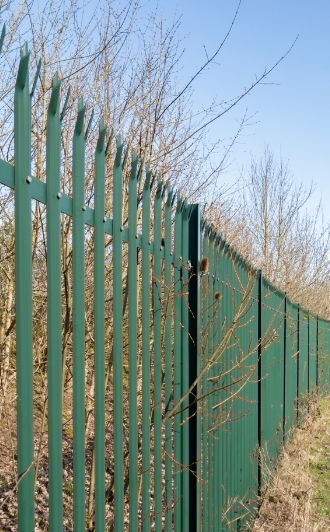
Safety and Palisade Fencing
Safety and palisade fencing is the steel perimeter that goes...
More Details
Areas We Serve
- Speed Humps Amberley
- Speed Humps Ashburton
- Speed Humps Christchurch
- Speed Humps Darfield
- Speed Humps Kaiapoi
- Speed Humps Methven
- Speed Humps Rangiora
- Speed Humps Rolleston
- Speed Humps Timaru
Other Services Available in Methven
Questions from around Methven
What are speed bumps called in New Zealand?
Judder bars. Speed hump, speed bump and judder bar all get used for the same device.
What are the design standards for speed humps in New Zealand?
Standards for a public road sit with the road controlling authority, and we will not reprint numbers here as though they applied to your site. For a Methven street, ask Ashburton District Council. For the highway, NZTA. On private land the profile is chosen for the vehicles crossing it and specified as part of the design.
Can I get a hump on the highway outside my accommodation?
That road is NZTA’s, and the recent change through the north end of town was a speed limit reduction rather than a physical device. Your own entrance and car park are a different matter entirely.
Why humps and not bumps?
Habit more than engineering. In practice a bump tends to mean the short abrupt one in a car park and a hump the longer one, but neither word is a specification.
What happens if you take one fast?
You get a jolt through the suspension and, at real speed, a genuine loss of control. That is the mechanism working, not failing.
Will a bolt-down unit survive a Methven winter?
With the right fixings into a sound surface, yes. Tell us if the area is scraped or ploughed so we allow for it.
Get Started with Professional Line Marking Solutions

Get a Free Consultation
Speak with our experts to discuss your line marking requirements and get a tailored solution.
Schedule Now
Need Help Choosing?
Our team provides advice on the right line marking services and materials for your site.
Find Your Solution
Talk to an Expert
Have questions or want a quote? Connect with our experienced team today.
Contact Us