 Available 24 Hours a Day, 7 Days A Week
  027 424 0600
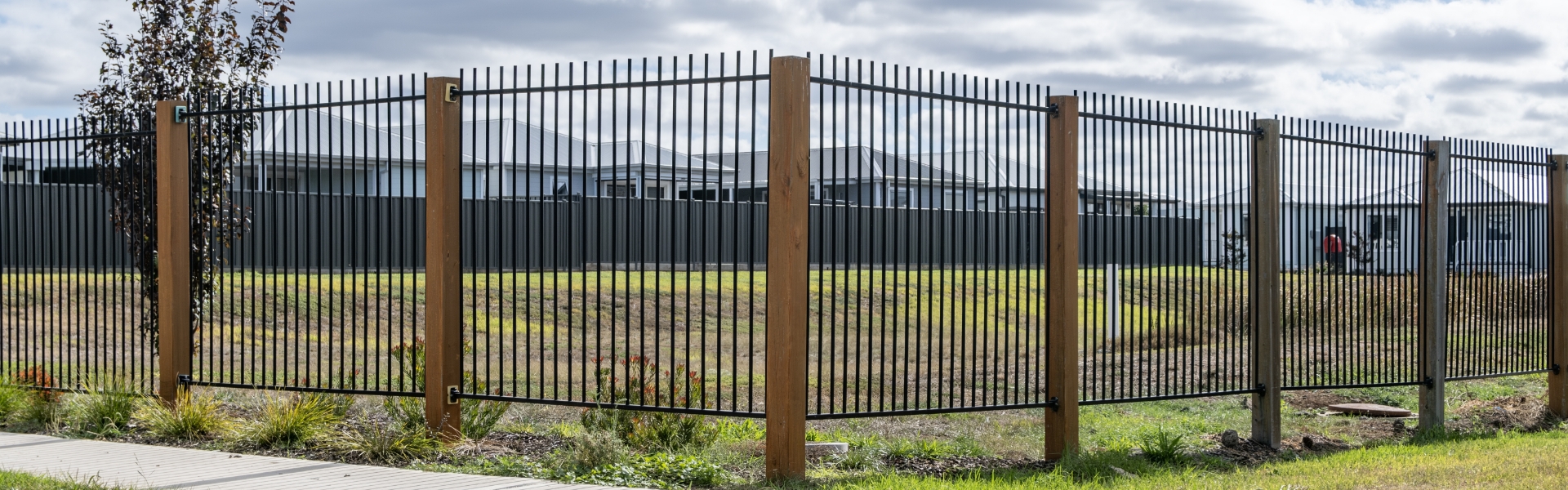
Safety and Palisade Fencing Methven

Available 24 Hours a Day, 7 Days A Week

100% Client Satisfaction

Full Range of Premier Services

High-Quality Products
Get A Free Quote
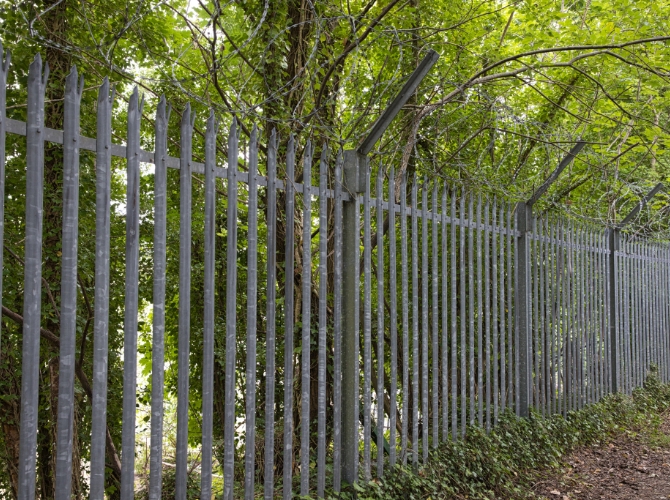
At about 320 metres with the Southern Alps foothills right there, a fence here has a harder winter than one out on the plains. Township forecasts carry overnight temperatures falling below freezing and rain turning to snow, and that combination tests the footing long before it tests the steel above it. Group One New Zealand designs, manufactures and installs safety and palisade fencing across Methven, with crews travelling out from the Islington base in Christchurch, roughly an hour away. Sydney Chappell started the New Zealand company in 2026. Tell us what you are fencing and we will come out and look at it.
Frost, snow and what they do to a fence
Water in the ground freezes, expands and lifts whatever sits in it. A shallow footing on a cold site will move, and a fence line that has moved is a fence line that never quite sits right again. Depth and diameter are therefore not a standard number here. They come off the finished height, the exposure, the gate loads and what the borer actually finds in the ground.
Coatings matter for the same reason the season does. Freeze and thaw cycles, wet snow sitting against steel and the icy winds that come through with the storm systems all work on a finish. Hot-dip galvanising after fabrication is the specification that answers it, because it protects the inside of every section as well as the outside. Powder coat goes over the top where colour matters.
We work in steel, aluminium and stainless steel. On a Methven perimeter the finish is not the decorative decision. It is the one that decides whether the fence is still sound in twenty winters.
Phone us on 027 424 0600, 7am to 3pm Monday to Friday. A crew comes out, walks the line and puts a written quote together from the site rather than from a description.
Call 027 424 0600 to Request a Free Quote
Industries We Serve
We proudly serve clients across a range of sectors, including:

Hospitals

Aviation Surfaces

Schools

Sporting Surfaces

Factory Safety Lines

Body Corporate
Fencing lodges, holiday homes and farm gates
Methven carries an unusual property mix for a town of 1,500 to 1,700 permanent residents. Alongside the farms there are dozens of holiday homes, apartments, lodges, farm stays and backpacker accommodation, and the demand behind them swells with every Mt Hutt ski season. Out on Line Road there is bare Business D zoned land open to light industrial, service and commercial development.
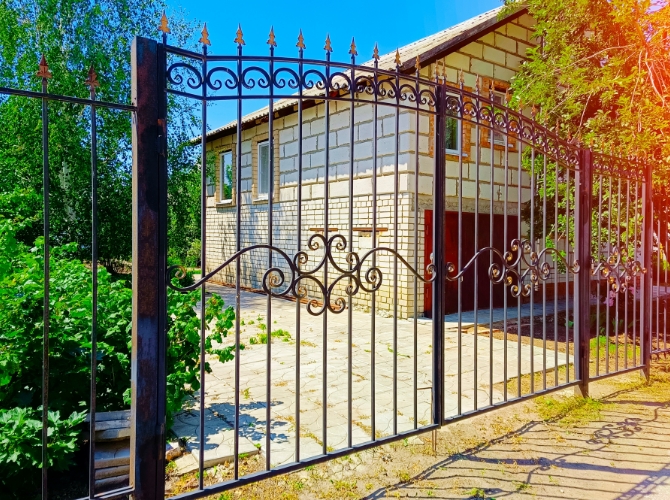
Each of those wants a different fence. Visitor accommodation needs boundaries and gates that read as welcoming while still doing a job, and that keep a pool or a plant area properly separated. A farm entrance needs width for machinery and a gate that works in a southerly with cold hands. A new commercial yard needs a perimeter that protects plant and stock.
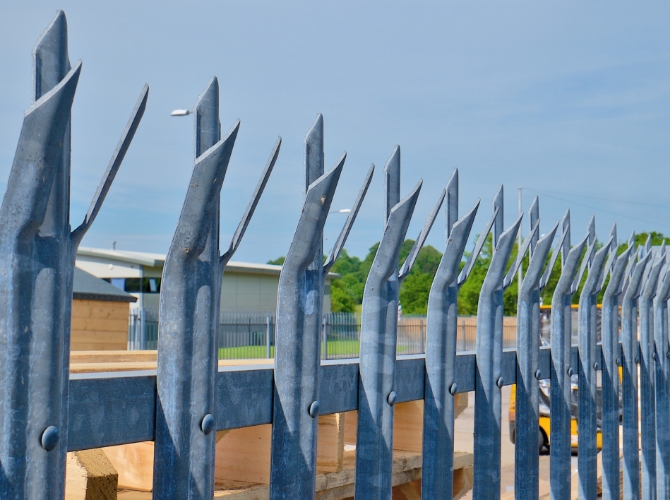
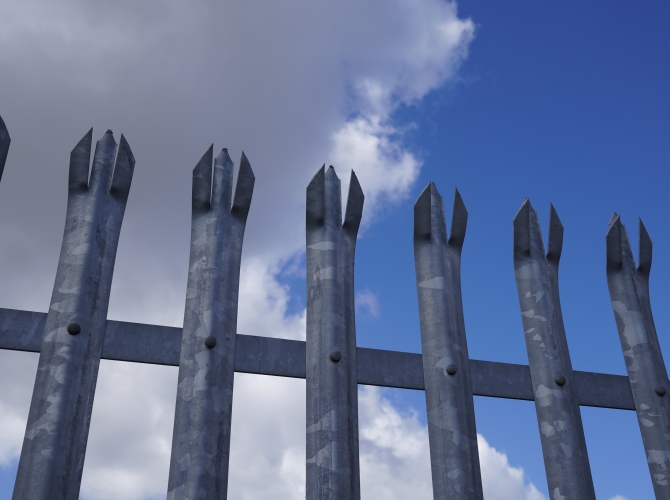
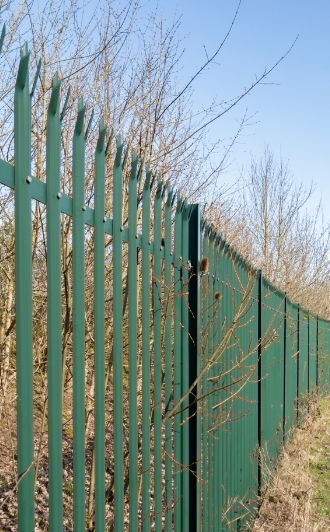
Steel palisade is the specification for the working perimeter: vertical pales bolted to horizontal rails on concreted posts, rolled to a profile that resists climbing, spaced so a yard stays visible rather than screened. Pale tops can be finished rounded where the fence faces a footpath or guest parking, or pointed where the brief calls for it.
358 anti-climb mesh is the alternative used around New Zealand where a boundary should not look industrial. The aperture is too tight to take a foothold, and the fence reads as almost transparent from a short distance, which suits a lodge frontage far better.
Safety barriers cover the third case: stopping a fall rather than securing a boundary. Deck and terrace edges, loading areas and the top of a cut bank.
Hire panels, or a fence that stays
Safety fencing describes two products that share nothing but a name. One is temporary: mesh panels on portable feet, hired by the week around a build or an event and collected afterwards. The other is permanent, set in concrete and expected to outlast the building it protects. Group One New Zealand builds the permanent kind, designed and manufactured for one property and installed to stay there.
The Ashburton District Council rules that apply here
Methven sits in the Ashburton District, so the district’s fencing position applies. You can build a fence up to 2.5 metres in height measured from natural ground level, and the Council recommends talking to its Planning Department about a resource consent for anything over 2 metres.
Where a fence sits on top of a retaining wall, two further tests apply. A building consent is required where the retaining wall is more than 1.5 metres high and the fence more than 2.5 metres high, and a building consent is required outright if the fence and the retaining wall are joined. On sloping ground close to the foothills that comes up more often than it does on flat land.
Swimming pool fencing is regulated separately and sits outside any general height allowance, which matters on a property renting to guests.
Confirm the current requirements with Ashburton District Council before work starts, and we build to what they allow.
Street frontages get noticed here
Anything installed at a road edge in this district attracts local attention. Bollards at the Upper Hakatere Reserve became a public argument, and the speed limit on SH77 at the north end of the township has come down from 100 km/h to 60 km/h. A frontage fence, a barrier or a gate at a busy edge is worth designing so it reads as considered rather than imposed, and worth raising with the Council early rather than after it is in the ground.
Need Professional Line Marking or Safety Products?
Contact Group One today – reliable, accredited, and available 24/7.

Client Testimonials


5.0 Stars / 21 + reviews
The team from Group One were exceptional.
They arrived on time, did a fantastic job and made our childcare centre carpark look like new . Thankyou
Prompt and efficient service.
Very professional and experienced. Syd always answers his phone otherwise calls you back. Highly recommended.
Highly recommended.
Competitive price, quality work and even helped me put up the customer parking signs. Went above and beyond. Thanks very much, Syd and Blake.
Great job and no complaints!
Wonderful to work with and helping us get our line marking completed. Would definitely use again and refer to others.
Highly Recommend Group 1 Linemarking!
We recently hired Group 1 Linemarking for a few of our residential strata projects, and the results exceeded our expectations. The team was punctual, professional, and clearly experienced. The line marking was crisp, precise, and done exactly to spec. Communication throughout the process was smooth, and they were flexible with scheduling, which made things a lot easier on our end. If you need reliable, high-quality line marking services, I wouldn’t hesitate to recommend Group 1. Great job!
Working with Syd and his team is always a pleasure
The quality of work is always to a high standard. The Group One team is always professional, they apply a high standard for safety ensuring their SWMS is tailored for the job and their equipment is serviced and well maintained. I highly recommend Group One and if you use them you won’t be disappointed.
Design, manufacture, installation
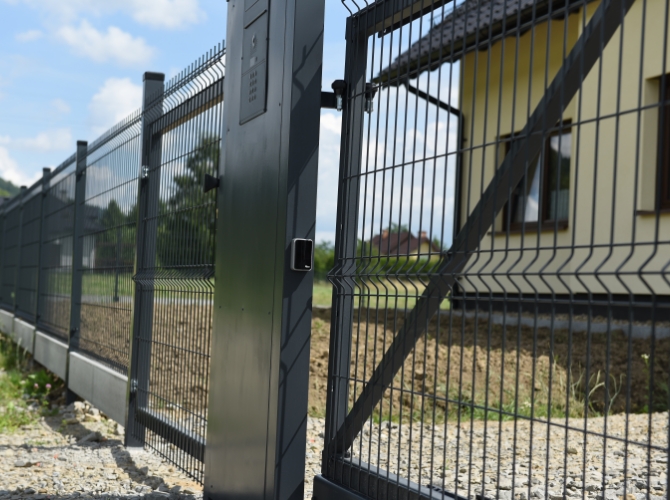
The first visit does most of the work: boundary, ground, borer access, gate positions, and how a southerly hits the line. Design turns that into heights, pale spacing, post specification, footing depth and gate hardware. Manufacture happens off site. Installation is posts, concrete, rails and pales, then gates hung and adjusted until they run properly under their own weight, cold hinges included.
We guarantee all the work we do, backed by a full after-sales service.
What the quote is built from
Pricing is on quote. The things that actually move it:
- Perimeter length, corners and how the ground rises and falls
- Finished height, which drives post size, footing depth and the consent question
- Ground conditions, and how the frost behaves on that particular site
- Gates: pedestrian, guest or machinery width, swing or slide, manual or automated
- Finish: galvanised only, or galvanised and powder coated
Winter access is worth mentioning too. A job booked around the ski season runs differently from one done in February, and we will be straight with you about that when we quote.
Call 027 424 0600 to Request a Free Quote




Group One New Zealand, booked around the season
Winter decides more here than anywhere else we work, so it also decides how a job gets booked. Crews come inland from Islington in Christchurch, about an hour, and a fence line ordered in the middle of the ski season is a different piece of work from the same line in February. We would rather say that at the quote than discover it with an auger stuck in frozen ground. Sydney Chappell founded Group One New Zealand in 2026 and it has stayed small, which is why the person who priced your lodge frontage is the one adjusting a gate on a cold morning until it swings properly under its own weight. Holiday homes, farm stays and the Line Road commercial sites all get the same treatment: drawn, fabricated and installed by us, and finished for twenty winters rather than five. Anything beyond 2026 is Australian experience, described by the company that way: “Although Group 1 Line Marking has just started here in New Zealand, as a group we have been operating in Australia for almost 25 years.” The full range is on the page.
Book a site visit
Ask us in February and the conversation is about heights, gate widths and where the line runs. Ask us in July and the first question back will be whether the borer can get down the line at all, and what the ground is doing under the frost. Same fence, different job, and it is worth knowing which one you are booking.
Phone us on 027 424 0600 or email info@groupone.co.nz, 7am to 3pm Monday to Friday. Have the site address, a rough boundary length, the height you want, and whether a bank, a retaining wall or a pool is part of the picture. Group One New Zealand, Unit 1, 37 Foremans Road, Islington, Christchurch 8042. NZBN 9429053752833.
Call 027 424 0600 to Request a Free Quote
Comprehensive Line Marking & Safety Services
Safety and Palisade Fencing
Safety and palisade fencing is the steel perimeter that goes...
More Details
Areas We Serve
- Safety and Palisade Fencing Amberley
- Safety and Palisade Fencing Ashburton
- Safety and Palisade Fencing Christchurch
- Safety and Palisade Fencing Darfield
- Safety and Palisade Fencing Kaiapoi
- Safety and Palisade Fencing Methven
- Safety and Palisade Fencing Rangiora
- Safety and Palisade Fencing Rolleston
- Safety and Palisade Fencing Timaru
Other Services Available in Methven
Questions from Methven property owners
How secure is palisade fencing?
It is one of the harder perimeters to get over, and it keeps a site visible from the road rather than hiding it. On a property left empty between bookings or between seasons, that visibility is worth as much as the height.
What are the pros and cons of palisade fencing?
For: very long-lived in galvanised steel, nothing to rot at the ground line, no repainting, and it takes wind well because air passes through it. Against: it looks industrial, so it is not always right at a guest entrance, and it costs more than timber or wire.
Does my neighbour have to pay for half the fence?
Under the Fencing Act 1978 adjoining owners share the cost of an adequate boundary fence, following written notice served before work starts. It is a matter between owners rather than a Council process.
Will frost push my fence out of line?
Not if the footings are designed for the site. That is the whole reason we take levels and check the ground before quoting instead of applying a standard depth.
How much does fencing cost per metre?
There is no rate we would publish. Length, height, ground, gates and finish move it, and on a cold, sloping site the footings alone can change the number.
Can you fence around a pool at a rental property?
Yes, and pool barriers are their own compliance job with their own consent, separate from any general fence height allowance. Worth getting right first time on a property that hosts guests.
Get Started with Professional Line Marking Solutions

Get a Free Consultation
Speak with our experts to discuss your line marking requirements and get a tailored solution.
Schedule Now
Need Help Choosing?
Our team provides advice on the right line marking services and materials for your site.
Find Your Solution
Talk to an Expert
Have questions or want a quote? Connect with our experienced team today.
Contact Us