 Available 24 Hours a Day, 7 Days A Week
  027 424 0600

Bollards Darfield

Available 24 Hours a Day, 7 Days A Week

100% Client Satisfaction

Full Range of Premier Services

High-Quality Products
Get A Free Quote

Something big turns across your yard most days: a milk tanker, a truck and trailer, a tractor with an implement wider than the driver can see past. Bollards keep those movements off the things that cost real money to replace. Darfield sits 35 km west of Christchurch, and our crews travel out from the Islington base, where Sydney Chappell started Group One New Zealand in 2026. Tell us what keeps getting clipped and we will come and set the positions out on the ground.
Where they earn their keep on a rural site
Darfield serves the Malvern farming belt and hosts Fonterra’s milk processing plant, so heavy vehicle movement is the constant here rather than the exception. The jobs that come up:
- Loading and weighbridge approaches, where a driver reversing to a mark has one blind side and a wall, a post or a pump on the other.
- Building corners and services, protecting switchboards, gas bottle cages, tanks and downpipes on a yard where the turning circle is tighter than the vehicle wants.
- Pedestrian separation, keeping staff on foot out of the path of vehicles that cannot stop quickly.
- Entrances, where a removable or fold-down bollard closes an access most of the time and opens it for the contractor, the harvest truck or the stock crate.
Roughly half of Darfield’s property base is lifestyle blocks, so plenty of the entrance work is a single removable bollard at a driveway rather than a run of steel down a frontage. Both get the same treatment on site.
Call 027 424 0600 to Request a Free Quote
Industries We Serve
We proudly serve clients across a range of sectors, including:

Hospitals

Aviation Surfaces

Schools

Sporting Surfaces

Factory Safety Lines

Body Corporate

A merchant supplies the steel; someone still has to install it
Bollards can be bought locally or delivered from anywhere, and there is nothing wrong with the product. What a supplier cannot do is stand on your yard and decide where the post belongs relative to the tanker’s path, how much clearance to leave so the driver is not clipping it weekly, whether the ground under the mark is compacted metal or soft fill, how deep the footing has to go, and how the surface gets closed up afterwards. That work is the difference between a bollard that stops a vehicle and one that gets flattened the first time it is tested.
What we do on site
The visit comes first. We measure the area, work out what is being protected and which direction the risk arrives from, and mark each position against the vehicles that actually use the yard.
Nothing is dug until services are located and the boundary confirmed. On rural and lifestyle properties that matters, because water lines, power feeds and effluent lines rarely follow a tidy plan.
In-ground bollards get a hole taken past the base course into ground that will hold. The post is set plumb, then concrete goes in around it and usually inside it too. Depth follows the diameter and height of the post and what we find as we dig. Where the surface is a slab that cannot be broken into, a surface-mount bollard bolts down through a base plate instead.
Then the surface goes back: asphalt patched, concrete made good, metal or seal reinstated so the yard works again. On a proper nor’west day, when the arch is up and the wind is pulling moisture out of everything, we plan the pour around the weather rather than fighting it.
Ready for a price? Phone 027 424 0600 or email info@groupone.co.nz and we will book a site visit.

Selwyn District Council, the Fencing Act and your boundary
Inside your own boundary, bollards are generally yours to place. Selwyn District Council notes that the construction and maintenance of boundary fences is largely governed by the Fencing Act and sits outside council jurisdiction, while the Selwyn District Plan carries its own urban fencing rules covering height and visibility, at Rules 4.13 and 4.17.
Where it changes is at the road boundary, a vehicle crossing or council land. That is a conversation with Selwyn District Council before the work, not after, and we raise it at the site visit so nobody discovers it once the concrete has gone off.
What the quote depends on
Pricing is on quote, worked out per site once we have seen it. What shifts the figure:
- Type, diameter, height and finish of bollard
- Fixed, removable or fold-down
- How many go in
- In-ground footing or surface-mount base plate
- The surface being cut: concrete, asphalt, compacted metal, gravel or kerb
- Access for the crew and gear, and when the area can be closed
- Reinstatement afterwards
Galvanised steel is the standard for working yards. Powder coating suits a frontage the public sees, and stainless steel goes on entrances where appearance matters.
Need Professional Line Marking or Safety Products?
Contact Group One today – reliable, accredited, and available 24/7.

Client Testimonials


5.0 Stars / 21 + reviews
The team from Group One were exceptional.
They arrived on time, did a fantastic job and made our childcare centre carpark look like new . Thankyou
Prompt and efficient service.
Very professional and experienced. Syd always answers his phone otherwise calls you back. Highly recommended.
Highly recommended.
Competitive price, quality work and even helped me put up the customer parking signs. Went above and beyond. Thanks very much, Syd and Blake.
Great job and no complaints!
Wonderful to work with and helping us get our line marking completed. Would definitely use again and refer to others.
Highly Recommend Group 1 Linemarking!
We recently hired Group 1 Linemarking for a few of our residential strata projects, and the results exceeded our expectations. The team was punctual, professional, and clearly experienced. The line marking was crisp, precise, and done exactly to spec. Communication throughout the process was smooth, and they were flexible with scheduling, which made things a lot easier on our end. If you need reliable, high-quality line marking services, I wouldn’t hesitate to recommend Group 1. Great job!
Working with Syd and his team is always a pleasure
The quality of work is always to a high standard. The Group One team is always professional, they apply a high standard for safety ensuring their SWMS is tailored for the job and their equipment is serviced and well maintained. I highly recommend Group One and if you use them you won’t be disappointed.

Group One New Zealand on the Malvern run
Sydney Chappell founded Group One New Zealand in 2026. We are a small team, so you know you’ll get the very best, and we guarantee all the work we do. Design, manufacture and installation are all ours, which keeps one set of hands on the job from the measure-up to the finished footing. The full range sits on our page.
Book a site visit
Most yards end up buying bollards twice. The first lot goes in around the thing that has already been hit; the second lot follows a season later, around the three things that had not been hit yet. If you would rather do it once, walk us round everything on the yard you would hate to replace, not just the one with the dent in it.
Phone 027 424 0600 or email info@groupone.co.nz, 7am to 3pm Monday to Friday. Group One New Zealand, Unit 1, 37 Foremans Road, Islington, Christchurch 8042. NZBN 9429053752833.
Call 027 424 0600 to Request a Free Quote




Comprehensive Line Marking & Safety Services
Safety and Palisade Fencing
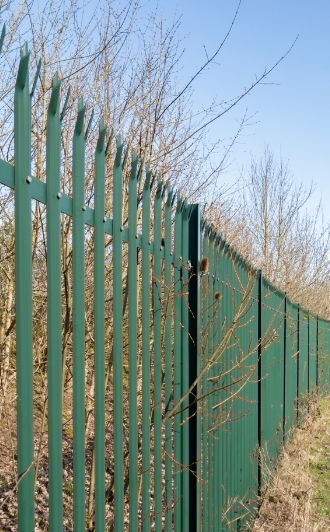
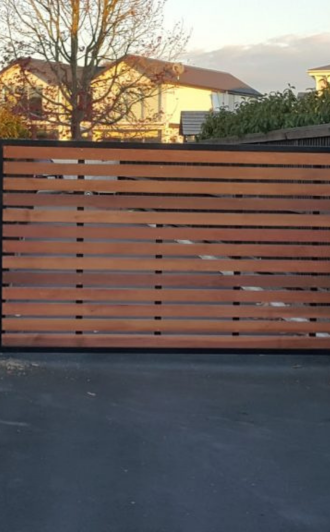
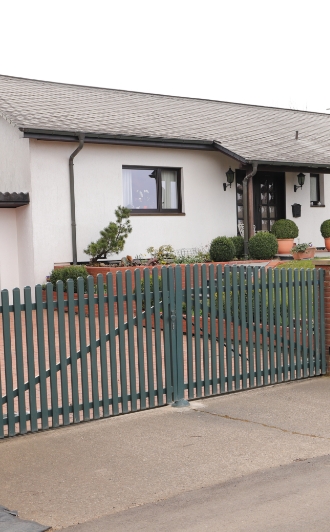
Safety and palisade fencing is the steel perimeter that goes...
More Details
Areas We Serve
- Bollards Amberley
- Bollards Ashburton
- Bollards Christchurch
- Bollards Darfield
- Bollards Kaiapoi
- Bollards Methven
- Bollards Rangiora
- Bollards Rolleston
- Bollards Timaru
Other Services Available in Darfield
- Automatic Gates Darfield
- Commercial Gates Darfield
- Convex Safety Mirrors Darfield
- Custom Gates Darfield
- Driveway Gates Darfield
- Gate Access Systems Darfield
- Industrial Gates Darfield
- Line Marking Darfield
- Safety and Palisade Fencing Darfield
- Security Gates Darfield
- Speed Humps Darfield
- Wheel Stops Darfield
Questions we get asked
How much does it cost to have bollards installed?
On quote, after a look at the site. The bollards themselves are the predictable part. What the ground turns out to be, how far the crew has to bring gear across the property, and what the surface needs afterwards are what actually set the figure.
How far apart should bollards be?
Auckland Transport publishes the New Zealand reference most people work from: at least 1.8 metres of clearance between bollards and the kerb, and at least 1.2 metres between bollards across an entranceway so prams, wheelchairs and mobility scooters can pass. Those are Auckland Transport’s figures rather than a Selwyn District Council rule. On a farm or transport yard the deciding factor is usually the swept path of your biggest vehicle.
How deep should bollards be installed?
Past the base course, into ground that will carry the load. There is no single number. A yard built up with metal over twenty years and a poured concrete apron give different answers, and we settle it on site.
Can bollards be removed easily?
If you choose that type, yes. Removable bollards lift out of a flush ground socket and fold-down bollards hinge at the base. A fixed in-ground bollard has to be cut off and its footing dug out, which is why the question is worth answering before installation rather than after.
Get Started with Professional Line Marking Solutions

Get a Free Consultation
Speak with our experts to discuss your line marking requirements and get a tailored solution.
Schedule Now
Need Help Choosing?
Our team provides advice on the right line marking services and materials for your site.
Find Your Solution
Talk to an Expert
Have questions or want a quote? Connect with our experienced team today.
Contact Us