 Available 24 Hours a Day, 7 Days A Week
  027 424 0600
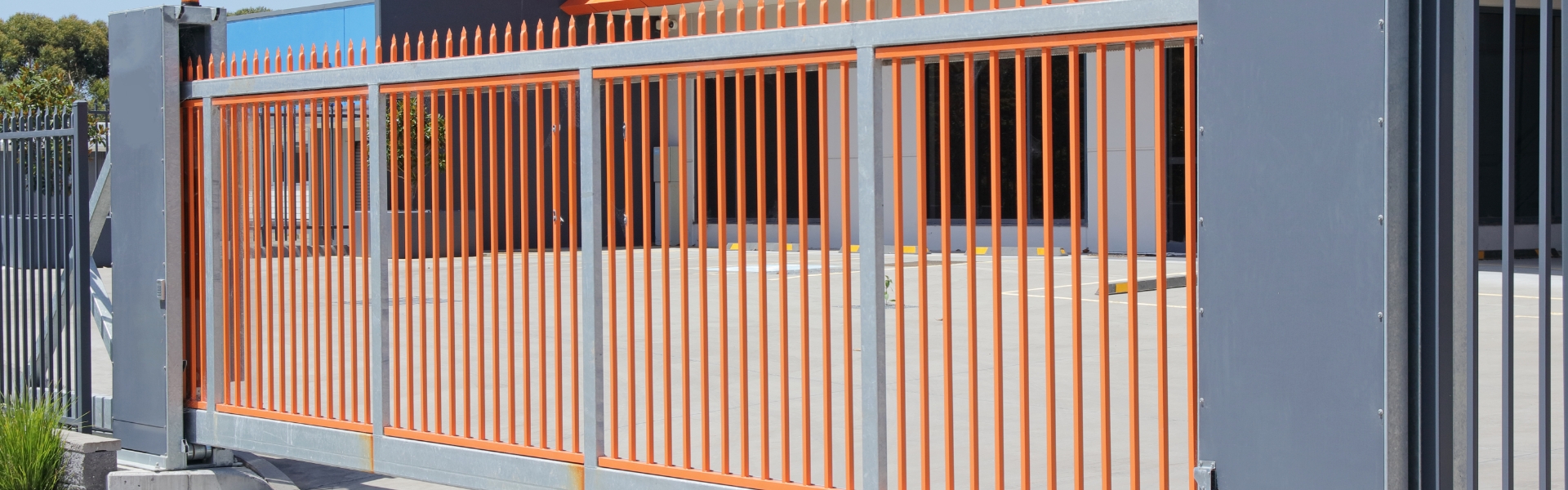
Commercial Gates Amberley

Available 24 Hours a Day, 7 Days A Week

100% Client Satisfaction

Full Range of Premier Services

High-Quality Products
Get A Free Quote

Group One New Zealand designs, manufactures and installs commercial gates in Amberley, and marks out and equips the yard and car park behind them, so the whole entrance is one job rather than three. The crew travels north from our Islington base in Christchurch. Sydney Chappell started the New Zealand company in 2026. Phone us on 027 424 0600 or email info@groupone.co.nz, 7am to 3pm Monday to Friday, and we will come up, look at the site and talk the solution through before anything is quoted or built.
Farm, vineyard and rural-service entrances
Amberley is the largest town in the Hurunui district, North Canterbury, and works as the service centre for the dairy, sheep, arable and grape-growing enterprises around it. The gates here mostly front three kinds of site: a working farm or vineyard entrance, a rural-service commercial premises on the town frontage, and, at the moment, live construction.
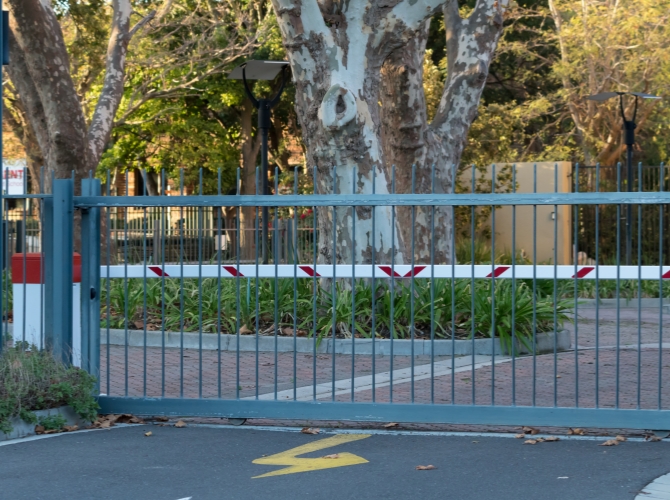
The configuration comes off site facts. Clear opening span first, then side room for a track run, leaf weight, duty cycle, and what has to fit through. A cantilever free-spans a wide farm or vineyard entrance with nothing crossing the ground, which suits a gravelled approach that has never been level. A sliding gate on a track suits an opening with a clear run alongside it and a surface that can be prepared. Single and double swing gates work where there is arc room and lighter traffic. A bi-fold suits a tight frontage in town, and a boom or barrier arm covers a visitor car park where the job is managing vehicles rather than securing plant.
The vehicles decide the width. A van and a ute with a trailer is one specification. A tractor with an implement, a harvester, a stock truck, a container unit or a forklift crossing between sheds is another.
Call 027 424 0600 to Request a Free Quote
Industries We Serve
We proudly serve clients across a range of sectors, including:

Hospitals

Aviation Surfaces

Schools

Sporting Surfaces

Factory Safety Lines

Body Corporate

The gate now, the car park when it opens
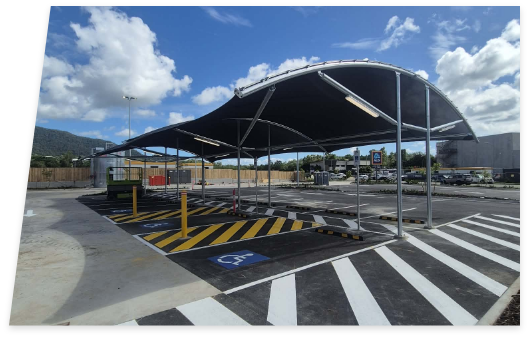
A 250-home retirement village is being developed on 37 acres of rural-residential land in the centre of town, and that is a good illustration of how a commercial entrance actually gets used over time. During construction it needs controlled access: one gate, contractors in and out, materials on site overnight. When it opens it needs something quite different, which is marked visitor parking, mobility bays and pedestrian routes that never cross the delivery path.
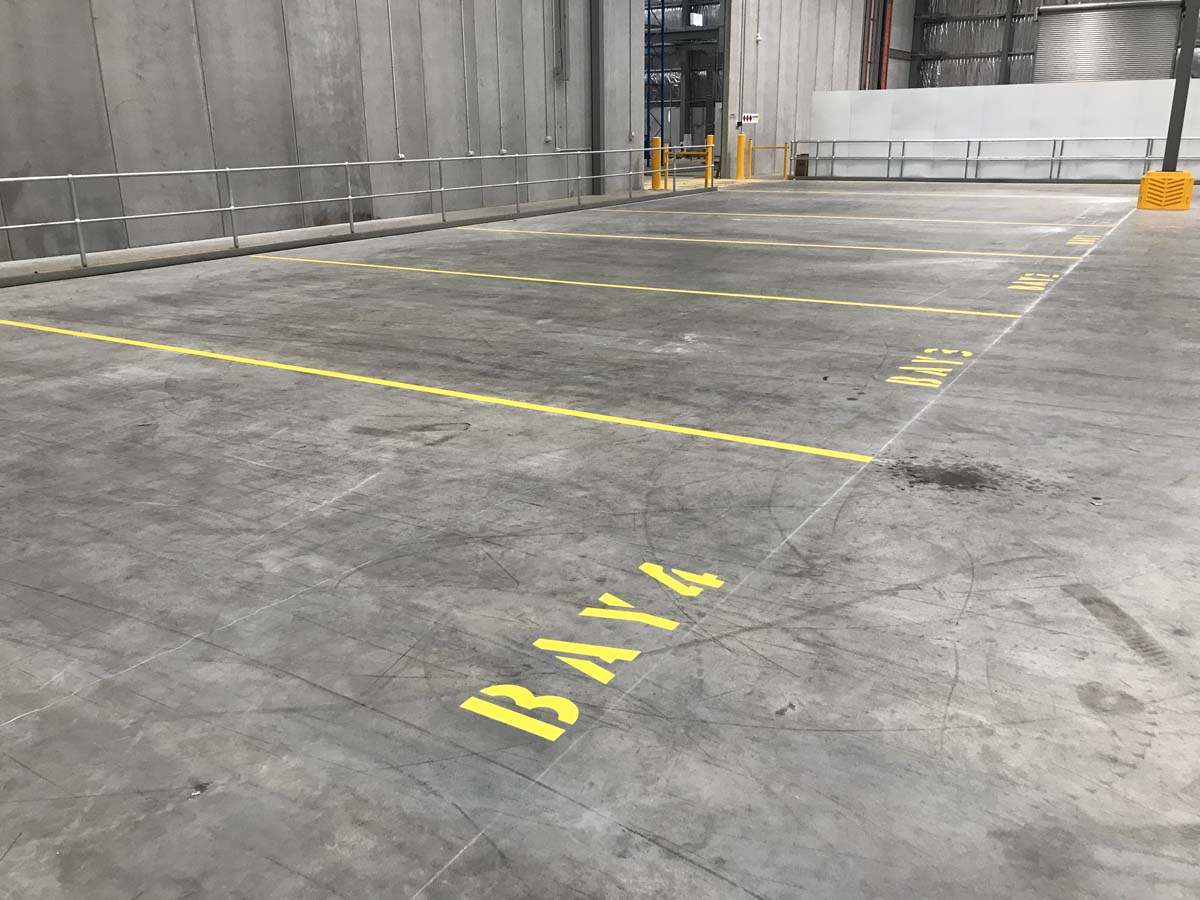
Both come off the same drawing when one team does both. What we mark out and install behind a gate:
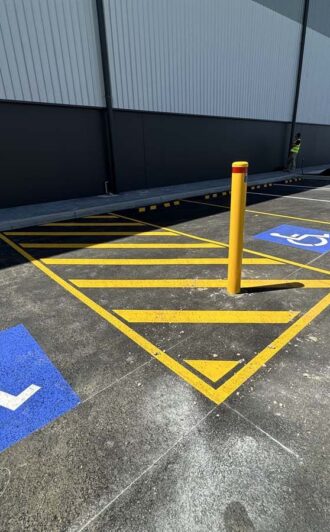
- Car park bays, aisles, arrows and hatching, including mobility bays where they are needed
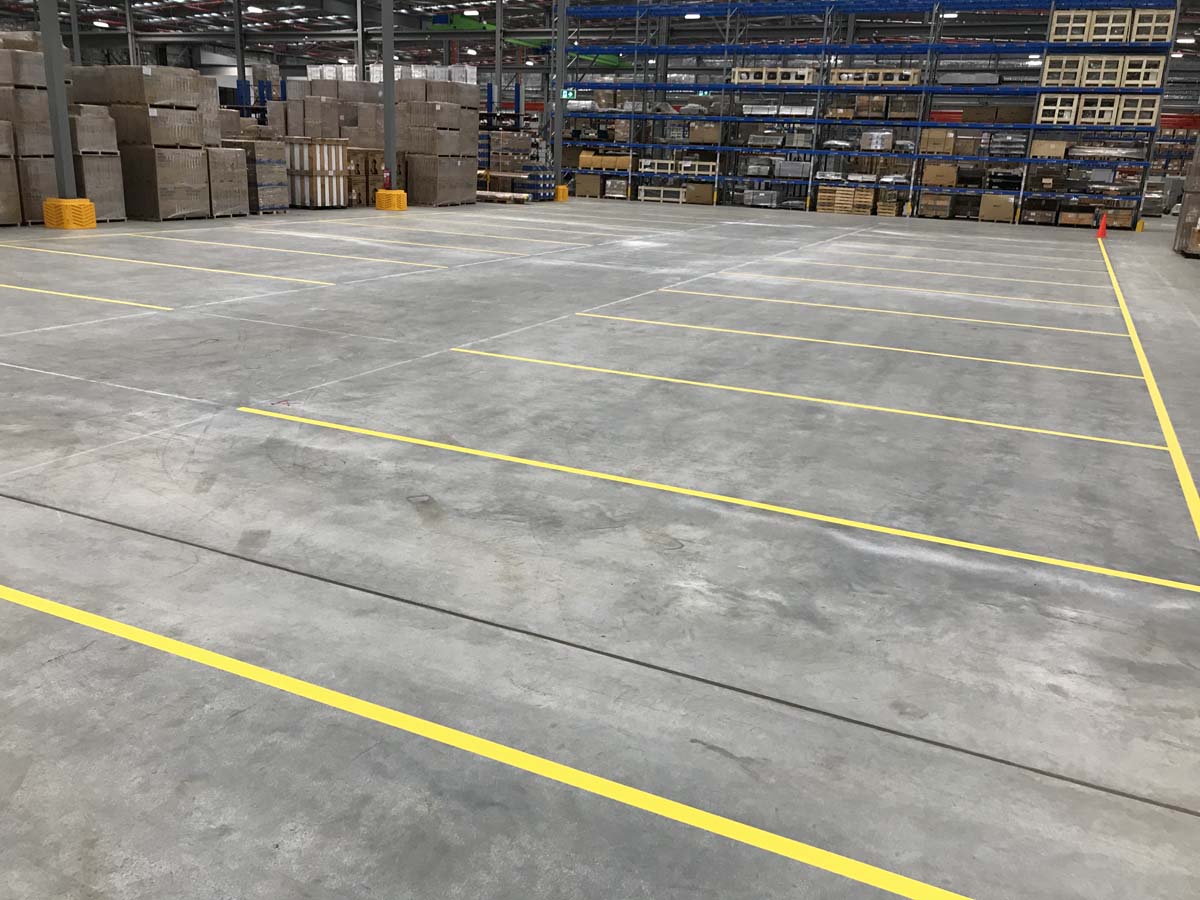
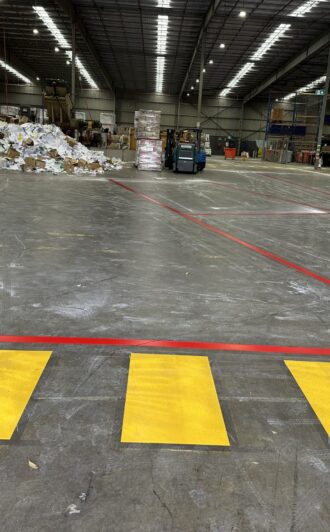
- Internal traffic lanes, walkthrough lanes and forklift paths
- Designated storage and loading zones marked on the yard or shed floor
- Bollards protecting switchboards, pumps, plant and door jambs
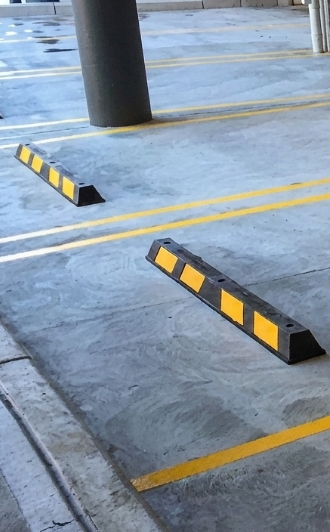
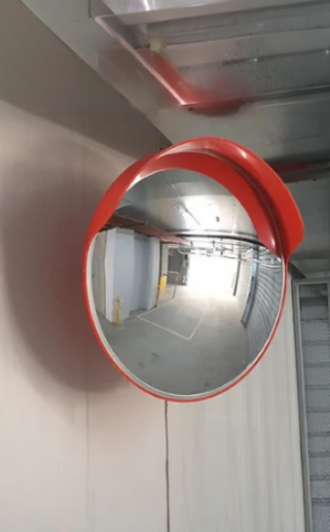
- Wheel stops, speed humps and convex safety mirrors at blind exits
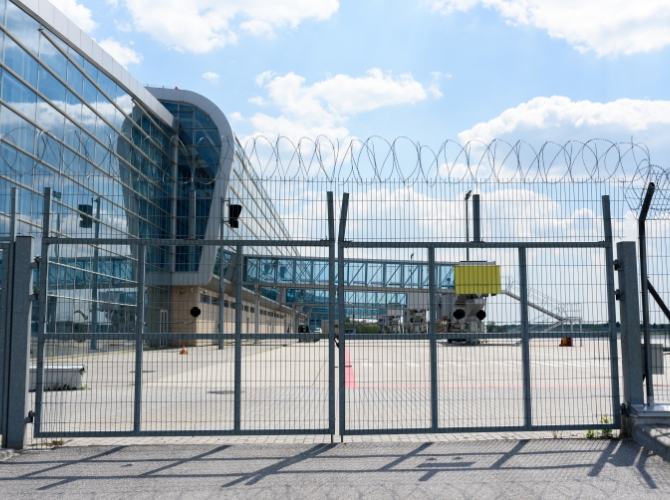
- Safety and palisade fencing running into the gate posts
One crew, one mobilisation, one set of drawings, and the route from the road through the gate to the parking bay designed as a single movement. Our vision is to create safer, more efficient parking environments for both drivers and pedestrians, and on a site that changes use partway through, that is easier to deliver if the same people drew the first stage.
Automation where the gate is a long way from the switchboard
Motors are sized to leaf weight and to how many times a day the gate cycles, and larger commercial motors are held for heavier custom leaves. On a farm or vineyard the entrance is often well away from any building, so power is the first practical question. Solar runs a gate where there is no mains supply at the post, which is a common answer out here rather than an unusual one.
Access is handled with keypads, remotes, intercoms, card and fob readers, access controllers and remote locks, mixed so staff, seasonal workers, contractors and deliveries each get in the right way. Safety devices go on every automated installation. We also supply parts, hardware, access controllers and remote locks to automate a gate you already own, and our safety devices and alternative opening methods allow automatic gates on sloped ground as well as flat-level. Irregular, tight or hard-to-reach sites are worth a conversation rather than an apology.

Materials, finish and a wet winter
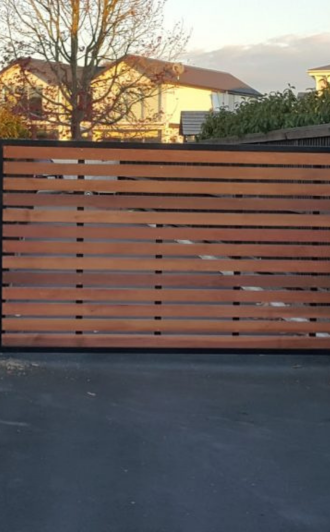
Our range of materials covers wood, steel, aluminium and stainless steel. Steel carries a wide span without flexing, aluminium keeps a high-cycle leaf light on its hardware, and stainless goes into fixings that have to hold their finish. Steel is hot-dip galvanised before powder coating, so the protection sits inside the sections as well as on them.
NIWA groups the coastal strip north of here as a distinct Canterbury climate zone: relatively mild winters, and rather high annual rainfall that peaks in winter. Wet ground through the wettest months is a footing question, so post depth and what the footing bears on get decided on site. The region’s strongest winds are the north-westerlies that sweep the plains, and a wide solid leaf standing in an open paddock entrance carries that load into its posts, which is why post size and footing depth are set for the leaf rather than to a standard hole.
All our gates are 100% New Zealand made and installed by the same team, which is where the saving sits.
Consents: the national position, and what to ask the council
We will be straight about this rather than inventive. There is no Amberley or Hurunui specific fence and gate height rule that we can point you to, so here is the national position and where to check the rest.
Nationally, MBIE’s Building Performance guidance is that a building consent is not required for fences or hoardings up to 2.5 metres high. District plans made under the Resource Management Act may still require a resource consent for fences over about 2 metres, and swimming pool fences sit outside the exemption and do need a building consent. A gate on a road boundary is the case most likely to trigger a district plan rule independently of height, and boundary obligations with a neighbour come from the Fencing Act 1978.
Because the height limits that apply to your site come from the district plan rather than from the national rule, confirm them directly with Hurunui District Council before work starts. Our equipment and installations are built to meet local requirements, and we will build to whatever the Council confirms.
Need Professional Line Marking or Safety Products?
Contact Group One today – reliable, accredited, and available 24/7.

Client Testimonials


5.0 Stars / 21 + reviews
The team from Group One were exceptional.
They arrived on time, did a fantastic job and made our childcare centre carpark look like new . Thankyou
Prompt and efficient service.
Very professional and experienced. Syd always answers his phone otherwise calls you back. Highly recommended.
Highly recommended.
Competitive price, quality work and even helped me put up the customer parking signs. Went above and beyond. Thanks very much, Syd and Blake.
Great job and no complaints!
Wonderful to work with and helping us get our line marking completed. Would definitely use again and refer to others.
Highly Recommend Group 1 Linemarking!
We recently hired Group 1 Linemarking for a few of our residential strata projects, and the results exceeded our expectations. The team was punctual, professional, and clearly experienced. The line marking was crisp, precise, and done exactly to spec. Communication throughout the process was smooth, and they were flexible with scheduling, which made things a lot easier on our end. If you need reliable, high-quality line marking services, I wouldn’t hesitate to recommend Group 1. Great job!
Working with Syd and his team is always a pleasure
The quality of work is always to a high standard. The Group One team is always professional, they apply a high standard for safety ensuring their SWMS is tailored for the job and their equipment is serviced and well maintained. I highly recommend Group One and if you use them you won’t be disappointed.
What the quote depends on
Bespoke pricing, given after a site visit. What moves it:
- Clear opening span and configuration
- Leaf weight, material and finish
- Ground conditions, and the groundwork the footings or a track run need
- Motor duty rating
- Mains power at the gate, or a solar setup
- How deep the access control specification goes
- Access for the install crew, and the travel to site
- Whether the yard and car park works are done in the same visit
Group One New Zealand, the company behind both halves of the job
A gate and a marked car park are normally two contracts with two suppliers. Here they are one, and on a rural-service site that changes use partway through, that is the difference between a layout drawn once and a layout patched twice. Sydney Chappell founded Group One New Zealand in 2026, and it is deliberately a small team, so you know you’ll get the very best. In the company’s own words: “Although Group 1 Line Marking has just started here in New Zealand, as a group we have been operating in Australia for almost 25 years.” We guarantee all the work we do, and every gate the team builds carries a comprehensive warranty and full after-sales service. New Zealand Business Number 9429053752833. The page has the full range.
Call 027 424 0600 to Request a Free Quote




Two stages, one drawing
If your site is going to change use, say so at the site visit. A gate specified for a construction phase and a car park laid out for how the place will actually run afterwards can be drawn together now and installed in two visits, which costs less than deciding the second half after the first is already in the ground.
Phone us on 027 424 0600 or email info@groupone.co.nz, 7am to 3pm Monday to Friday. Group One New Zealand, Unit 1, 37 Foremans Road, Islington, Christchurch 8042.
Call 027 424 0600 to Request a Free Quote
Comprehensive Line Marking & Safety Services
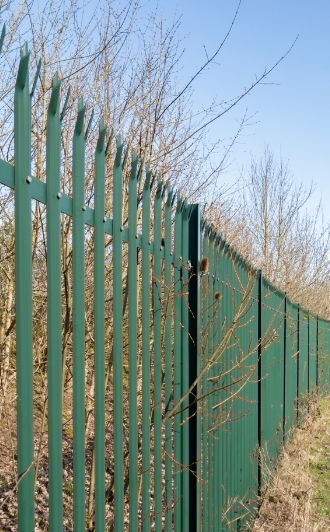
Safety and Palisade Fencing
Safety and palisade fencing is the steel perimeter that goes...
More Details
Areas We Serve
- Commercial Gates Amberley
- Commercial Gates Ashburton
- Commercial Gates Christchurch
- Commercial Gates Darfield
- Commercial Gates Kaiapoi
- Commercial Gates Methven
- Commercial Gates Rangiora
- Commercial Gates Rolleston
- Commercial Gates Timaru
Other Services Available in Amberley
Questions from North Canterbury sites
There is no power at the gate. What are the options?
Solar, in most cases, sized to the duty cycle rather than to a catalogue. The alternative is trenching a supply out to the post, which is worth pricing against the solar option at the visit.
What does a commercial gate cost up here?
It is quoted per site. Span, leaf weight, ground conditions, motor duty rating, power or solar, access control and the travel to site all move it, which is why the visit comes first.
Can you work on a site that is still under construction?
Yes, and it is often the sensible order: controlled access while the work is happening, with the car park layout marked out once the surfaces are finished.
Get Started with Professional Line Marking Solutions

Get a Free Consultation
Speak with our experts to discuss your line marking requirements and get a tailored solution.
Schedule Now
Need Help Choosing?
Our team provides advice on the right line marking services and materials for your site.
Find Your Solution
Talk to an Expert
Have questions or want a quote? Connect with our experienced team today.
Contact Us