 Available 24 Hours a Day, 7 Days A Week
  027 424 0600

Security Gates Amberley

Available 24 Hours a Day, 7 Days A Week

100% Client Satisfaction

Full Range of Premier Services

High-Quality Products
Get A Free Quote

Ask what height you are allowed to build to and most trades will give you a number straight away. For security gates in Amberley the truthful answer is that the national position is clear and the district one has to come from the Council, and this page will say which is which rather than blur them together. Group One New Zealand designs, manufactures and installs gates across North Canterbury, with crews travelling up State Highway 1 from Islington in Christchurch, and Sydney Chappell started the New Zealand company in 2026. Phone us on 027 424 0600, 7am to 3pm Monday to Friday, and we will come out and look at the entrance.
The gates we are talking about
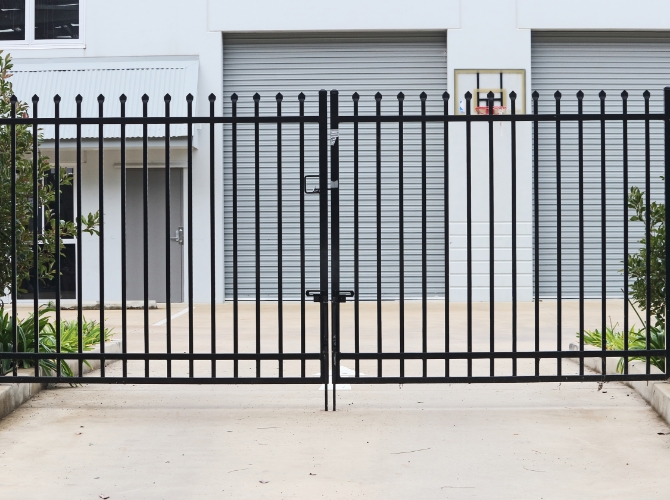
A security gate on this page is a fabricated leaf hung at the entrance to a property: a farm race, a lifestyle-block driveway, a yard, a rural-commercial frontage. Steel, aluminium or timber, hung on posts set into the ground, swinging or sliding. It is not a retail security door or a window grille, which is another trade with other hardware. It is not the release gate that software teams run in a build pipeline, which shares the words and nothing else. Everything here is made in New Zealand and installed on a Canterbury property by the crew that built it.
Call 027 424 0600 to Request a Free Quote
Industries We Serve
We proudly serve clients across a range of sectors, including:

Hospitals

Aviation Surfaces

Schools

Sporting Surfaces

Factory Safety Lines

Body Corporate

The honest answer on height in Hurunui
Nationally, MBIE’s Building Performance guidance is that a building consent is not required for fences or hoardings up to 2.5 metres high. It also states that district plans made under the Resource Management Act may still require a resource consent for fences over about 2 metres, and that swimming pool fences fall outside the exemption and do require a building consent.
What we have not found is an Amberley or Hurunui specific fence or gate height rule. The only Hurunui fencing standard that came up applies to the Hanmer Springs residential design area and governs colour rather than height. So the district layer is a genuine unknown from where we sit, and the right move is to confirm the Hurunui District Plan position directly with Hurunui District Council before anyone relies on a height.
We will not fill that gap with a number borrowed from another council. Selwyn, Waimakariri, Ashburton, Timaru and Christchurch all set their own thresholds and they do not match each other, so quoting one of theirs here would be worse than saying nothing. Boundary structures shared with a neighbour sit under the Fencing Act 1978 regardless of district.
Gates you will open by hand every day
Plenty of Amberley entrances are on established properties where the owner works the gate themselves, often several times a day. Leaf weight, latch height and how much effort a swing takes are not small details in that situation, and they are the reason an aluminium frame frequently beats steel on a wide residential leaf. A pedestrian gate beside the vehicle leaf helps too: it is lighter, it is quicker, and it means the big gate is only moved when a vehicle needs it.

Farm, lifestyle and rural-commercial entrances
Amberley is the largest town in the Hurunui District and the service centre for dairy, sheep, arable and grape-growing country around it, so the openings run from a house driveway to something a tanker or a harvester has to clear.
Width comes from the longest vehicle plus the room a driver needs to line up off State Highway 1 or a rural road. Then the ground decides the form. A swing gate needs a clear arc over ground that stays level through the travel. A slider on a track needs run-back space and a track that stays clean, which a stock or gravel entrance will not give you. A cantilever slider carries the leaf clear of the ground with no track at all. A bi-fold folds into itself where there is neither arc nor run-back.
Winter rain, and the wind off the plains
NIWA groups the coastal strip north of Amberley as its own Canterbury climate zone, with relatively mild winters and rather high annual rainfall that peaks in winter. Wet winters put the pressure on drainage rather than on frost: water standing around a post is what starts the rot in timber and finds the coating faults in steel, and a ground track that ponds will silt up and stop the gate closing cleanly.
The other force is the north-westerly, the region’s strongest wind. It loads a solid leaf like a sail and passes that straight through the hinges into the post and footing, which is why vertical bar, palisade or mesh infill often makes more sense on an exposed entrance than a full solid panel.
Need Professional Line Marking or Safety Products?
Contact Group One today – reliable, accredited, and available 24/7.

Client Testimonials


5.0 Stars / 21 + reviews
The team from Group One were exceptional.
They arrived on time, did a fantastic job and made our childcare centre carpark look like new . Thankyou
Prompt and efficient service.
Very professional and experienced. Syd always answers his phone otherwise calls you back. Highly recommended.
Highly recommended.
Competitive price, quality work and even helped me put up the customer parking signs. Went above and beyond. Thanks very much, Syd and Blake.
Great job and no complaints!
Wonderful to work with and helping us get our line marking completed. Would definitely use again and refer to others.
Highly Recommend Group 1 Linemarking!
We recently hired Group 1 Linemarking for a few of our residential strata projects, and the results exceeded our expectations. The team was punctual, professional, and clearly experienced. The line marking was crisp, precise, and done exactly to spec. Communication throughout the process was smooth, and they were flexible with scheduling, which made things a lot easier on our end. If you need reliable, high-quality line marking services, I wouldn’t hesitate to recommend Group 1. Great job!
Working with Syd and his team is always a pleasure
The quality of work is always to a high standard. The Group One team is always professional, they apply a high standard for safety ensuring their SWMS is tailored for the job and their equipment is serviced and well maintained. I highly recommend Group One and if you use them you won’t be disappointed.

Where the strength actually sits
Start at the bottom of the job rather than the top. Post size and footing depth are the first figures we settle, read off the leaf weight and off what the auger finds at the hole, and on ground that stays damp through a winter-peaking rainfall that depth is a calculation rather than a habit. Steel is then hot-dip galvanised and powder coated in that order, so the protection sits under the colour instead of depending on it.
The leaf itself is sized to what it has to cross, which is why a farm opening carries box section a pedestrian gate would never need. Infill is welded or mechanically fixed inside the frame, not screwed to its face where a fixing is visible and within reach. Hinges carry anti-lift detail so the leaf cannot be raised off its pins, and exposed fixings are tamper-resistant. On a double swing, drop bolts land in ground sockets. Locking points suit the leaf height and, on an established property where the owner works the gate several times a day, the reach of the person actually using it, which is a decision worth making at the entrance rather than at the bench. Ground clearance underneath stays tight. An anti-climb head, where one is wanted, means extended vertical bar, a raked top or a rolled edge.
Timber, steel, aluminium and stainless steel
Our range of materials covers wood, steel, aluminium and stainless steel. Steel gives the stiffest frame and handles the widest rural openings. Aluminium is lighter, which matters both for hinge and footing loads and for the person opening it, and it does not rust. Stainless goes into fixings and exposed fittings. Timber is the classic look on a North Canterbury entrance and moves with the seasons, so it stays square longest as infill on a steel or aluminium frame rather than as the structure itself.
Call 027 424 0600 to Request a Free Quote





How we arrive at a figure up here
There are no numbers on this page, and there is a reason the quote follows the visit rather than coming before it. Amberley sits at the top of the run, so the drive up State Highway 1 and the timing of it are real inputs. We would rather measure once, build to that measurement and come back with a finished leaf than make the trip twice.
Leaf weight is the input that matters most on a gate somebody works by hand several times a day, and it drags frame material, hinge size and footing depth along with it. Then the clear opening width and the height, taken from the longest vehicle and the room a driver needs to pull off the road. Then infill profile, locking hardware, ground clearance under the leaf, ground conditions and fall across the entrance, drainage around the posts given how the winter rainfall behaves here, and the finish.
Design, manufacture and installation happen in that order once the drawing is settled. Everything is made in New Zealand, installed by our own crew, and covered by a warranty and after-sales service.
Group One New Zealand at the top of the run
Amberley is where the run north stops. Crews load out at Islington in Christchurch and drive up State Highway 1 with the leaf already made, because the hands that cut and welded it are the ones hanging it on your posts. That single-crew arrangement is part of why this page sends you to Hurunui District Council instead of quoting a height at you: nobody in the middle has a reason to guess, and a wrong number costs us a second trip as surely as it costs you. The New Zealand end of the business is genuinely young. Sydney Chappell registered it in 2026, and there are not many names on the crew list. The company is upfront that the trading history behind the name is Australian: “Although Group 1 Line Marking has just started here in New Zealand, as a group we have been operating in Australia for almost 25 years.” Our page sets out the whole range.
Call 027 424 0600 to Request a Free Quote
We would rather flag it than guess it
Where the district rule is not something we can verify, the quote will say so and point you to the Council rather than quote you a height we cannot stand behind. It is a short call to make, and it is better made before the steel is cut than after.
Phone us on 027 424 0600 or email info@groupone.co.nz, 7am to 3pm Monday to Friday. Group One New Zealand, Unit 1, 37 Foremans Road, Islington, Christchurch 8042. NZBN 9429053752833.
Call 027 424 0600 to Request a Free Quote
Comprehensive Line Marking & Safety Services
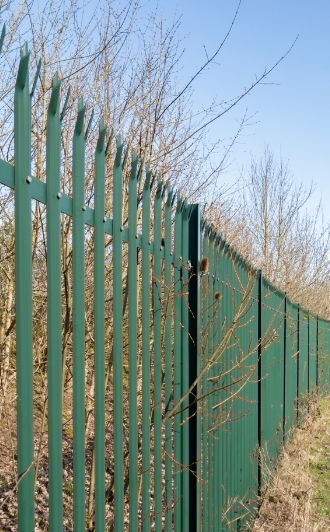
Safety and Palisade Fencing
Safety and palisade fencing is the steel perimeter that goes...
More Details
Areas We Serve
- Security Gates Amberley
- Security Gates Ashburton
- Security Gates Christchurch
- Security Gates Darfield
- Security Gates Kaiapoi
- Security Gates Methven
- Security Gates Rangiora
- Security Gates Rolleston
- Security Gates Timaru
Other Services Available in Amberley
- Automatic Gates Amberley
- Bollards Amberley
- Commercial Gates Amberley
- Convex Safety Mirrors Amberley
- Custom Gates Amberley
- Driveway Gates Amberley
- Gate Access Systems Amberley
- Industrial Gates Amberley
- Line Marking Amberley
- Safety and Palisade Fencing Amberley
- Speed Humps Amberley
- Wheel Stops Amberley
Questions from Amberley properties
What do security gates cost in Amberley?
Quoted per site. Opening width, height, frame and infill spec, hardware, ground conditions and finish all move the figure, and rural entrances usually carry more post and footing work than town ones.
How high can we go without a consent?
The national position is 2.5 metres for a building consent, but a district plan can require a resource consent above about 2 metres. For your address, that answer comes from Hurunui District Council.
Is a sliding gate practical on a lifestyle block?
Often the most practical option, particularly a cantilever that keeps the leaf off the ground. It needs run-back space along the boundary, which most lifestyle entrances have.
Can you build a wooden gate that stands up out here?
Timber infill on a steel or aluminium frame, yes. Given the winter rainfall, the detail that matters is drainage around the posts and keeping timber off the ground line.
Get Started with Professional Line Marking Solutions

Get a Free Consultation
Speak with our experts to discuss your line marking requirements and get a tailored solution.
Schedule Now
Need Help Choosing?
Our team provides advice on the right line marking services and materials for your site.
Find Your Solution
Talk to an Expert
Have questions or want a quote? Connect with our experienced team today.
Contact Us