 Available 24 Hours a Day, 7 Days A Week
  027 424 0600
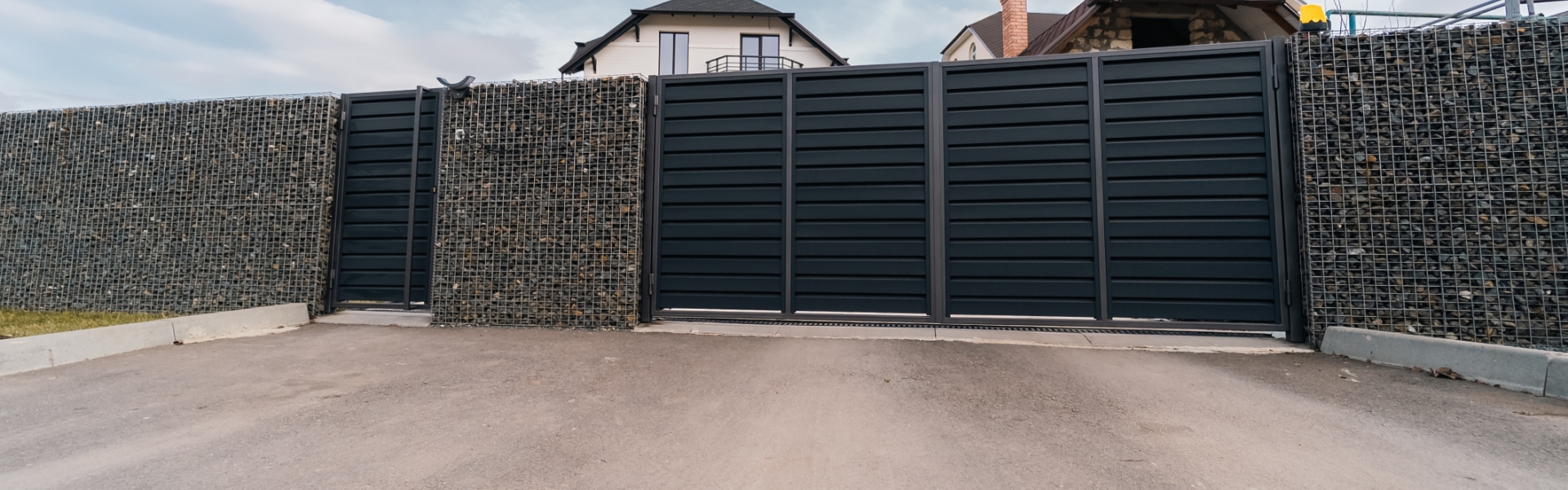
Automatic Gates Timaru

Available 24 Hours a Day, 7 Days A Week

100% Client Satisfaction

Full Range of Premier Services

High-Quality Products
Get A Free Quote
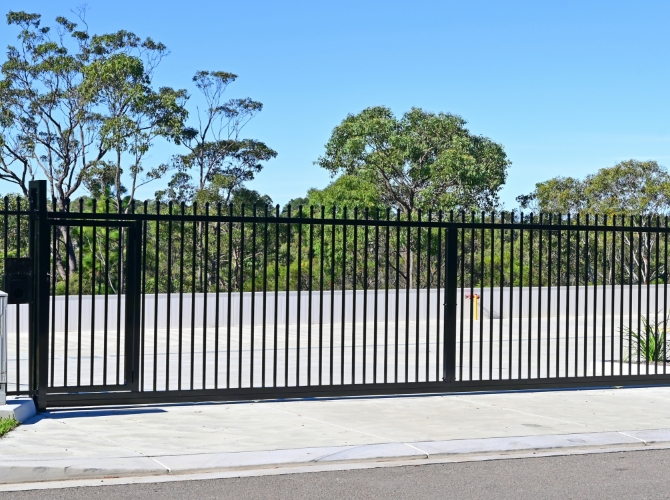
Run a yard anywhere near the port and you already know what the air does to anything with a bearing in it. That is the real design brief for automatic gates in Timaru: not the leaf, which can be protected easily enough, but the motor, the gearbox and the electronics that have to keep working inside it. Group One New Zealand designs, manufactures and installs the whole system, and our crews travel down from the Islington base in Christchurch to do it. Phone us on 027 424 0600, 7am to 3pm Monday to Friday, and we will come and look at the entrance before quoting it.
Salt reaches the moving parts first
Airborne sea salt accelerates corrosion of the metals used in construction, which is why hot-dip galvanised and powder-coated steel is the local default for gates and fencing. On a powered gate that protection has to extend past the leaf to everything that makes it move.
The parts that fail first on an exposed site:
- The motor housing and its seals, where moist salt air gets to the windings
- The gearbox and its lubricant
- Hinges, pivots, the rack and the ground track
- Limit switches and the sensing that tells the gate where it is
- Photocell lenses and their alignment
- Fixings, and the roadside control enclosure with its cable entries
What we do about it is unglamorous and it works. Sealed enclosures rated for outdoor exposure, mounted so water runs off rather than pools. Stainless fixings. An in-ground drive housing that is sealed and drained rather than sealed alone, because a drive box that fills is a drive box that dies. Cable entries taken from below with a drip loop. And a servicing interval set on the assumption that salt is working on the gate every day, not an interval borrowed from an inland site.
Call 027 424 0600 to Request a Free Quote
Industries We Serve
We proudly serve clients across a range of sectors, including:

Hospitals

Aviation Surfaces

Schools

Sporting Surfaces

Factory Safety Lines

Body Corporate
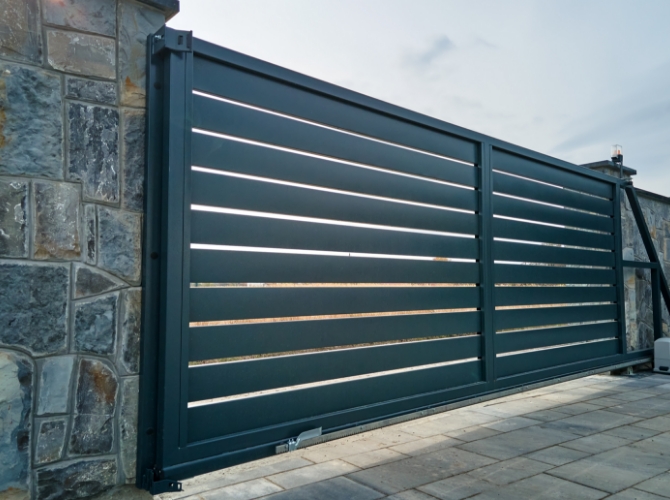
Yard access, after hours
South Canterbury’s industrial base sits around the port and Washdyke, and most of the entrances we are asked about there carry trucks rather than family cars. That changes what the controls have to do.
Free-exit detection lets loaded vehicles leave without anyone touching a handset. SIM-based remote access lets a manager off site open the gate for an after-hours delivery. Delegated and temporary access covers contractors, relief drivers and seasonal staff without handing out permanent remotes. Keypads and intercoms handle visitors at the boundary, with cable back to the office unless the intercom runs over a mobile connection, and anything mobile-based needs a usable signal at the gate. On a residential entrance the same kit shrinks to remote handsets, a keypad and Bluetooth or phone access for the household.
Choosing the drive
The opening decides the drive. Span and leaf weight set the motor class. Track run and side room decide whether a rack-driven slider fits, and on a wide commercial entrance it usually earns its place. Swing gates need sweep clearance and ground that does not fall away underneath the leaf, with articulated arm drives for wide pillars, ram drives for lighter balanced leaves and underground drives where the hardware needs to disappear. Duty cycle sits alongside all of it: a yard gate cycling all day needs a thermal rating a household gate never touches. The leaf and the drive are always specified together, because leaf weight, wind area and frame rigidity set what the motor has to be.
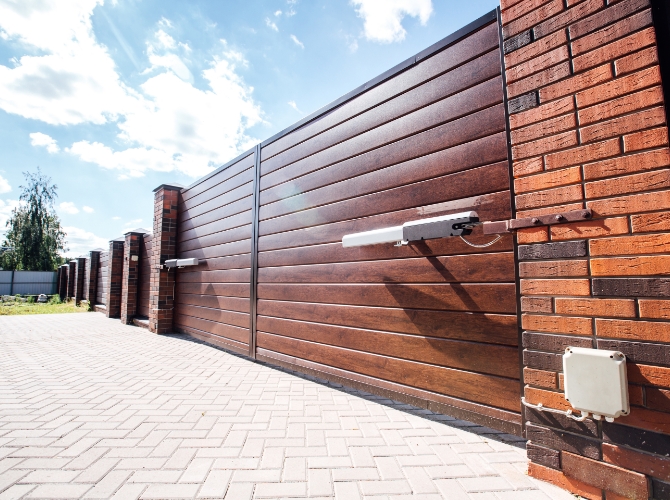
Power, and what happens when it goes
Mains supply means trenching along the gate line, conduit and an enclosure that survives outdoors. Where the gate sits well away from any practical mains run, solar operation is a standard option here, sized against the gate’s cycle count with battery capacity for a run of dull days. Battery backup covers a mains gate through an outage, and every gate we install has a manual release that opens it by hand without tools. Standby draw, not opening draw, is the figure that sizes a battery or a panel.
Safety devices, sloped ground and gates you already own
Obstruction detection and force limiting come as standard, with photocells across the opening, safety edges, warning lights on a commercial frontage, a separate pedestrian route and vehicle detection where traffic could queue onto the road.
Cramped, irregular and hard-to-reach entrances get designed for rather than declined, and automation works on sloped ground as well as on the flat. Where a gate already hangs on sound posts, we can often automate it in place using parts, hardware, access controllers and remote locks. On a coastal site that assessment includes what corrosion has already done to the hinges and the frame, because there is no sense driving a leaf that is halfway through failing.
Need Professional Line Marking or Safety Products?
Contact Group One today – reliable, accredited, and available 24/7.

Client Testimonials


5.0 Stars / 21 + reviews
The team from Group One were exceptional.
They arrived on time, did a fantastic job and made our childcare centre carpark look like new . Thankyou
Prompt and efficient service.
Very professional and experienced. Syd always answers his phone otherwise calls you back. Highly recommended.
Highly recommended.
Competitive price, quality work and even helped me put up the customer parking signs. Went above and beyond. Thanks very much, Syd and Blake.
Great job and no complaints!
Wonderful to work with and helping us get our line marking completed. Would definitely use again and refer to others.
Highly Recommend Group 1 Linemarking!
We recently hired Group 1 Linemarking for a few of our residential strata projects, and the results exceeded our expectations. The team was punctual, professional, and clearly experienced. The line marking was crisp, precise, and done exactly to spec. Communication throughout the process was smooth, and they were flexible with scheduling, which made things a lot easier on our end. If you need reliable, high-quality line marking services, I wouldn’t hesitate to recommend Group 1. Great job!
Working with Syd and his team is always a pleasure
The quality of work is always to a high standard. The Group One team is always professional, they apply a high standard for safety ensuring their SWMS is tailored for the job and their equipment is serviced and well maintained. I highly recommend Group One and if you use them you won’t be disappointed.
Galvanised, powder-coated and made here
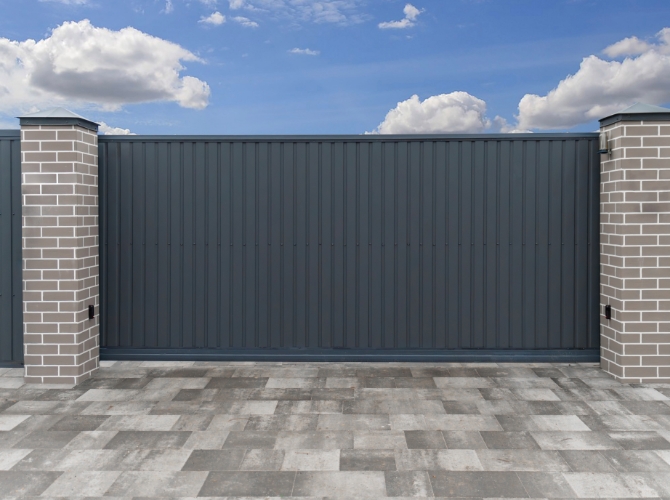
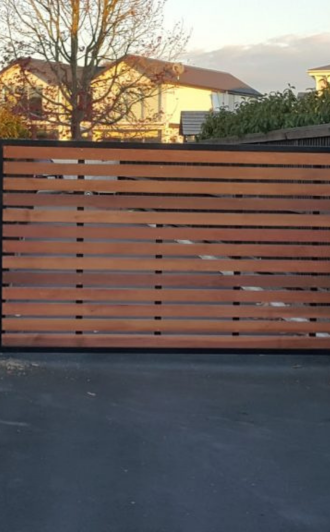
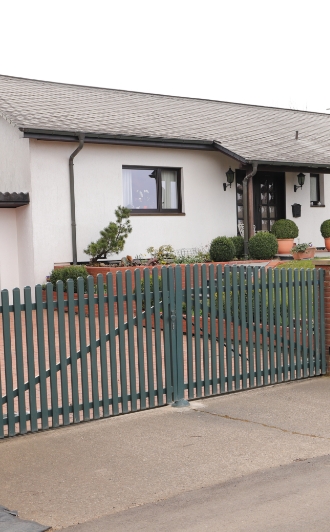
Design, manufacture and installation are all ours, with consultation running through the lot. We fabricate in timber, steel, aluminium and stainless steel, with hot-dip galvanising and powder-coat finishes specified for the exposure the site actually has, and post and footing depths set by the leaf weight. A flexing leaf pushes a powered gate out of alignment long before anyone pushing it by hand would notice. All our gates are 100% New Zealand made and installed, with a comprehensive warranty and full after-sales service behind them.
Two rules, one gate
Timaru has a genuine trap in it. Timaru District Council treats fences or walls less than 2.5 metres high as exempt building work. Separately, the Timaru District Plan caps road boundary fences at a maximum height of 2 metres in its residential and related zones.
An automatic gate sits on the road boundary by definition. So a street-front gate between those two heights can be exempt from building consent and still breach a District Plan performance standard, which makes it a land use consent question instead. Residential swimming pool fencing is expressly not exempt and needs a building consent, lodged through the Council’s Simpli portal. Boundary fences shared with a neighbour fall under the Fencing Act 1978. Confirm current requirements with Timaru District Council before anything is fabricated.
Call 027 424 0600 to Request a Free Quote





Where the money goes on a coastal entrance
Pricing is on quote. The finish and the level of corrosion protection the exposure calls for are the first line rather than the last, because on this coast that choice reaches past the leaf into the hinges, the rack, the track and the housings, and it is the one input nobody revisits cheaply afterwards. Material sits with it. From there the figure takes in the span, the gate type the opening will carry and the drive that suits it, leaf weight with the motor size and duty cycle that follow, the surface and fall at the gateway and the footings under the posts, power at the gate whether that is mains or solar, the access control hardware, and the safety devices across the opening. Site difficulty and the run down from Islington close it out.
Group One New Zealand, and specifying against salt
Making the gate means we also specify what protects it, and on this coast that is most of the argument. Hot-dip galvanising after fabrication, powder coat over the top, stainless fixings, sealed and drained housings, and a hinge or roller chosen because it will spend its life washed in salt air rather than because it was cheapest on the sheet. None of that is open to an outfit that orders a leaf in and bolts a drive onto it. Group One New Zealand was founded in 2026 by Sydney Chappell, it is a small team, and gates are built at Islington in Christchurch for the trip down to South Canterbury. Washdyke yards and the operators behind the port trade make up most of the work here, where an entrance carries heavy vehicles at hours when nobody is watching. The company on its own history: “Although Group 1 Line Marking has just started here in New Zealand, as a group we have been operating in Australia for almost 25 years.” Our page covers the rest.
Call 027 424 0600 to Request a Free Quote
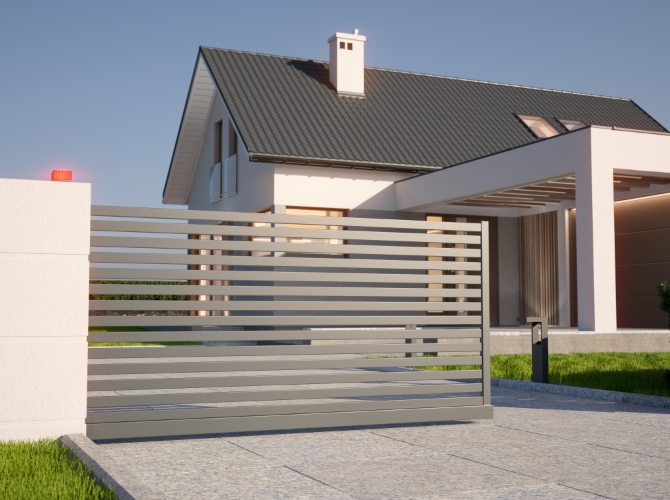
The part not to economise on
If there is one place a Timaru gate budget should not be trimmed, it is the enclosure, the seals and the fixings around the drive. They are invisible, they add little to the quote, and they are the components that decide whether the gate is still working in ten years or being pulled apart in three. Ask us to show you what we are specifying there and why.
Phone us on 027 424 0600 or email info@groupone.co.nz, 7am to 3pm Monday to Friday. Group One New Zealand, Unit 1, 37 Foremans Road, Islington, Christchurch 8042. NZBN 9429053752833.
Call 027 424 0600 to Request a Free Quote
Comprehensive Line Marking & Safety Services
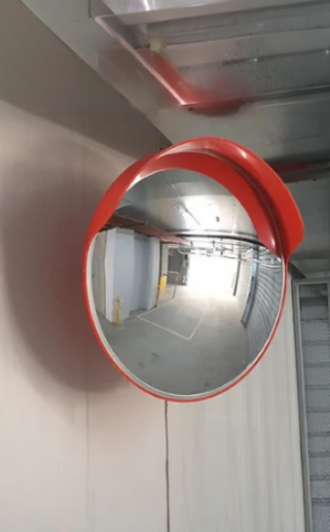
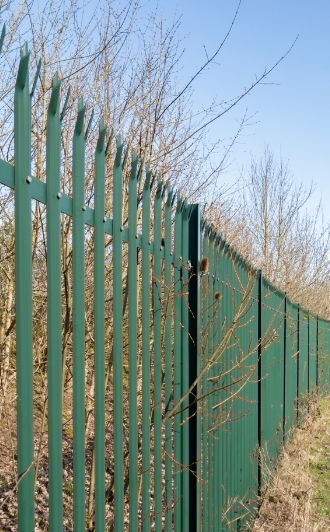
Safety and Palisade Fencing
Safety and palisade fencing is the steel perimeter that goes...
More Details
Areas We Serve
- Automatic Gates Amberley
- Automatic Gates Ashburton
- Automatic Gates Christchurch
- Automatic Gates Darfield
- Automatic Gates Kaiapoi
- Automatic Gates Methven
- Automatic Gates Rangiora
- Automatic Gates Rolleston
- Automatic Gates Timaru
Other Services Available in Timaru
Questions from South Canterbury sites
How much does it cost to automate an existing gate?
It depends on what is already there. A rigid leaf on sound posts with power nearby is the straightforward case; a heavy or flexing leaf, corroded hinges or a long power run all change it. We quote it after looking at the gate, in New Zealand dollars.
How much does a new automatic gate cost?
Quoted per site. Span, weight, material, finish, drive type, duty cycle, power supply and access hardware are what move it.
Are kitset gate motors worth it?
They can suit a light, well hung gate on a sheltered inland site. Near the coast the enclosure rating, the seals and the fixings are the parts that decide the lifespan, and that is usually where a kitset saves its money.
How often should a coastal gate be serviced?
More often than an inland one. We set the interval from how exposed the site is and how hard the gate works, and it is agreed when the gate goes in.
Get Started with Professional Line Marking Solutions

Get a Free Consultation
Speak with our experts to discuss your line marking requirements and get a tailored solution.
Schedule Now
Need Help Choosing?
Our team provides advice on the right line marking services and materials for your site.
Find Your Solution
Talk to an Expert
Have questions or want a quote? Connect with our experienced team today.
Contact Us