 Available 24 Hours a Day, 7 Days A Week
  027 424 0600

Bollards Methven

Available 24 Hours a Day, 7 Days A Week

100% Client Satisfaction

Full Range of Premier Services

High-Quality Products
Get A Free Quote

A good share of your winter traffic is drivers who have never been on the property before. Methven fills each season with Mt Hutt visitors staying in the town’s lodges, holiday houses and farm stays, and they arrive not knowing where the entrance narrows, where people walk, or which bit of gravel is not actually a car park. Bollards make that decision for them. Group One New Zealand designs, manufactures and installs them, travelling out from our Islington base in Christchurch, and Sydney Chappell started the New Zealand company in 2026. Tell us the address and we will come and mark out where they should stand.
What they are asked to do here
- Direct traffic at an entrance. A pair of bollards narrows an opening, tells an unfamiliar driver where the vehicle route is, and keeps them off the grass, the path or the drainage.
- Protect the building. Corners, glazing, verandah posts, gas bottles and switchboards on a frontage where visitors park nose-in.
- Separate people from vehicles. Around accommodation, hospitality and yard entrances, where guests walk between parked cars and doorways.
- Close an access without losing it. Removable bollards lift out of a flush ground socket; fold-down bollards hinge at the base and lock upright. Both suit a gate that has to open for stock trucks, contractors or a delivery and shut again afterwards.
Farm and stockyard work sits alongside all of that. Methven is the centre of a cropping, dairy and livestock district, and the same posts that guide a visitor’s car keep a tractor from taking out a water tank.
Call 027 424 0600 to Request a Free Quote
Industries We Serve
We proudly serve clients across a range of sectors, including:

Hospitals

Aviation Surfaces

Schools

Sporting Surfaces

Factory Safety Lines

Body Corporate

On public land it is a community conversation; on yours it is your call
Bollards in this district have made the news. The Hakatere Huts community fought Ashburton District Council over the installation of bollards at the Upper Hakatere Reserve, and NZTA has separately cut a 600 metre stretch of SH77 at the north end of town from 100 km/h to 60 km/h. Both are the same subject as your driveway, scaled up: deciding where vehicles are allowed to go and how fast.
Inside your own boundary, none of that applies. You decide, we install. Where a job reaches the road boundary, the vehicle crossing or council land, Ashburton District Council is the first call and we raise it at the site visit rather than after the concrete is in. For anything that is part of a fence rather than a standalone bollard, the council’s published position is that you can build up to 2.5 metres from natural ground level, and it recommends talking to its Planning Department about a resource consent for anything over 2 metres.
Installing on ground that freezes
The site visit comes first. We measure the run, agree what is being protected and from which direction, and mark the positions against the vehicles that actually use the place. Services get located and the boundary confirmed before anything is dug.
In-ground bollards need a hole taken past the base course into ground that will hold. The post is set plumb and concrete poured around it, usually inside it as well, with the depth following the diameter and height of the bollard and whatever the ground turns out to be. Where a slab cannot be broken into, a surface-mount bollard bolts down through a base plate.
Then the surface goes back: asphalt patched, concrete made good, gravel or seal reinstated.
Methven’s town centre sits at 320 metres, close enough to the foothills that overnight temperatures drop below freezing and rain turns to snow. Concrete does not gain strength in a frost, so winter footings get scheduled around the forecast instead of against it. We will tell you plainly if a week is wrong for the pour.
Want yours quoted? Phone 027 424 0600 or email info@groupone.co.nz and we will book a visit.

Buying a bollard versus having one installed
The steel is the easy part to obtain and the least of what decides whether it works. Position relative to the vehicle path, clearance so drivers are not clipping it every week, whether the ground under the mark will actually hold a footing, how deep to take it, and how the surface is closed up afterwards: none of that arrives with the product. It gets settled on the ground, by someone looking at the same corner the driver will be looking at. That is the work being quoted.
What the quote depends on
Pricing is on quote, per site, once we have walked it. What moves the number:
- Type, diameter, height and finish of bollard
- Fixed, removable or fold-down
- How many go in
- In-ground footing or surface-mount base plate
- The surface being cut: concrete, asphalt, gravel or kerb
- Access, and when we can have the area
- Reinstatement afterwards
Galvanised steel handles farm and yard conditions. Powder coating suits a guest-facing frontage where colour helps visibility. Stainless steel goes on entrances where the look matters.
Need Professional Line Marking or Safety Products?
Contact Group One today – reliable, accredited, and available 24/7.

Client Testimonials


5.0 Stars / 21 + reviews
The team from Group One were exceptional.
They arrived on time, did a fantastic job and made our childcare centre carpark look like new . Thankyou
Prompt and efficient service.
Very professional and experienced. Syd always answers his phone otherwise calls you back. Highly recommended.
Highly recommended.
Competitive price, quality work and even helped me put up the customer parking signs. Went above and beyond. Thanks very much, Syd and Blake.
Great job and no complaints!
Wonderful to work with and helping us get our line marking completed. Would definitely use again and refer to others.
Highly Recommend Group 1 Linemarking!
We recently hired Group 1 Linemarking for a few of our residential strata projects, and the results exceeded our expectations. The team was punctual, professional, and clearly experienced. The line marking was crisp, precise, and done exactly to spec. Communication throughout the process was smooth, and they were flexible with scheduling, which made things a lot easier on our end. If you need reliable, high-quality line marking services, I wouldn’t hesitate to recommend Group 1. Great job!
Working with Syd and his team is always a pleasure
The quality of work is always to a high standard. The Group One team is always professional, they apply a high standard for safety ensuring their SWMS is tailored for the job and their equipment is serviced and well maintained. I highly recommend Group One and if you use them you won’t be disappointed.
Group One New Zealand on the Methven run
Sydney Chappell founded Group One New Zealand in 2026, and as the company puts it: “Although Group 1 Line Marking has just started here in New Zealand, as a group we have been operating in Australia for almost 25 years.” We are a small team and we guarantee all the work we do. Design, manufacture and installation are all ours, and Methven sits inside the area our crews cover, which reaches west toward the foothills. The full range is on our page.
Book a site visit
One question shapes most of these jobs before we arrive: does a vehicle have to be physically stopped, or does a driver who has never been here simply need telling where the route goes? The first answer means fixed posts and a footing built to take a hit. The second is usually a lighter job in less ground. Being honest about which one you have is the fastest way to a sensible number.
Phone 027 424 0600 or email info@groupone.co.nz, 7am to 3pm Monday to Friday. Group One New Zealand, Unit 1, 37 Foremans Road, Islington, Christchurch 8042. NZBN 9429053752833.
Call 027 424 0600 to Request a Free Quote




Comprehensive Line Marking & Safety Services
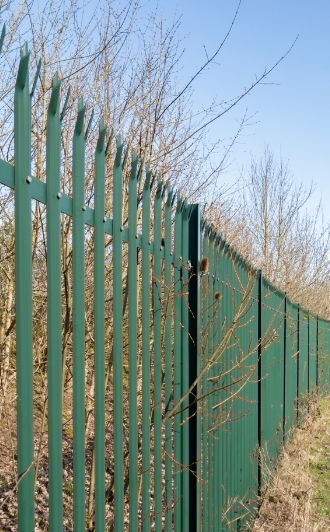
Safety and Palisade Fencing
Safety and palisade fencing is the steel perimeter that goes...
More Details
Areas We Serve
- Bollards Amberley
- Bollards Ashburton
- Bollards Christchurch
- Bollards Darfield
- Bollards Kaiapoi
- Bollards Methven
- Bollards Rangiora
- Bollards Rolleston
- Bollards Timaru
Other Services Available in Methven
Questions we get asked
How much does it cost to have bollards installed?
On quote. The bollard is the predictable part. Getting gear onto the site, what the ground turns out to be, and reinstating the surface afterwards are what set the figure, so a visit comes before a number.
How far apart should bollards be?
Auckland Transport publishes the clearest New Zealand guidance: at least 1.8 metres of clearance between bollards and the kerb, and at least 1.2 metres between bollards across an entranceway so prams, wheelchairs and mobility scooters get through. Those are Auckland Transport’s figures, not an Ashburton District Council rule. Where visitors arrive towing, the swept path of a vehicle and trailer usually sets the gap instead.
How deep should bollards be installed?
Past the base course, into ground that will carry the load. There is no fixed number, and on a gravel yard the honest answer only comes once the hole is open.
Can bollards be removed easily?
Only if that is what went in. Removable and fold-down bollards are built for it. A fixed in-ground bollard means cutting the post and breaking out the footing, so it pays to decide up front how often the access really needs to open.
Get Started with Professional Line Marking Solutions

Get a Free Consultation
Speak with our experts to discuss your line marking requirements and get a tailored solution.
Schedule Now
Need Help Choosing?
Our team provides advice on the right line marking services and materials for your site.
Find Your Solution
Talk to an Expert
Have questions or want a quote? Connect with our experienced team today.
Contact Us