 Available 24 Hours a Day, 7 Days A Week
  027 424 0600
Gate Access Systems Ashburton

Available 24 Hours a Day, 7 Days A Week

100% Client Satisfaction

Full Range of Premier Services

High-Quality Products
Get A Free Quote
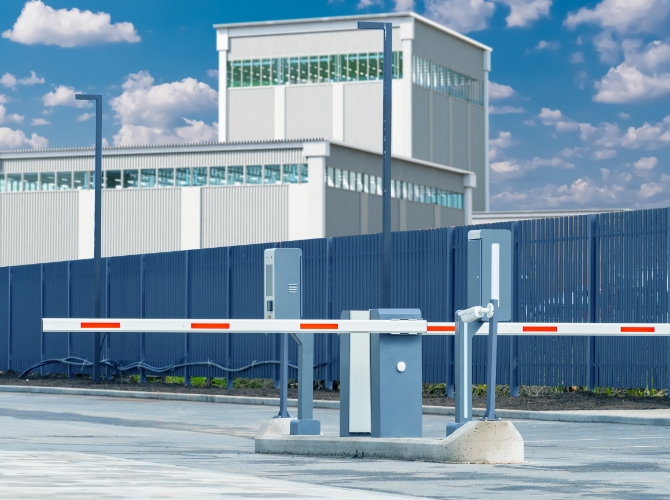
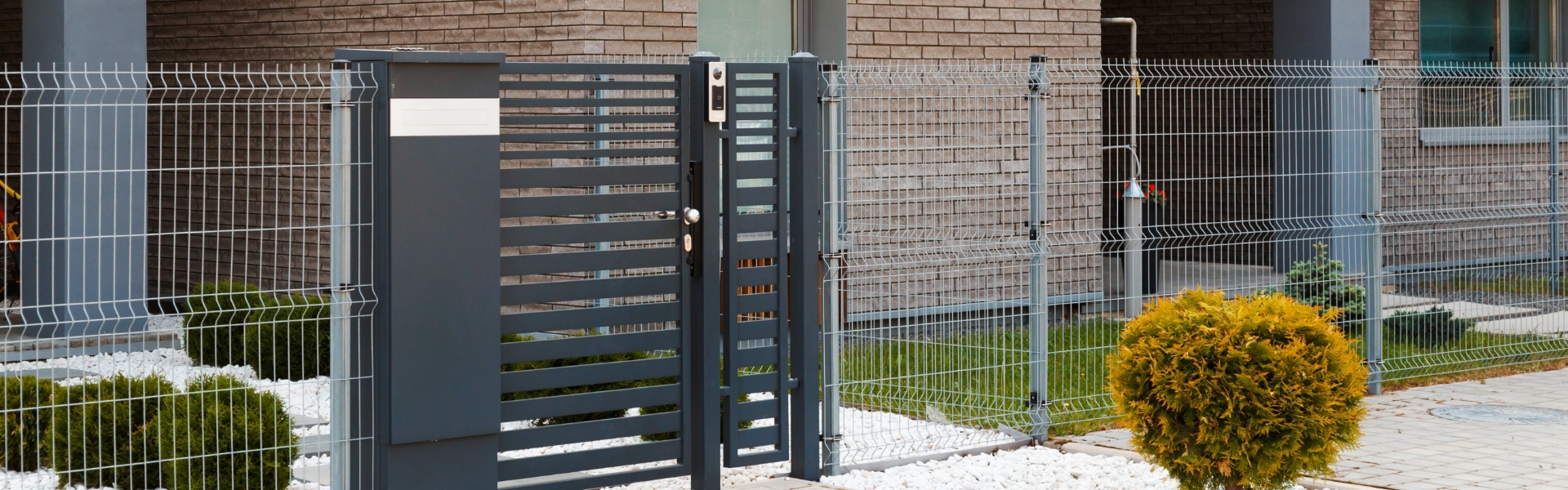
Getting out of a loaded stock truck to punch a code, then climbing back in, is the part nobody thinks about until they have watched a driver do it in the rain with a trailer hanging out on the road. Gate access systems in Ashburton earn their keep by removing that step. Remotes mounted in the cab, Bluetooth or mobile-phone entry, SIM-based release, keypad codes for everyone else, an access controller holding the user list, intercom-style entry, and free-exit and safety devices are the pieces. Group One New Zealand designs, manufactures and installs them, with crews travelling down from our Islington base in Christchurch, and Sydney Chappell started the New Zealand company in 2026. Phone us on 027 424 0600, 7am to 3pm Monday to Friday, and we will walk the entrance and put a written quote in front of you.
Entry for a vehicle whose driver cannot easily get out
Primary industries make up 27.0% of Ashburton District GDP, against 6.2% nationally, so the entrances around here take machinery, stock trucks and tankers rather than hatchbacks. That changes the specification in three ways.
- The credential goes in the cab. An in-vehicle remote, or mobile entry from the phone already in the driver’s hand, means the gate is moving before the truck has stopped rolling.
- The gate has to be triggered early enough. A slow-opening leaf and a fast-arriving truck do not mix, so the trigger point and the drive speed are matched to the vehicle rather than to the gate.
- Free-exit devices do the same job in reverse. Nobody should be reversing a trailer to reach an exit button.

Industries We Serve
We proudly serve clients across a range of sectors, including:

Hospitals

Aviation Surfaces

Schools

Sporting Surfaces

Factory Safety Lines

Body Corporate
Setback, and where the truck sits while it waits
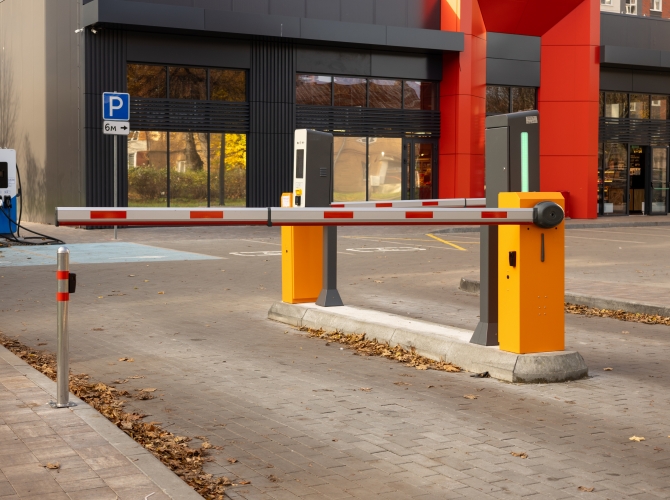
The awkward part of a rural-commercial entrance is usually not the gate. It is that there is nowhere to wait. A truck and trailer needs to be clear of the road while the gate finishes moving, and if the gate line sits close to the boundary, part of that vehicle stands in the carriageway.
That is a design decision, not a hardware one. Where the gate sits back far enough, everything gets easier: a longer approach, room to trigger early, and space for the leaf to swing without a driver reversing to clear it. Where the setback is not there, a sliding gate along the fence line usually buys back what a swing gate would take. Both get a tape measure on the visit.
Automating the gate on a 2000s property
The majority of Ashburton’s residential housing stock was built between 2000 and 2009, which puts a lot of gates in the age band where the hardware is worn but the gate itself is sound. Automating one is a large part of what we do, and we carry parts, hardware, access controllers and remote locks for it.
Three things decide it, and the first is weight. A leaf built for machinery is nearly always heavier than the owner guesses, and span multiplies what the hinge has to hold, so the drive is sized against both rather than against the opening width. The second is the hardware already there: hinges, posts, and on a slider the track and rollers, all of which get worked considerably harder once a motor is doing the opening. The third is geometry: the fall of the ground through the arc or the slide, measured rather than assumed, and room for the motor, controller and cabling well clear of where a truck and trailer actually track. Where the gate will not carry it, that comes out on the visit.
Power on a long driveway, and getting out when it fails
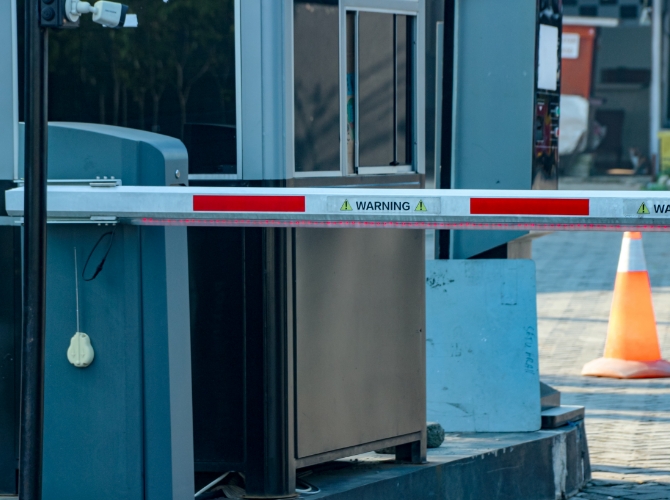
A rural entrance is often a long way from the switchboard, and trenching that distance is frequently the biggest single item in a quote. Solar with a battery removes it: panel and battery run the drive and the controller, and the running cost stays off your power bill. On a mains gate the battery is the outage cover instead. Either way, manual release means somebody can free the gate by hand and get a vehicle out when nothing else works, which matters more when that vehicle is a truck on a schedule.
SIM-based access needs coverage at the gate rather than the house or office, so we check the signal at the entrance. Canterbury weather does the rest of the work on the hardware: winter southerlies bring hard frosts to the plains and the strongest winds come from the north-west, so enclosures are sealed for it and a tall solid leaf gets a drive sized for wind as well as weight.
Ashburton District Council, boundary pegs and retaining walls
Ashburton District Council publishes more structural detail than most, which makes this straightforward.
- You can build a fence up to 2.5 m in height from natural ground level.
- Over 2 m, the council recommends talking to its Planning Department about whether a Resource Consent is required.
- A fence on top of a retaining wall needs a building consent where the retaining wall is more than 1.5 m high and the fence more than 2.5 m high.
- Where the fence and the retaining wall are joined, a Building Consent is required regardless.
- Find your boundary pegs, or have the boundary surveyed, before you build. Getting this wrong can mean moving the fence later.
Swimming pool fencing is separately regulated and enforced by the council, and sits outside any fence exemption. Boundary fences remain subject to the Fencing Act 1978, which governs what you owe a neighbour on a shared line. Confirm the current requirements with Ashburton District Council before the design is fixed.
Need Professional Line Marking or Safety Products?
Contact Group One today – reliable, accredited, and available 24/7.

Client Testimonials


5.0 Stars / 21 + reviews
The team from Group One were exceptional.
They arrived on time, did a fantastic job and made our childcare centre carpark look like new . Thankyou
Prompt and efficient service.
Very professional and experienced. Syd always answers his phone otherwise calls you back. Highly recommended.
Highly recommended.
Competitive price, quality work and even helped me put up the customer parking signs. Went above and beyond. Thanks very much, Syd and Blake.
Great job and no complaints!
Wonderful to work with and helping us get our line marking completed. Would definitely use again and refer to others.
Highly Recommend Group 1 Linemarking!
We recently hired Group 1 Linemarking for a few of our residential strata projects, and the results exceeded our expectations. The team was punctual, professional, and clearly experienced. The line marking was crisp, precise, and done exactly to spec. Communication throughout the process was smooth, and they were flexible with scheduling, which made things a lot easier on our end. If you need reliable, high-quality line marking services, I wouldn’t hesitate to recommend Group 1. Great job!
Working with Syd and his team is always a pleasure
The quality of work is always to a high standard. The Group One team is always professional, they apply a high standard for safety ensuring their SWMS is tailored for the job and their equipment is serviced and well maintained. I highly recommend Group One and if you use them you won’t be disappointed.
Keeping track of who has a remote
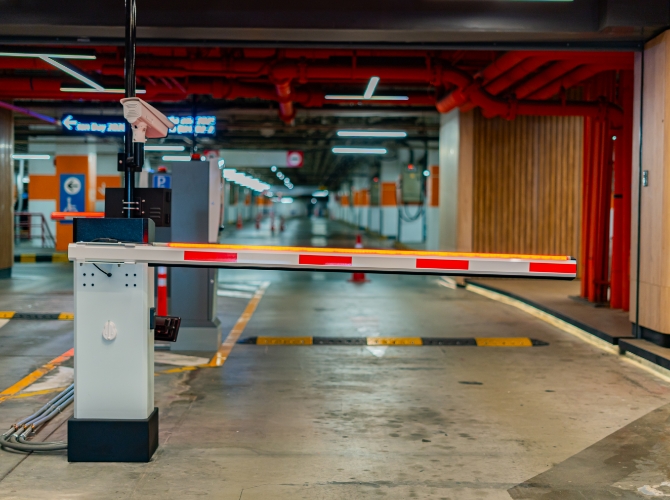
On a yard taking deliveries the credential list moves. Drivers change, carriers change, contractors finish. Issue credentials individually so any one can be withdrawn without reissuing a code to everybody else, and nominate the person who does it. A lost in-cab remote is then a two-minute job rather than a morning of phone calls. The mechanical side wants the same discipline: a drive cycling for every delivery, and hinges and rollers carrying a heavy leaf through frost and dust, are wearing parts. Book a servicing interval rather than waiting for the gate to stop with a truck in front of it.
Building it, and what the figure turns on
Three stages, and the first happens standing at your entrance: the opening measured, the setback paced against your longest vehicle, the gate that is already there looked over, and a list taken of who needs a credential. Manufacture follows, in timber, steel, aluminium or stainless steel, 100% New Zealand made and installed, with larger commercial motors where the leaf demands it. Installation finishes with whoever runs the place shown how to put a driver on the list and take one off. Warranty and after-sales service are part of the job rather than an extra: comprehensive on the workmanship, full on the service afterwards.
Pricing is on quote. On a mid-Canterbury entrance the first two items below usually decide most of it, and the rest fill in around them.
- Gate weight and span, because a leaf built to let a stock truck through is heavier than nearly anything else we quote
- Retrofit or new build, which on hardware of the 2000s is a genuine fork in the road
- The entry methods, and how many of them are running at once
- The number of credentials the controller has to carry
- Power at the entrance, and whether the answer is cabling or solar
- Corrosion protection on outdoor hardware
- Travel to the site





Group One New Zealand, and the crew that comes down
Sydney Chappell founded Group One New Zealand in 2026. It is a small team, and a travelling one, which is the point worth making on a page about setback and vehicle length: the people who put a tape over your entrance are the ones who come back to install what they specified. As the company puts it: “Although Group 1 Line Marking has just started here in New Zealand, as a group we have been operating in Australia for almost 25 years.” Full credentials and the whole range are on the page.
Measure the truck, not the gate
Most entrances get specified around the opening width and nothing else, which is how a gate ends up technically correct and practically useless. Before we come out, get the length of the longest vehicle that regularly uses that entrance, including the trailer. Everything on this page follows from that number.
Phone us on 027 424 0600 or email info@groupone.co.nz, 7am to 3pm Monday to Friday. Group One New Zealand, Unit 1, 37 Foremans Road, Islington, Christchurch 8042. NZBN 9429053752833.
Call 027 424 0600 to Request a Free Quote
Comprehensive Line Marking & Safety Services
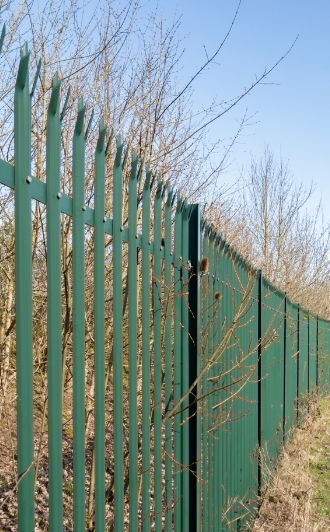
Safety and Palisade Fencing
Safety and palisade fencing is the steel perimeter that goes...
More Details
Areas We Serve
- Gate Access Systems Amberley
- Gate Access Systems Ashburton
- Gate Access Systems Christchurch
- Gate Access Systems Darfield
- Gate Access Systems Kaiapoi
- Gate Access Systems Methven
- Gate Access Systems Rangiora
- Gate Access Systems Rolleston
- Gate Access Systems Timaru
Other Services Available in Ashburton
- Automatic Gates Ashburton
- Bollards Ashburton
- Commercial Gates Ashburton
- Convex Safety Mirrors Ashburton
- Custom Gates Ashburton
- Driveway Gates Ashburton
- Industrial Gates Ashburton
- Line Marking Ashburton
- Safety and Palisade Fencing Ashburton
- Security Gates Ashburton
- Speed Humps Ashburton
- Wheel Stops Ashburton
Questions from mid-Canterbury yards
What does an automatic gate cost?
On quote, per entrance. Entry methods, the number of credentials, gate weight and span, retrofit or new build, power at the gate and travel all move the figure.
Can a driver open the gate without leaving the cab?
Yes, and it is usually the whole reason for the job. An in-vehicle remote or mobile entry from the driver’s phone does it, triggered far enough out that the gate is already moving.
Can our existing farm gate be automated?
Frequently. Weight, span, the state of the posts and hinges, and the ground clearance decide it, and all four are checked on site.
Our gate is close to the road. Is that a problem?
It can be, because a truck and trailer needs to be clear of the carriageway while the gate opens. A sliding gate, or moving the gate line back, usually solves it, and that gets worked out with a tape measure on the visit.
Get Started with Professional Line Marking Solutions

Get a Free Consultation
Speak with our experts to discuss your line marking requirements and get a tailored solution.
Schedule Now
Need Help Choosing?
Our team provides advice on the right line marking services and materials for your site.
Find Your Solution
Talk to an Expert
Have questions or want a quote? Connect with our experienced team today.
Contact Us