 Available 24 Hours a Day, 7 Days A Week
  027 424 0600
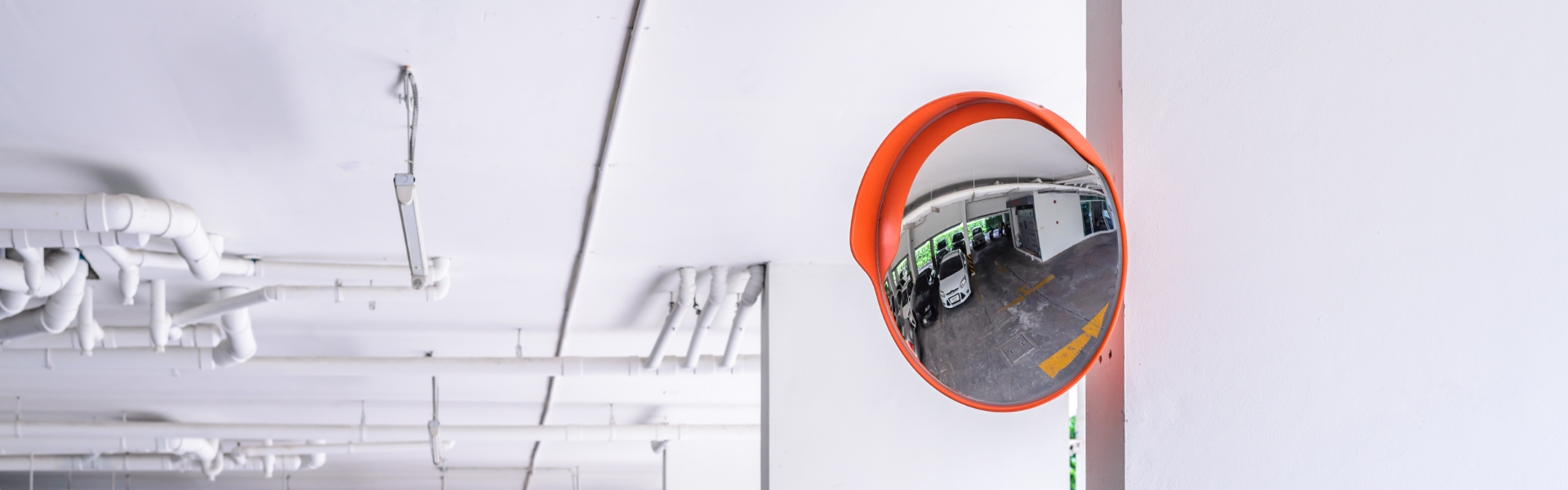
Convex Safety Mirrors

Available 24 Hours a Day, 7 Days A Week

100% Client Satisfaction

Full Range of Premier Services

High-Quality Products
Request a Free Quote
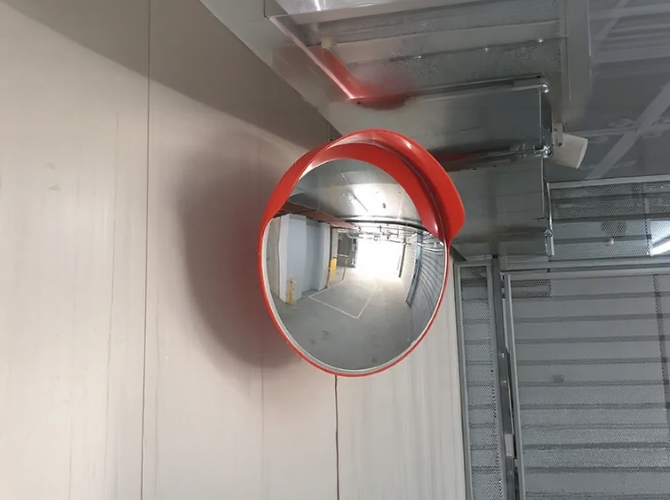
Convex safety mirrors are curved faces mounted above a blind corner so a driver can see what a wall, a fence or a parked truck is hiding. They go up at vehicle exits onto a footpath, at loading bays where trucks reverse across a shared lane, at car park corners and ramp turns, at warehouse aisle intersections where forklifts and people cross, and on yard gateways opening onto an open road. The buyers are property managers, warehouse and yard operators, retailers, body corporates, schools and lifestyle block owners, and most of them ring after a near miss rather than before one. Group One New Zealand supplies and installs them across Canterbury from a base in Islington, Christchurch, and Sydney Chappell founded the New Zealand company in 2026.
Start where the driver is sitting
Position is decided from inside a vehicle, not from the footpath. Sit where the driver sits, at the point on the approach where they commit, and look at what is hidden. A car, a van and a truck cab each see a different amount of that corner, and a forklift driver sits lower than any of them.
Most jobs settle into one of a handful of geometries.
- A vehicle exit where a fence or wall hides the footpath until the bonnet is across it
- A loading bay or roller door where a truck reverses over a shared access lane
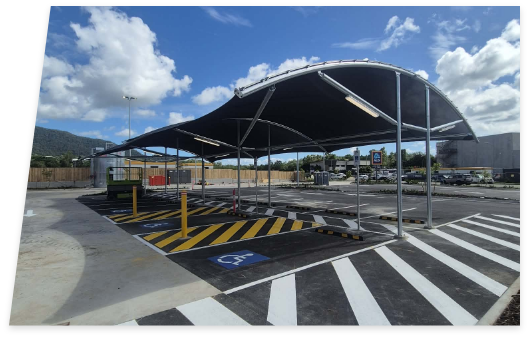
- A blind car park corner, or a ramp turn between levels of a parking building
- An internal aisle intersection where people and machines cross
- A shared driveway serving several tenancies
Each wants the mirror in a different place relative to the hazard, and a corner that only looks covered stops getting the second glance it used to get.
Call 027 424 0600 to Request a Free Quote
Viewing distance sets the diameter
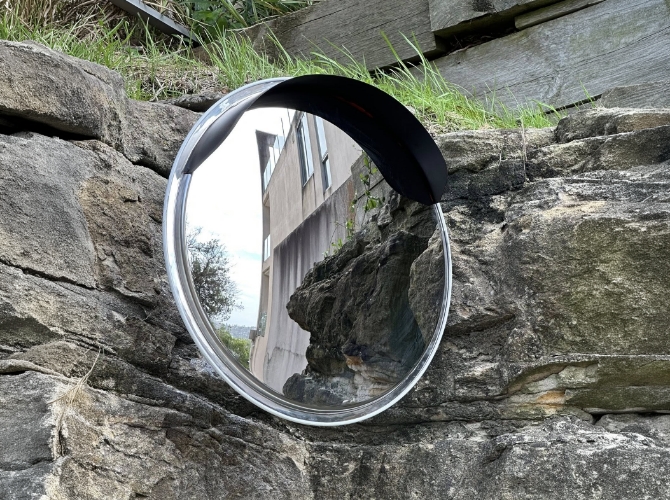
Face size follows how far back the driver is when the information is useful. A mirror read from three metres can be small. The same mirror at fifteen metres reduces an approaching vehicle to a speck. Bigger is not better in general, it is better at distance, and an oversized face on a tight indoor corner just collects knocks.
Height is the second number. Too low and a parked van blocks it. Too high and it hands back roof line and sky. On a street frontage it also sits clear of the footpath and out of easy reach.
Angle is the last, and the only one that cannot be worked out on paper. Tilt gets set on site with someone in a vehicle looking at the face while someone else adjusts the bracket.
Group One New Zealand builds the mount, not the mirror
Sydney Chappell founded Group One New Zealand in 2026, and the workshop and yard are at Unit 1, 37 Foremans Road, Islington, Christchurch 8042. Mirror faces are manufactured products and we specify and supply them. What comes out of our own workshop is everything that holds one up: the post where there is nothing suitable to fix to, the bracket where a stock mount will not reach, and fixings chosen for the wall or ground they go into.
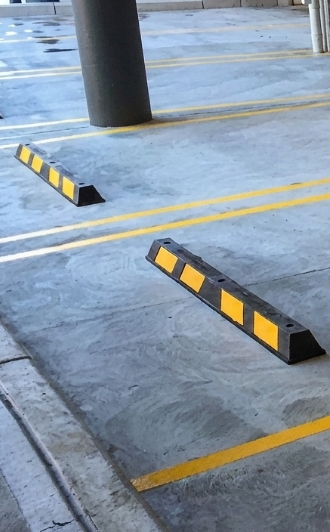
The same workshop turns out bollards and wheel stops, and the same crews do the line marking around them, so a car park gets sorted in one visit. We are a small team, so you know you’ll get the very best, everyone in it has a vast amount of industry experience behind them to apply to each project undertaken, and we guarantee all the work we do. In the company’s own words: “Although Group 1 Line Marking has just started here in New Zealand, as a group we have been operating in Australia for almost 25 years.”
Crews run from Amberley in the north to Timaru in the south, and west towards the Canterbury foothills. Phone us on 027 424 0600 or email info@groupone.co.nz, 7am to 3pm Monday to Friday.
Call 027 424 0600 to Request a Free Quote
Industries We Serve
We proudly serve clients across a range of sectors, including:

Hospitals

Aviation Surfaces

Schools

Sporting Surfaces

Factory Safety Lines

Body Corporate
Hoods, domes and what the face is made of
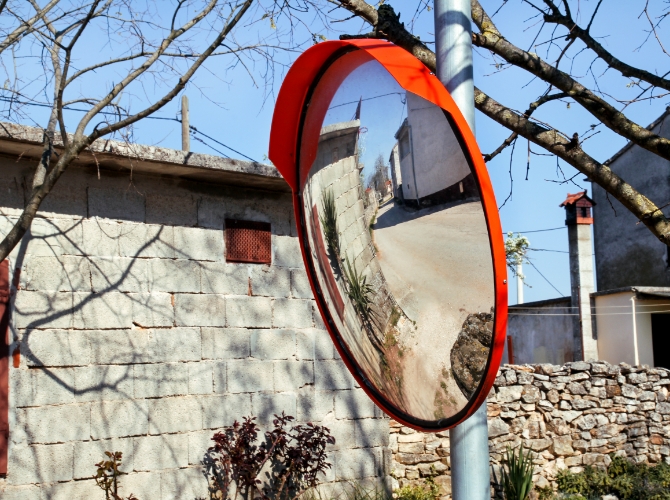
Format follows the junction. A round hooded mirror is the standard outdoor face, the hood keeping rain and low sun off it, and it suits an exit, gateway or yard corner where the view runs one way. A half dome covers a T-junction in an aisle. A full dome covers a four-way crossing indoors, and a long straight aisle often reads better in a rectangular face.
Material trades clarity against what happens when something hits it. Acrylic gives the sharpest image and belongs indoors or in sheltered positions. Polycarbonate absorbs a knock without shattering, which is what you want at forklift height. Stainless steel will not break at all, so it goes where contact is likely, at some cost to image sharpness.
Wind off the plains, salt off the coast
A mirror that moves is a mirror nobody trusts, and Canterbury gives the hardware two things to survive.
The first is wind. A large face on a post is a sail, and a nor’wester finds any slack in a bracket within a season, so posts get set for the face they carry rather than to a standard depth.
The second is salt. There is a lot of coast between Amberley and Timaru, and plain steel fixings near it weep rust down a wall long before they fail, then seize when someone tries to re-aim the face. Stainless or hot dip galvanised fixings, aluminium or stainless brackets and a protected post are what let you adjust a mount in three years rather than cut it off.
Call 027 424 0600 to Request a Free Quote
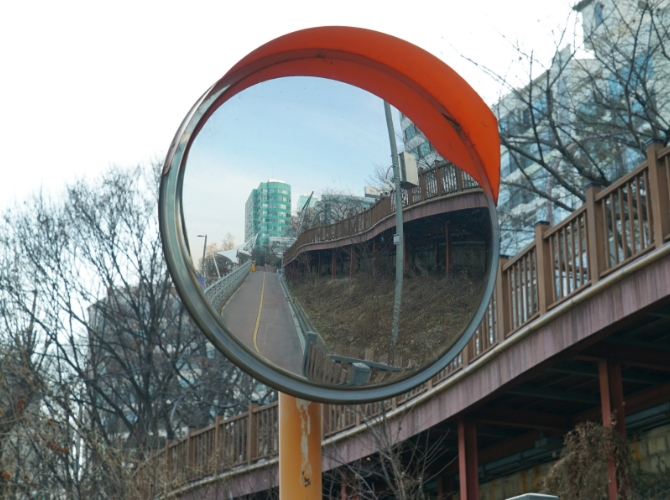
From the site look to a mirror that is aimed in
Design is a visit. We’ll come out and take a look at the site and discuss ideas with you about the best solution for your situation. That settles how many mirrors the site needs, where each goes, the diameter, the height and the fixing.
Supply and fabrication follow. Faces and standard mounts are ordered to that specification, and where there is nothing to fix to, or a stock bracket will not reach, the post or bracket is made in Islington and comes out with the crew.
Installation is the fixing, then the aiming. The mirror goes up, the tilt is set with someone sitting in a vehicle at the commit point, and the view is checked again before anyone packs up. On a site still trading, the work runs around the exit’s busiest hours.
What decides the price of a mirror job
Pricing is on quote, because the mirror is the smaller part of the job. What moves the number:
- How many mirrors the site actually needs, usually fewer than expected
- Diameter and face material
- Format: hooded, half dome, full dome or flat
- Whether it fixes to something already standing, or a post has to be set
- Access, including ramps, high mounts and anywhere traffic keeps moving past
- Travel within the service area, and any work outside trading hours
Ask for the aiming to be included in whatever you are quoted. It is the easiest step to leave out of a price, and the one that decides whether the mirror does anything.
Mirrors installed across Canterbury, town by town
Assessed, supplied and fixed by crews working out of Islington:
- Convex Safety Mirrors Amberley
- Convex Safety Mirrors Ashburton
- Convex Safety Mirrors Christchurch
- Convex Safety Mirrors Darfield
- Convex Safety Mirrors Kaiapoi
- Convex Safety Mirrors Methven
- Convex Safety Mirrors Rangiora
- Convex Safety Mirrors Rolleston
- Convex Safety Mirrors Timaru
Need Professional Line Marking or Safety Products?
Contact Group One today – reliable, accredited, and available 24/7.
Before you buy the mirror
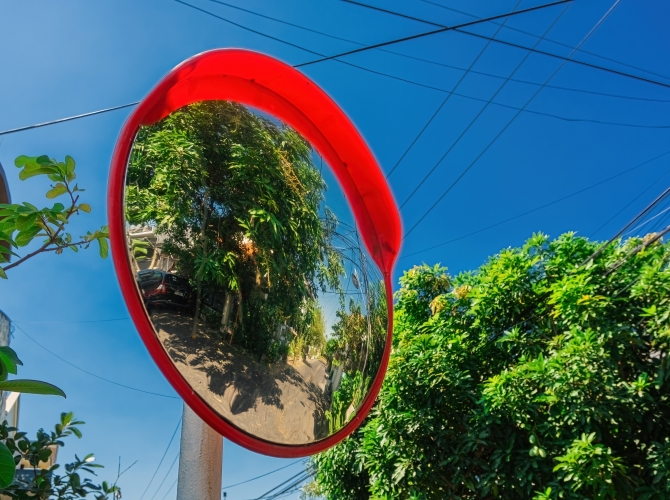
Worth knowing about the optics: a curved face widens the view by shrinking everything in it, so a vehicle in one looks smaller and further away than it is. It tells a driver something is coming, not how fast. A mirror earns its place where a driver already stops to check, and it stays second best to opening the sight line up where a fence, a hedge or a layout can be changed instead.
Phone us on 027 424 0600 or email info@groupone.co.nz, 7am to 3pm Monday to Friday. Group One New Zealand, Unit 1, 37 Foremans Road, Islington, Christchurch 8042. NZBN 9429053752833.
Call 027 424 0600 to Request a Free Quote

Client Testimonials


5.0 Stars / 21 + reviews
The team from Group One were exceptional.
They arrived on time, did a fantastic job and made our childcare centre carpark look like new . Thankyou
Prompt and efficient service.
Very professional and experienced. Syd always answers his phone otherwise calls you back. Highly recommended.
Highly recommended.
Competitive price, quality work and even helped me put up the customer parking signs. Went above and beyond. Thanks very much, Syd and Blake.
Great job and no complaints!
Wonderful to work with and helping us get our line marking completed. Would definitely use again and refer to others.
Highly Recommend Group 1 Linemarking!
We recently hired Group 1 Linemarking for a few of our residential strata projects, and the results exceeded our expectations. The team was punctual, professional, and clearly experienced. The line marking was crisp, precise, and done exactly to spec. Communication throughout the process was smooth, and they were flexible with scheduling, which made things a lot easier on our end. If you need reliable, high-quality line marking services, I wouldn’t hesitate to recommend Group 1. Great job!
Working with Syd and his team is always a pleasure
The quality of work is always to a high standard. The Group One team is always professional, they apply a high standard for safety ensuring their SWMS is tailored for the job and their equipment is serviced and well maintained. I highly recommend Group One and if you use them you won't be disappointed.
What people ask before ordering one
Can we just buy one from a hardware store and put it up ourselves?
For a simple indoor corner you can reach, and stand back from to check the view yourself, that is a sensible thing to do. It stops being sensible at an exit onto a public footpath, at a mount above head height, or anywhere a post goes into the ground. We also fit and aim mirrors people have already bought.
Does it need council permission?
On your own building, inside your own boundary, usually not. It changes when the mount is part of a boundary structure, or when the mirror has to look into the road corridor. Some councils no longer approve mirrors on public roads at all, so confirm the position with yours before anything is ordered.
What happens when it gets knocked?
Faces get clipped by truck mirrors and turned by wind. The mount goes in so the face can be re-aimed rather than replaced, and we come back and reset one.
Comprehensive Line Marking & Safety Services
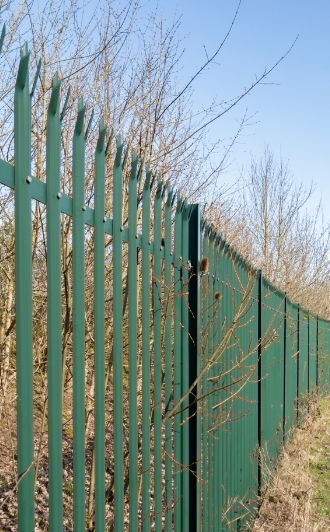
Safety and Palisade Fencing
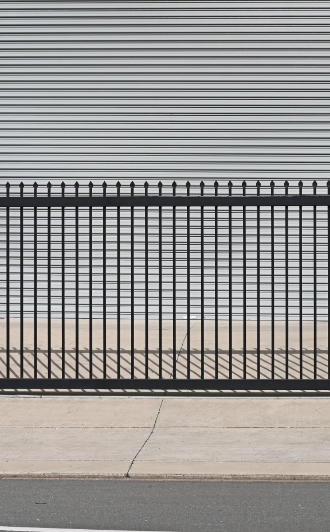
Safety and palisade fencing is the steel perimeter that goes...
More Details
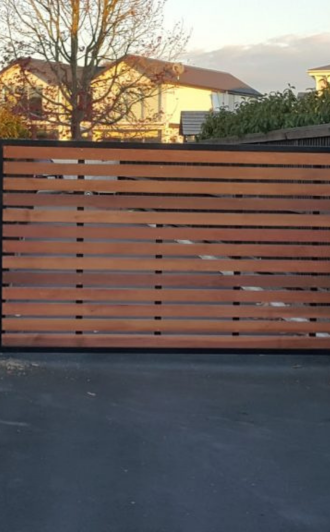
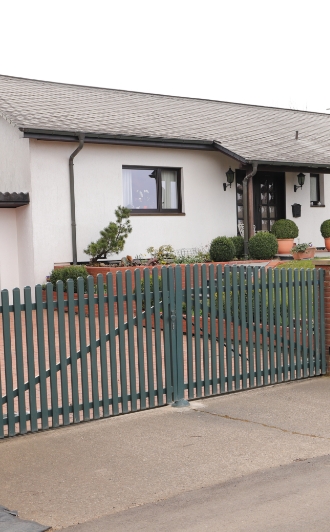
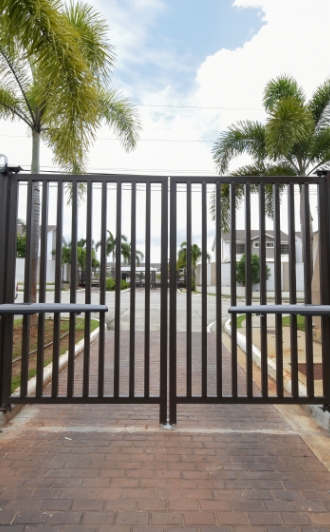
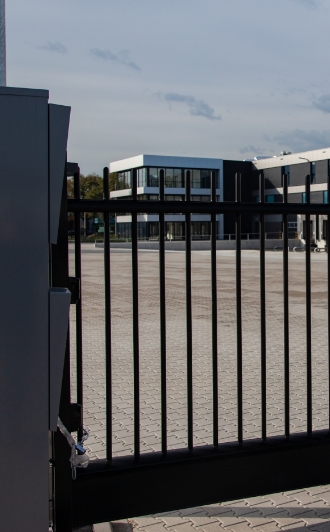
Sliding and Electric Gates
Group One provides professional sliding and electric gate solutions...
More Details
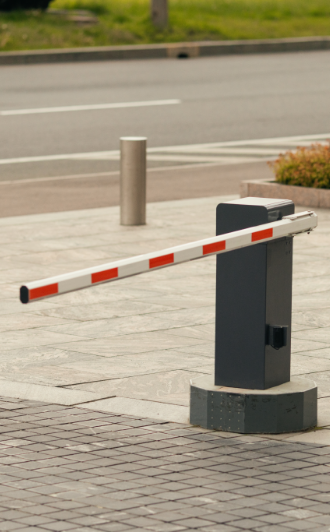
Barrier Arms & Boom Gates
Control vehicle access with reliable barrier arm and boom gate...
More Details
Get Started with Professional Line Marking Solutions

Get a Free Consultation
Speak with our experts to discuss your line marking requirements and get a tailored solution.
Schedule Now
Need Help Choosing?
Our team provides advice on the right line marking services and materials for your site.
Find Your Solution
Talk to an Expert
Have questions or want a quote? Connect with our experienced team today.
Contact Us