 Available 24 Hours a Day, 7 Days A Week
  027 424 0600
Gate Access Systems Amberley

Available 24 Hours a Day, 7 Days A Week

100% Client Satisfaction

Full Range of Premier Services

High-Quality Products
Get A Free Quote
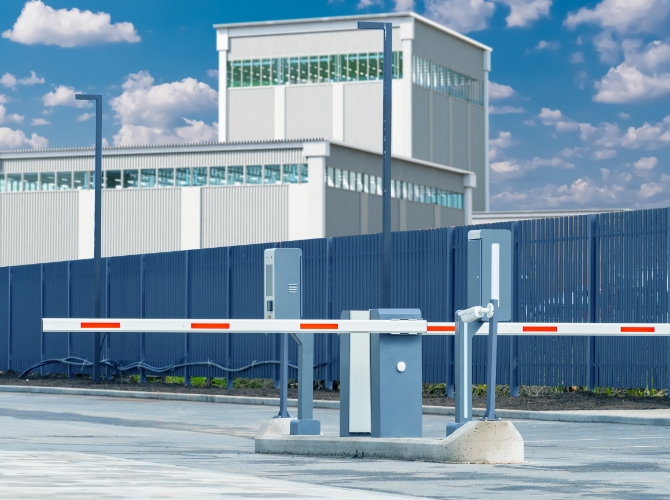
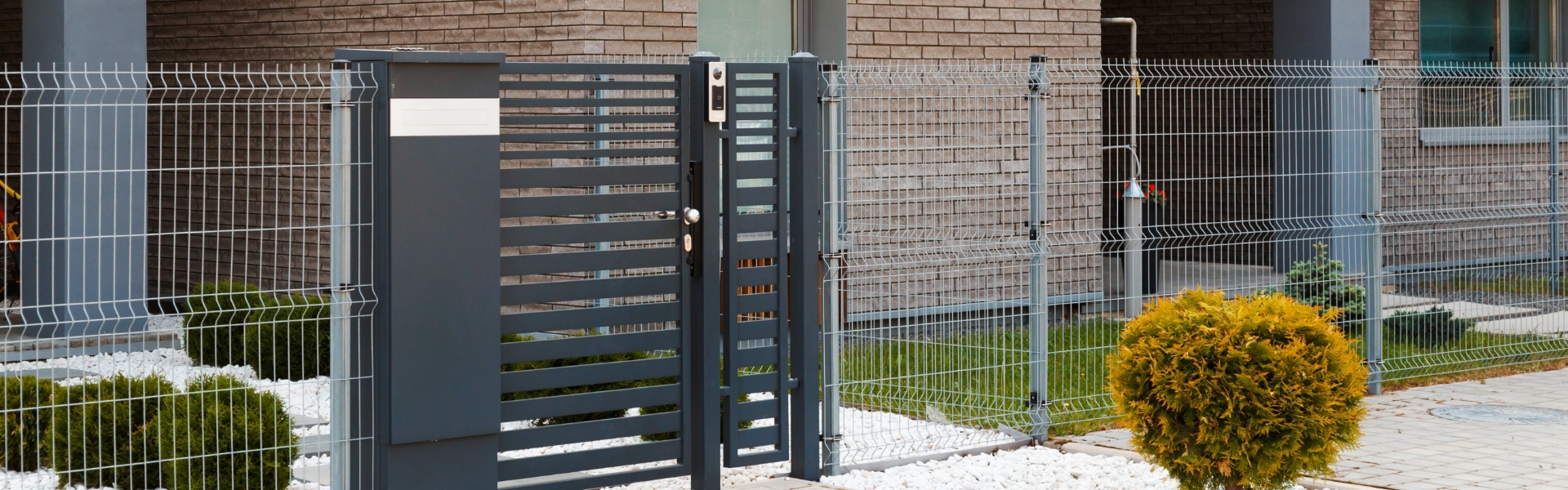
A gate is only as good as the person standing in front of it can make it open, and on a wet evening that person is often a district nurse, a grandchild or a courier who has never been up your drive. Gate access systems in Amberley are best chosen with that in mind. Keypad or PIN codes, remote transmitters, Bluetooth and mobile-phone entry, SIM-based release, an access controller holding the user list, intercom-style entry, and free-exit and safety devices are the options, and the right combination depends on what is being controlled and who has to get through. Group One New Zealand designs, manufactures and installs them, with crews running up State Highway 1 from our Islington base in Christchurch, and Sydney Chappell started the New Zealand company in 2026. Phone us on 027 424 0600, 7am to 3pm Monday to Friday, and we will look at the entrance and put a written quote in front of you.
Entry that stays easy to use
Amberley in North Canterbury has a usually resident population of 2,520 and a median age of 52.7, and a 250-home retirement village is being developed on 37 acres of rural-residential land in the centre of town. That shapes the brief in a way a subdivision full of young families does not.
The practical rules that follow:
- A keypad with real buttons and a code you can say aloud beats an app-only system in almost every case. It works on a flat phone and it works for a visitor who will be there once.
- Remotes suit residents. One per vehicle, clipped where it lives, no screen to unlock.
- Intercom-style controlled entry earns its place where somebody inside wants to decide, rather than hand out another credential.
- Mobile and SIM-based release are worth having as the fallback, so a family member somewhere else can open the gate when something has gone wrong.
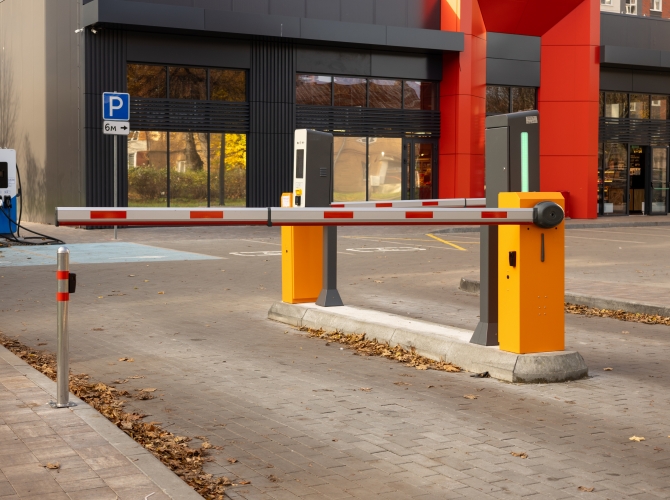
Free-exit and safety devices are not optional on a shared residential entrance. A vehicle inside should always be able to leave, and the gate should stop for anything in its path.
Call 027 424 0600 to Request a Free Quote
Industries We Serve
We proudly serve clients across a range of sectors, including:

Hospitals

Aviation Surfaces

Schools

Sporting Surfaces

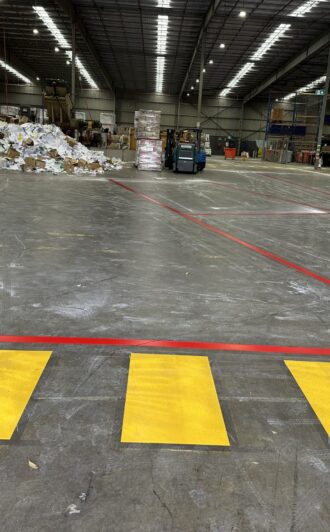
Factory Safety Lines

Body Corporate

Carers, family and deliveries
A controlled entrance to a residential community has a particular quality: most people coming through it do not live there. Carers, district nurses, family, gardeners, couriers and the supermarket van all arrive on their own schedule, and between them they make a longer credential list than the residents.
Provision generously and revoke individually. That means a controller with more capacity than today’s headcount, credentials issued per person or per service rather than one shared code, and a nominated person who adds and removes them. When a remote goes missing, that person cancels it and issues another, and nobody else notices. Servicing belongs in the same plan, because hinges, rollers and a drive cycling many times a day are wearing parts.
Farm and lifestyle gateways on the other side of town
Amberley is also the service centre for surrounding dairy, sheep, arable and grape-growing enterprises, and those entrances are a different job with the same hardware. Ownership out there tends to be settled and long-standing, which means the gate is usually already there.
Automating an existing gate is a large part of what we do, and we carry parts, hardware, access controllers and remote locks for it. On a long-settled property the posts and hinges are where the assessment starts, because a gate that has been pushed open by hand for twenty years has been carrying a fraction of the work a motor gives it, and a leaning post will not hold a powered leaf square. From there it is the weight and span of the leaf against the drive that would move it, the fall of the ground through the swing or slide, workable on a slope with safety devices and alternative opening methods once someone has measured it, and a spot for the motor and controller clear of where a vehicle stops. And if it will not take automation, nobody dresses that up.
Power at the gate, and the way out
Mains at the entrance keeps things simple. Where there is no cable, solar with a battery runs the drive and the controller without a trench and keeps the running cost off the power bill. The battery also carries the gate through an outage, and manual release means somebody can free it by hand and get a vehicle out when everything else has stopped. On a property where someone may need to leave in a hurry, that is the part worth demonstrating on handover day.
NIWA groups the coastal strip north of Amberley as its own Canterbury climate zone, with relatively mild winters and rather high annual rainfall peaking in winter, while the region’s strongest winds come from the north-west. Wet and windy is the working assumption: enclosures sealed for it, and a drive sized for wind load on a tall solid leaf rather than weight alone. SIM-based access needs coverage at the gate rather than the house, so we check the signal at the entrance.
Consents in Hurunui: the honest position
Amberley is the seat of Hurunui District Council. We could not find an Amberley- or Hurunui-specific fence or gate height rule published, and rather than borrow a neighbouring district’s numbers, here is the national position instead.
MBIE’s Building Performance guidance states that a building consent is not required for fences or hoardings up to 2.5 metres high. District plans made under the Resource Management Act may still require a resource consent for fences over about 2 metres, and a gate on the road boundary is the case most likely to meet one of those rules. Swimming pool fences sit outside the exemption and do require a building consent. Boundary fences remain subject to the Fencing Act 1978 regardless of height.
Because the local height limits are the part we cannot confirm from here, ring Hurunui District Council for your address before the design is fixed, and we will build to what they tell you.
Need Professional Line Marking or Safety Products?
Contact Group One today – reliable, accredited, and available 24/7.

Client Testimonials


5.0 Stars / 21 + reviews
The team from Group One were exceptional.
They arrived on time, did a fantastic job and made our childcare centre carpark look like new . Thankyou
Prompt and efficient service.
Very professional and experienced. Syd always answers his phone otherwise calls you back. Highly recommended.
Highly recommended.
Competitive price, quality work and even helped me put up the customer parking signs. Went above and beyond. Thanks very much, Syd and Blake.
Great job and no complaints!
Wonderful to work with and helping us get our line marking completed. Would definitely use again and refer to others.
Highly Recommend Group 1 Linemarking!
We recently hired Group 1 Linemarking for a few of our residential strata projects, and the results exceeded our expectations. The team was punctual, professional, and clearly experienced. The line marking was crisp, precise, and done exactly to spec. Communication throughout the process was smooth, and they were flexible with scheduling, which made things a lot easier on our end. If you need reliable, high-quality line marking services, I wouldn’t hesitate to recommend Group 1. Great job!
Working with Syd and his team is always a pleasure
The quality of work is always to a high standard. The Group One team is always professional, they apply a high standard for safety ensuring their SWMS is tailored for the job and their equipment is serviced and well maintained. I highly recommend Group One and if you use them you won’t be disappointed.
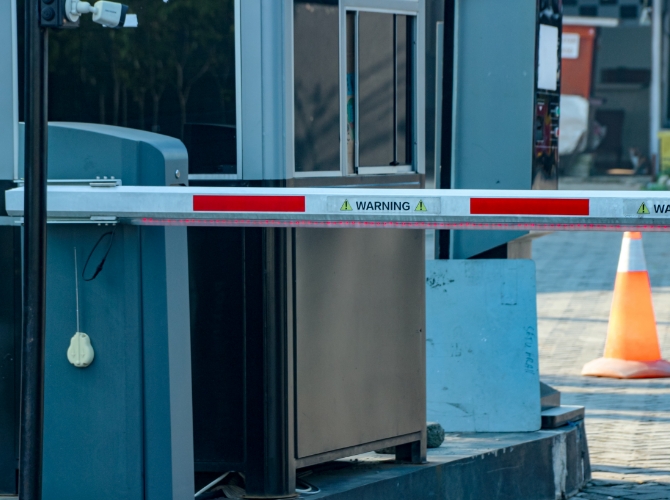
From the walk-round to the written quote
Pricing is on quote, and on a Hurunui job the credential count usually leads it. An entrance with carers, family, a gardener and a delivery round behind it wants a controller with headroom that a two-car driveway never needs, and that sizing decision lands in the figure before anything else does. Behind it sit the entry methods and how many of them run side by side, the weight and span of the leaf, whether we are automating a gate already standing or building one from nothing, what power exists at the entrance and whether cabling or solar answers it, the protection specified on outdoor hardware, and the run up State Highway 1.
The work itself is three stages. Design happens at your entrance, with the opening measured, the existing gate assessed and a count taken of everyone who needs a credential, visitors included. Manufacture is ours, in timber, steel, aluminium or stainless steel, and every gate is 100% New Zealand made and installed, with larger commercial motors where a heavy leaf calls for one. Installation ends with somebody standing at the keypad being shown how to put a user on and take one off, in person rather than in a manual. A comprehensive warranty and full after-sales service sit behind all of it.
Group One New Zealand, in plain terms
In keeping with a page about entry anyone can work out: Group One New Zealand is a New Zealand company, founded in 2026 by Sydney Chappell, and small enough that whoever walks your entrance is the person specifying the controller. The longer history is Australian, and the company puts it that way itself: “Although Group 1 Line Marking has just started here in New Zealand, as a group we have been operating in Australia for almost 25 years.” The rest of our credentials, and the full range, are on the page.
Call 027 424 0600 to Request a Free Quote




Start with the list of people, not the gate
Before anything else, write down everyone who will need through that entrance in a normal month. Residents, family, carers, cleaners, the courier, the contractor who comes twice a year. That list sizes the controller and settles the entry methods, and it is always longer than people guess when they start by thinking about gates.
Phone us on 027 424 0600 or email info@groupone.co.nz, 7am to 3pm Monday to Friday. Group One New Zealand, Unit 1, 37 Foremans Road, Islington, Christchurch 8042. NZBN 9429053752833.
Call 027 424 0600 to Request a Free Quote
Comprehensive Line Marking & Safety Services
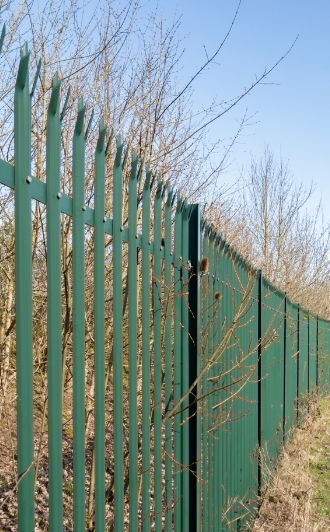
Safety and Palisade Fencing
Safety and palisade fencing is the steel perimeter that goes...
More Details
Areas We Serve
- Gate Access Systems Amberley
- Gate Access Systems Ashburton
- Gate Access Systems Christchurch
- Gate Access Systems Darfield
- Gate Access Systems Kaiapoi
- Gate Access Systems Methven
- Gate Access Systems Rangiora
- Gate Access Systems Rolleston
- Gate Access Systems Timaru
Other Services Available in Amberley
What Amberley people ask
What is a gate access control system?
The controller and the credentials rather than the gate itself. It holds a list of who may open the entrance, in whatever form suits them, and lets you add or remove somebody without changing anything physical.
What does a driveway gate cost in New Zealand?
On quote. The entry methods, the number of credentials, the weight and span of the gate, retrofit versus new build, and the power at the entrance all move it, so the visit comes before the figure.
Is an app-controlled gate a good idea for an older household?
As an extra, yes. As the only way in, rarely. A keypad code and a remote will always work, and the phone-based options sit alongside them rather than replacing them.
Can carers and family all have their own way in?
Yes, and that is the better setup. Individual credentials mean one can be withdrawn when an arrangement ends without changing anything for everyone else.
Get Started with Professional Line Marking Solutions

Get a Free Consultation
Speak with our experts to discuss your line marking requirements and get a tailored solution.
Schedule Now
Need Help Choosing?
Our team provides advice on the right line marking services and materials for your site.
Find Your Solution
Talk to an Expert
Have questions or want a quote? Connect with our experienced team today.
Contact Us