 Available 24 Hours a Day, 7 Days A Week
  027 424 0600

Speed Humps Ashburton

Available 24 Hours a Day, 7 Days A Week

100% Client Satisfaction

Full Range of Premier Services

High-Quality Products
Get A Free Quote

There are two ways to slow a vehicle down, and speed humps in Ashburton are only one of them. A hump is a raised profile across a lane, formed into the surface or bolted onto it, built so that crossing at speed is uncomfortable. The alternative is a lower posted limit, which costs nothing to maintain and applies along the whole road rather than at one point. On any public street the choice between them is Ashburton District Council’s, made on safety grounds. On land you own or manage, it is yours, and no approval is involved. Group One New Zealand designs, manufactures and installs traffic calming, with crews travelling down from Foremans Road in Islington, Christchurch. Sydney Chappell founded the New Zealand company in 2026.
How the council picks its tool
Ashburton District Council’s road safety programme uses speed humps, raised tables and reduced speed limits where lower speeds improve safety, particularly near schools and in residential subdivisions, and it has introduced 30 km/h school speed zones across several areas. It has also run speed limit reviews covering parts of the town, including Ashburton West.
That is a useful thing to see written down, because it shows the decision is not “hump or nothing”. A limit change, a raised table at a crossing point, a hump on an approach and a narrowing all do different work, and an authority picks between them on the evidence for that road. Your route for a public street is a request to Ashburton District Council, weighed on traffic and safety data.
Call 027 424 0600 to Request a Free Quote
Industries We Serve
We proudly serve clients across a range of sectors, including:

Hospitals

Aviation Surfaces

Schools

Sporting Surfaces

Factory Safety Lines

Body Corporate
Melcombe Street, and why the profile is the argument
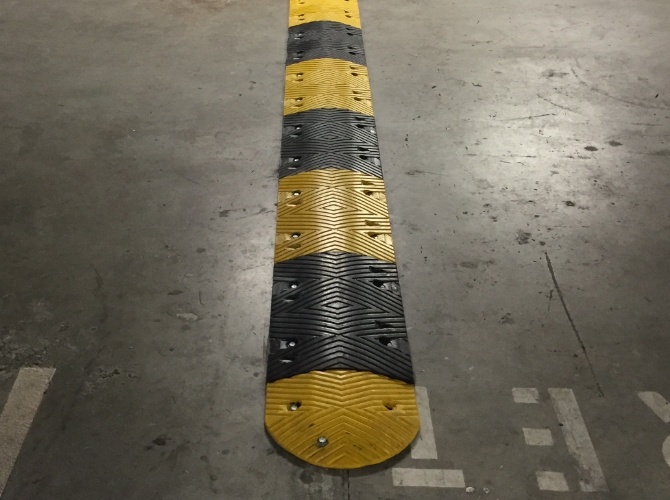
In February 2024 new speed bumps between the road-narrowing bulges on Melcombe Street surprised motorists with how steep they were, and got a public airing as dangerous rather than useful. Whatever your view of that particular installation, the lesson travels: a device that is too abrupt for the traffic crossing it stops being a safety measure and starts being a hazard, and drivers judge it in the first two seconds.
It is exactly the same on a private site. Profile, approach visibility and marking decide whether people accept a hump or complain about it, and those three things are chosen, not inherited.
Council road, or your own yard?
Everything past your gate is the council’s business. On a public Ashburton street the treatment, the timing and the evidence belong to Ashburton District Council, and your part is the request. Everything inside the gate belongs to you. A farm yard, a grain or stock handling area, a rural-commercial forecourt, a factory approach, a school ground, a car park behind a shop: the owner decides whether calming goes in, where it sits and what it is made of. If the approach is already controlled by , that is worth saying early, since traffic which stops at a gate builds its speed further inside the yard. No consent and no waiting list, just a decision and a date.
Matching the device to the traffic
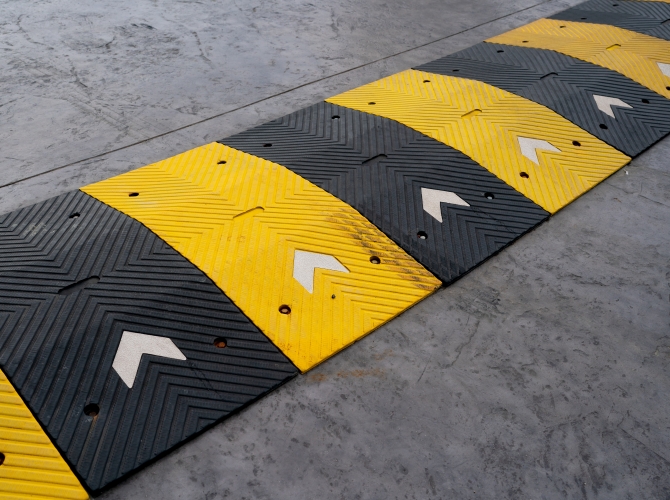
- Full-width humps: yard approaches and car park aisles where every vehicle should slow.
- Speed cushions: routes where trucks and tractors need to straddle rather than take the full lift.
- Raised tables and raised pedestrian crossings: where staff or customers cross on foot.
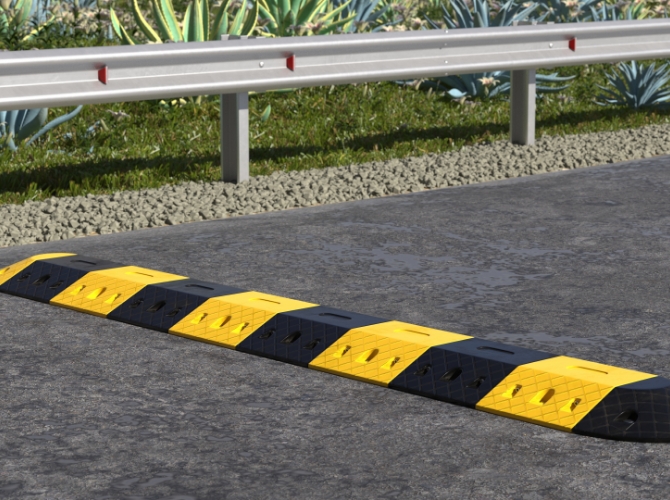
- Modular rubber and bolt-down units: fixed onto sound asphalt or concrete without reforming it.
- Deployable and temporary units: harvest traffic, works, events and layouts that change.
- Formed asphalt or concrete profiles: permanent, laid into the surface itself.
A bolt-down unit needs something solid to bolt to. On loose metal or a gravel yard it will work its way loose, so the honest answer there is usually a sealed apron first, or a different control altogether.
Sites across a farming district
Primary industries generate 27.0% of Ashburton district GDP against 6.2% nationally, so the sites that need calming here are working ones: farm supply yards where customers and forklifts share the same concrete, stock and grain handling areas, processing plant approaches, transport depots and rural-commercial forecourts.
The weather does its bit too. North-west gales come off the plains hard, and winter southerlies bring frosts that leave a surface cold and damp well into the morning. Both shift when we can bond, seal and mark, which is why an install date here comes with a sensible time of day attached rather than a promise made from a desk.
Need Professional Line Marking or Safety Products?
Contact Group One today – reliable, accredited, and available 24/7.

Client Testimonials


5.0 Stars / 21 + reviews
The team from Group One were exceptional.
They arrived on time, did a fantastic job and made our childcare centre carpark look like new . Thankyou
Prompt and efficient service.
Very professional and experienced. Syd always answers his phone otherwise calls you back. Highly recommended.
Highly recommended.
Competitive price, quality work and even helped me put up the customer parking signs. Went above and beyond. Thanks very much, Syd and Blake.
Great job and no complaints!
Wonderful to work with and helping us get our line marking completed. Would definitely use again and refer to others.
Highly Recommend Group 1 Linemarking!
We recently hired Group 1 Linemarking for a few of our residential strata projects, and the results exceeded our expectations. The team was punctual, professional, and clearly experienced. The line marking was crisp, precise, and done exactly to spec. Communication throughout the process was smooth, and they were flexible with scheduling, which made things a lot easier on our end. If you need reliable, high-quality line marking services, I wouldn’t hesitate to recommend Group 1. Great job!
Working with Syd and his team is always a pleasure
The quality of work is always to a high standard. The Group One team is always professional, they apply a high standard for safety ensuring their SWMS is tailored for the job and their equipment is serviced and well maintained. I highly recommend Group One and if you use them you won’t be disappointed.

What the quote depends on, and how the job runs
Pricing is on quote. The number moves on the device and the quantity, the surface it fixes into or is formed onto, access and when the area can be handed over, traffic volumes and vehicle types, drainage, the marking and signage around it, and anything that has to be reinstated afterwards.
The work runs as design, manufacture and installation. Design is a site visit and a measure-up, standing where the speed builds. Manufacture is the unit or profile for that layout. Installation covers fixing or forming, making the surface good and marking the hump so drivers read it early.
Group One New Zealand, briefly
Founded in 2026 by Sydney Chappell, small team, crews travelling down from Islington in Christchurch. That is most of it. Everything happening on Ashburton’s public roads is Ashburton District Council’s programme, not ours: the 30 km/h school zones, and the humps and raised tables it has used near subdivisions. Our part starts at the gate of a farm-supply yard, a processing approach or a rural-commercial forecourt, where the owner decides. Its longer record is an Australian one, stated as such: “Although Group 1 Line Marking has just started here in New Zealand, as a group we have been operating in Australia for almost 25 years.” The page has the devices.
Call 027 424 0600 to Request a Free Quote




We will tell you if you do not need one
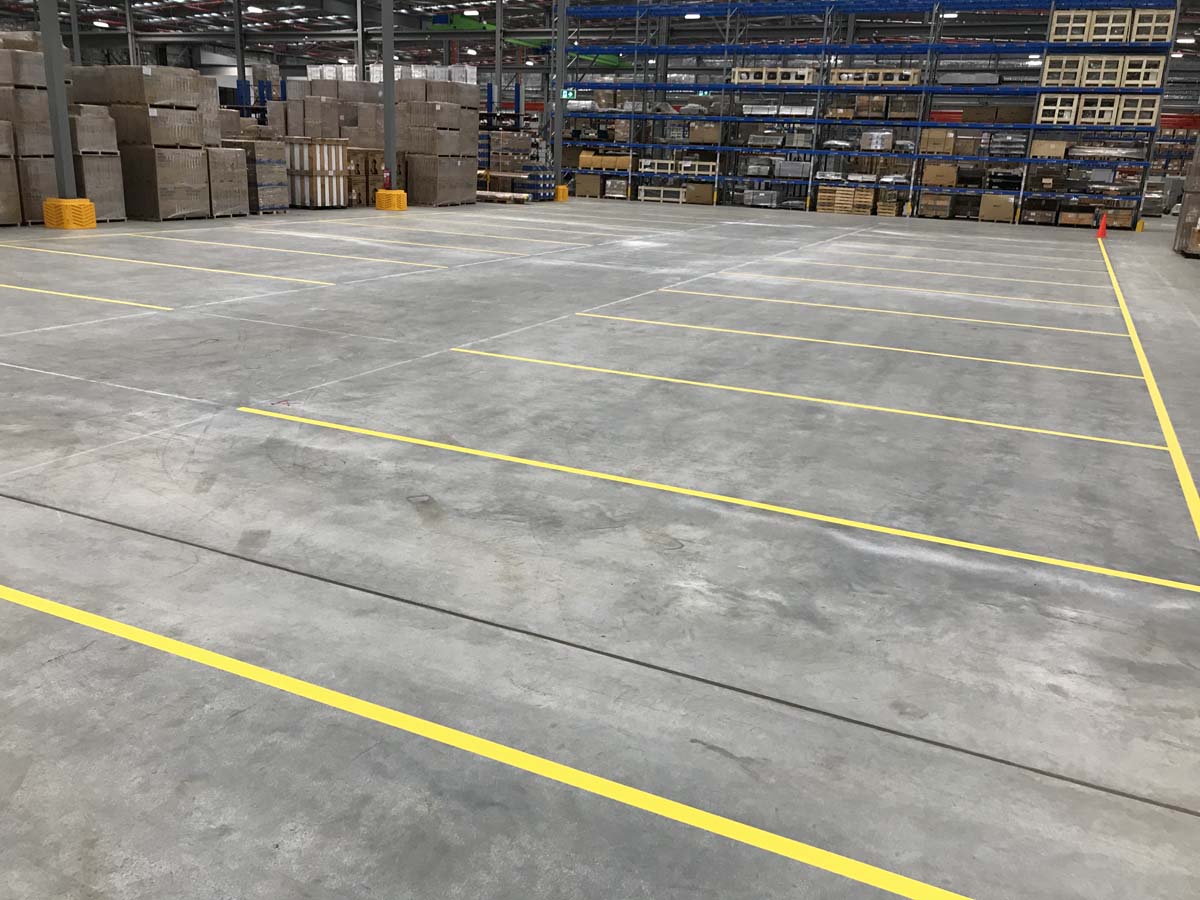
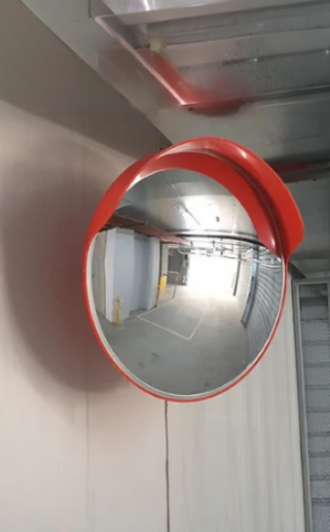
Some sites do not need a hump. A blind corner sometimes wants a mirror, a shortcut through a car park sometimes wants a bollard or a change to the entry, and a yard with one fast driver has a management problem rather than a construction one. We would rather say that on site than sell you six units and lose the next job. Where a hump is the right answer, you will get a straight recommendation on the device, the placement and the profile.
Phone us on 027 424 0600 or email info@groupone.co.nz, 7am to 3pm Monday to Friday. Group One New Zealand, Unit 1, 37 Foremans Road, Islington, Christchurch 8042. NZBN 9429053752833.
Call 027 424 0600 to Request a Free Quote
Comprehensive Line Marking & Safety Services
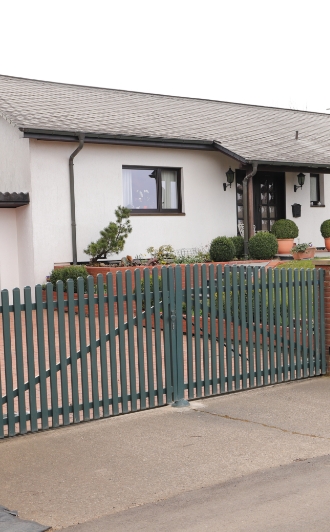
Safety and Palisade Fencing
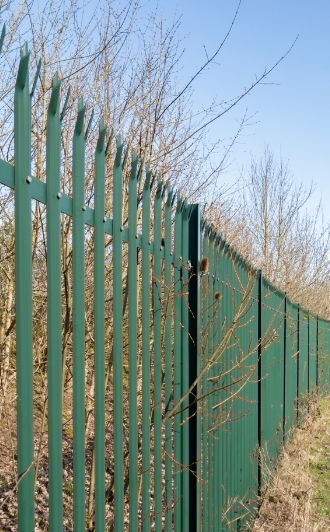
Safety and palisade fencing is the steel perimeter that goes...
More Details
Areas We Serve
- Speed Humps Amberley
- Speed Humps Ashburton
- Speed Humps Christchurch
- Speed Humps Darfield
- Speed Humps Kaiapoi
- Speed Humps Methven
- Speed Humps Rangiora
- Speed Humps Rolleston
- Speed Humps Timaru
Other Services Available in Ashburton
- Automatic Gates Ashburton
- Bollards Ashburton
- Commercial Gates Ashburton
- Convex Safety Mirrors Ashburton
- Custom Gates Ashburton
- Driveway Gates Ashburton
- Gate Access Systems Ashburton
- Industrial Gates Ashburton
- Line Marking Ashburton
- Safety and Palisade Fencing Ashburton
- Security Gates Ashburton
- Wheel Stops Ashburton
What mid-Canterbury sites ask
What is the height of speed humps in New Zealand?
We will not quote you a figure for a public road, because that belongs to the road controlling authority and the device standard it applies. Ask Ashburton District Council for a street. On your own site the profile is chosen for the vehicles crossing it and specified as part of the design.
Can I just buy one and drop it in myself?
You can buy units off the shelf, and plenty of people do. The difference shows up in the placement, the fixings and the marking, which is where a supplied-and-installed job earns its keep.
Will a hump work on a gravel yard?
Not fixed straight down, no. Loose metal moves and the unit follows it. Seal a pad for it, or look at a different way of controlling the speed.
What are speed humps called in New Zealand?
Judder bars, mostly, and the words bump and hump get used for the same thing.
Do we need a hump if the road already has a 30 km/h school zone?
Often not. A limit that people actually keep to does the job on its own, and a hump earns its place where the speed is still there despite the sign.
How is one installed?
On a sound sealed surface, it is set out, drilled and fixed, then marked. A formed profile is built into the surface and needs curing time before traffic uses it.
Get Started with Professional Line Marking Solutions

Get a Free Consultation
Speak with our experts to discuss your line marking requirements and get a tailored solution.
Schedule Now
Need Help Choosing?
Our team provides advice on the right line marking services and materials for your site.
Find Your Solution
Talk to an Expert
Have questions or want a quote? Connect with our experienced team today.
Contact Us