 Available 24 Hours a Day, 7 Days A Week
  027 424 0600
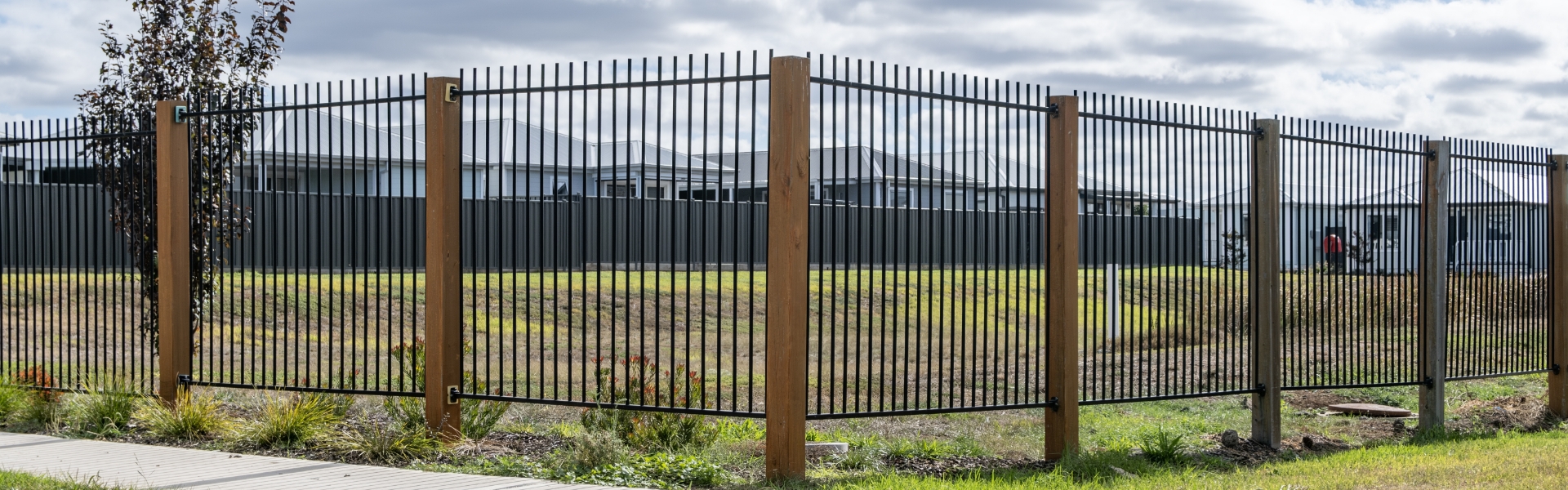
Safety and Palisade Fencing Amberley

Available 24 Hours a Day, 7 Days A Week

100% Client Satisfaction

Full Range of Premier Services

High-Quality Products
Get A Free Quote
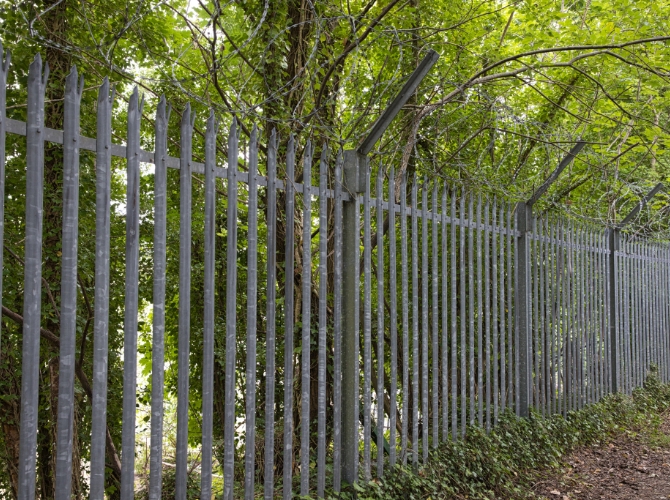
Ask how high you can build a fence in Amberley and the honest answer starts with what nobody publishes. There is no Hurunui-specific fence or gate height rule we can point you at, so the position that applies is the national one: no building consent for fences or hoardings up to 2.5 metres, with district plans able to require a resource consent above about 2 metres. Group One New Zealand designs, manufactures and installs safety and palisade fencing across Amberley, with crews travelling up from the Islington base in Christchurch, 50 km south on State Highway 1. Sydney Chappell started the New Zealand company in 2026. We check the district plan limit with the Council rather than quote you a number we cannot stand behind.
The consent position, stated plainly
MBIE’s Building Performance guidance is the baseline every fence in New Zealand starts from, and it says three useful things.
A building consent is not required for fences or hoardings up to 2.5 metres high. District plans made under the Resource Management Act 1991 may still require a resource consent for fences over a certain height, usually over 2 metres. Fences to swimming pools sit outside that exemption entirely and do require a building consent.
Sitting under all of it, the Fencing Act 1978 still governs boundary fences regardless of whether any consent is involved.
What we cannot do is hand you a Hurunui height number. The district’s published fencing standard we could find applies to the Hanmer Springs residential design area and deals with fence colour matching roof or cladding, not with height, and it has nothing to do with a property in Amberley. Borrowing a neighbouring district’s figure would be worse than useless on a job that has to comply.
So: confirm the Hurunui District Plan position for your address directly with Hurunui District Council, whose offices are here in town, before the design is locked. We will build to what they allow, and we will make the call with you if that is easier.
Phone us on 027 424 0600, 7am to 3pm Monday to Friday. A crew drives up, walks the boundary and puts a written quote together from the site.
Call 027 424 0600 to Request a Free Quote
Industries We Serve
We proudly serve clients across a range of sectors, including:

Hospitals

Aviation Surfaces

Schools

Sporting Surfaces

Factory Safety Lines

Body Corporate
Farm entrances, lifestyle frontages and village boundaries
Amberley is the largest town in the Hurunui District, a rural service centre for the dairy, sheep, arable and grape-growing country around it, and the fencing brief reflects that far more than it reflects urban infill. Most jobs here are an entrance, a yard or a frontage on a property with room around it. A 250-home retirement village is being built on 37 acres in the centre of town, which brings its own boundary, path-edge and pool-barrier work.
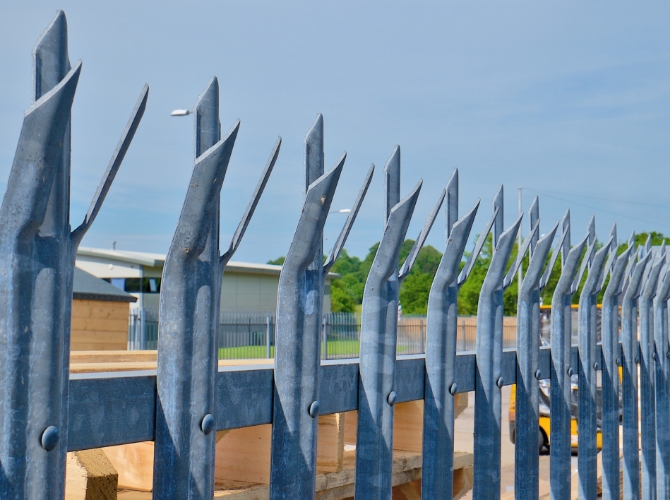
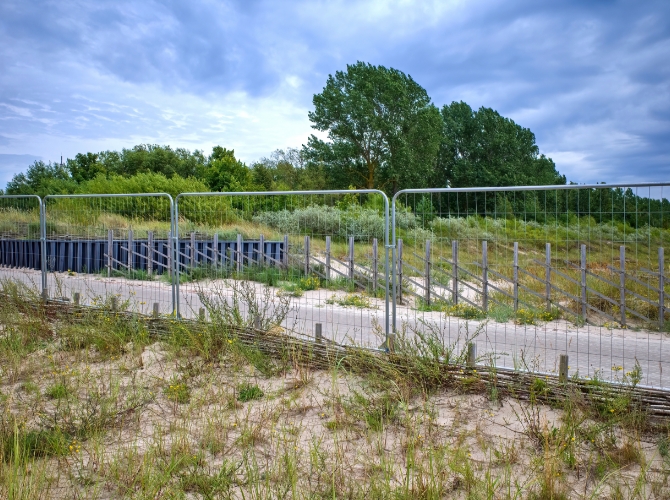
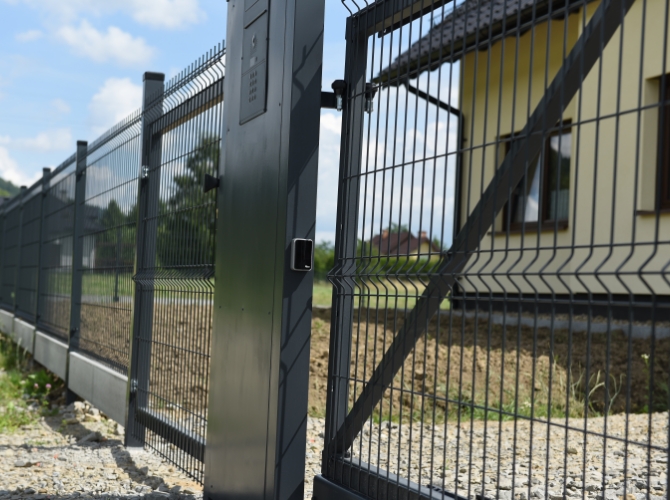
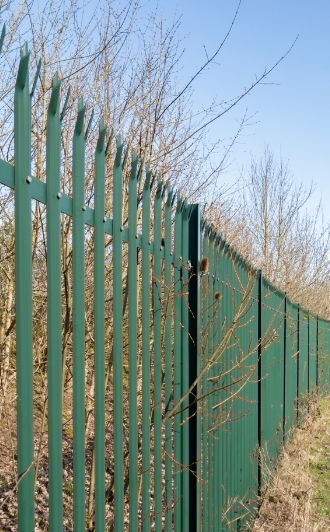
Steel palisade suits a working perimeter. Vertical pales bolt to horizontal rails carried on concreted posts, rolled to a profile that resists climbing, and spaced so a yard stays visible from the road rather than screened off. Pale tops can be specified rounded where the fence faces a footpath or a village walkway, or pointed where the site brief calls for it.
358 anti-climb mesh is the other perimeter specified around New Zealand. The aperture is too tight to take a foothold, and the fence reads as nearly transparent from a short distance, which is often the better answer where people live behind it.
Safety barriers are the third product and answer a fall rather than a boundary. Path edges above a drop, loading areas, tank and silo platforms.
Hire panels, or a fence that stays
The term safety fencing covers two products with nothing in common. One is temporary: mesh panels on portable feet, hired by the week around a build, a trench or an event, and collected when it is done. The other is permanent, set in concrete and expected to outlast the buildings behind it. Group One New Zealand builds the permanent kind, designed and manufactured for one property and installed to stay there.
Wet winters, nor’westers and what steel needs
NIWA treats the coastal strip north of Amberley as a Canterbury climate zone in its own right: relatively mild winters, with rather high annual rainfall that peaks in winter. Add Canterbury’s strongest winds, the north-westerlies that sweep the plains, and you have a fence that spends its winters wet and its summers loaded.
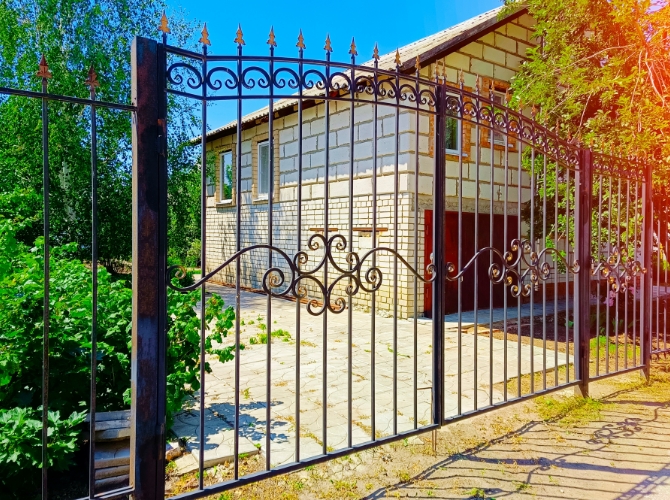
Persistent damp is a coating problem, not a steel problem. Hot-dip galvanising after fabrication is what answers it, because it protects the inside of every section as well as the outside, and the ground line is where any fence is eventually tested. Powder coat goes over the top where colour matters or the fence faces a street.
Wind is a structural problem. A palisade run lets air through the gaps where a solid fence takes the whole load, and post size, post spacing and footing depth all follow from the finished height and how exposed the line is.
We work in steel, aluminium and stainless steel, and on a rural perimeter the finish specification is what decides how many winters it sees.
Design, manufacture, installation
The first visit does the work: boundary, ground, borer access, gate positions and how the wind hits the line. Design turns that into heights, pale spacing, post specification and gate hardware. Manufacture happens off site. Installation is posts, concrete, rails and pales, then gates hung and adjusted until they swing or slide under their own weight.
We guarantee all the work we do, backed by a full after-sales service.
Need Professional Line Marking or Safety Products?
Contact Group One today – reliable, accredited, and available 24/7.

Client Testimonials


5.0 Stars / 21 + reviews
The team from Group One were exceptional.
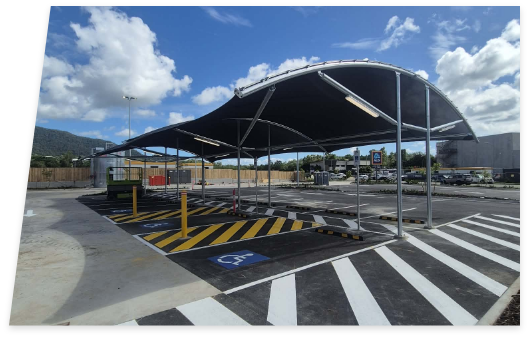
They arrived on time, did a fantastic job and made our childcare centre carpark look like new . Thankyou
Prompt and efficient service.
Very professional and experienced. Syd always answers his phone otherwise calls you back. Highly recommended.
Highly recommended.
Competitive price, quality work and even helped me put up the customer parking signs. Went above and beyond. Thanks very much, Syd and Blake.
Great job and no complaints!
Wonderful to work with and helping us get our line marking completed. Would definitely use again and refer to others.
Highly Recommend Group 1 Linemarking!
We recently hired Group 1 Linemarking for a few of our residential strata projects, and the results exceeded our expectations. The team was punctual, professional, and clearly experienced. The line marking was crisp, precise, and done exactly to spec. Communication throughout the process was smooth, and they were flexible with scheduling, which made things a lot easier on our end. If you need reliable, high-quality line marking services, I wouldn’t hesitate to recommend Group 1. Great job!
Working with Syd and his team is always a pleasure
The quality of work is always to a high standard. The Group One team is always professional, they apply a high standard for safety ensuring their SWMS is tailored for the job and their equipment is serviced and well maintained. I highly recommend Group One and if you use them you won’t be disappointed.
What the quote is built from
Pricing is on quote. What genuinely moves the number:
- Perimeter length, corners and how the ground rises and falls along it
- Finished height, which drives post size, footing depth and the consent question
- Ground conditions and machinery access along the line
- Gates: pedestrian or machinery width, swing or slide, manual or automated
- Finish: galvanised only, or galvanised and powder coated
A 20 metre run at a house frontage and a 20 metre run at a farm entrance with a wide vehicle gate are not the same job, which is why we measure before we price.
Group One New Zealand, and the honest answer about Hurunui
The section above stops short of a number, and that is deliberate. Nothing Hurunui-specific turned up that we could stand behind, so we send you to the Council rather than borrow a height from a neighbouring district. The habit comes from being small. Sydney Chappell founded Group One New Zealand in 2026 and there are not many names on the crew list, which means whoever quotes your boundary is the person who has to live with a wrong assumption. Fabrication happens at Islington in Christchurch and the crews drive north to Amberley, the top of the area they cover, so work up this way gets planned as full days rather than quick stops between calls. Dairy, sheep, arable and grape-growing properties want long runs of perimeter, and the same hands draw, make and install every metre of it. The longer trading record sits in Australia, and the company says so itself: “Although Group 1 Line Marking has just started here in New Zealand, as a group we have been operating in Australia for almost 25 years.” The full range and credentials are on the page.
Call 027 424 0600 to Request a Free Quote




Get your boundary measured
We would rather tell you the rule we cannot find than invent one, and rather measure a fence line than estimate it. Both come from the same habit.
Phone us on 027 424 0600 or email info@groupone.co.nz, 7am to 3pm Monday to Friday. Have the site address, a rough boundary length, the height you have in mind and what has to get through the gates. Group One New Zealand, Unit 1, 37 Foremans Road, Islington, Christchurch 8042. NZBN 9429053752833.
Call 027 424 0600 to Request a Free Quote
Comprehensive Line Marking & Safety Services
Safety and Palisade Fencing
Safety and palisade fencing is the steel perimeter that goes...
More Details
Areas We Serve
- Safety and Palisade Fencing Amberley
- Safety and Palisade Fencing Ashburton
- Safety and Palisade Fencing Christchurch
- Safety and Palisade Fencing Darfield
- Safety and Palisade Fencing Kaiapoi
- Safety and Palisade Fencing Methven
- Safety and Palisade Fencing Rangiora
- Safety and Palisade Fencing Rolleston
- Safety and Palisade Fencing Timaru
Other Services Available in Amberley
Questions from Hurunui property owners
Do I need planning permission for palisade fencing?
New Zealand does not use that term. There are two separate approvals here: a building consent, which is not required for fences or hoardings up to 2.5 metres, and a resource consent, which a district plan can require above roughly 2 metres. Which applies to your property is a Hurunui District Council question, and worth asking before you order steel.
Does my neighbour have to pay for half the fence?
Under the Fencing Act 1978 adjoining owners share the cost of an adequate boundary fence, after written notice is served before work begins. That obligation applies whether or not any consent is needed, and it is not something the Council administers.
How much does a 30 metre fence cost?
It depends on height, ground, gates and finish, so we do not publish a rate. Thirty metres of palisade with a vehicle gate in it is a different price from thirty metres of plain run, and both are different again on sloping ground.
Is palisade too much fence for a lifestyle block?
Sometimes. For a paddock boundary it is more fence than the job needs. For an entrance, a machinery yard, a chemical store or anything you would rather not replace, galvanised steel usually costs less over its life than the fence you keep repairing.
Does the pool at our place need its own fence?
Yes, and it needs a building consent regardless of height. Pool barriers sit outside the fence exemption everywhere in New Zealand, and the gate hardware is where most of them fail inspection.
Can you quote a job out on a farm rather than in town?
Yes. Rural entrances and yards are a large part of what we do around here, and the visit is planned as one trip so we take everything we need in a single pass.
Get Started with Professional Line Marking Solutions

Get a Free Consultation
Speak with our experts to discuss your line marking requirements and get a tailored solution.
Schedule Now
Need Help Choosing?
Our team provides advice on the right line marking services and materials for your site.
Find Your Solution
Talk to an Expert
Have questions or want a quote? Connect with our experienced team today.
Contact Us