 Available 24 Hours a Day, 7 Days A Week
  027 424 0600
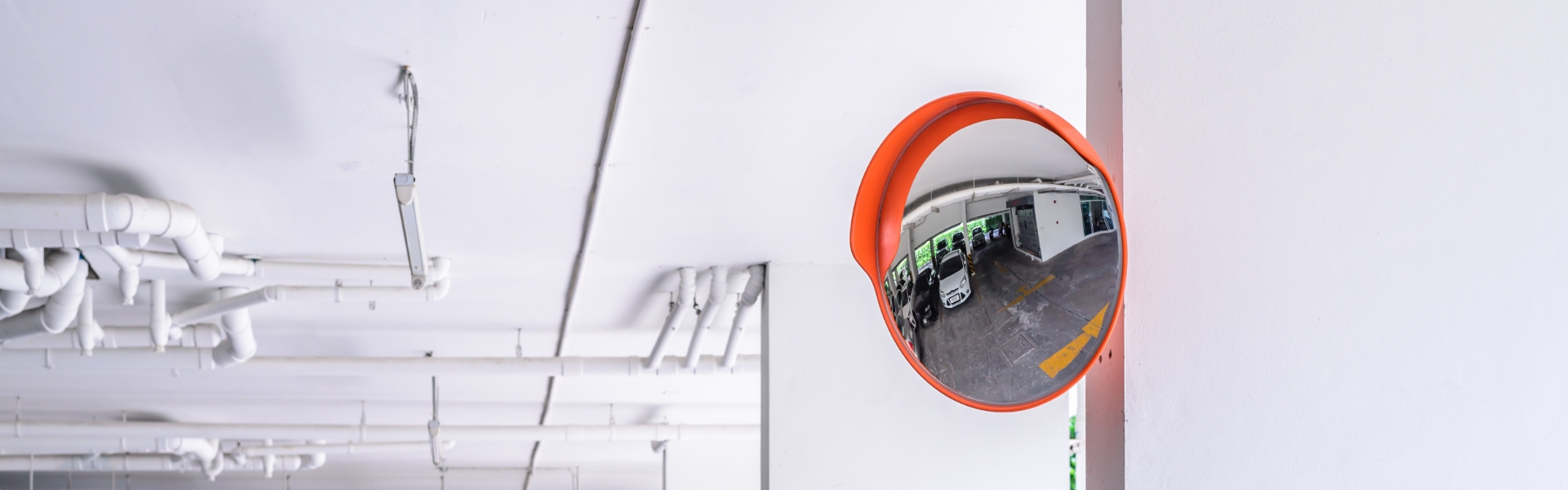
Convex Safety Mirrors Darfield

Available 24 Hours a Day, 7 Days A Week

100% Client Satisfaction

Full Range of Premier Services

High-Quality Products
Get A Free Quote
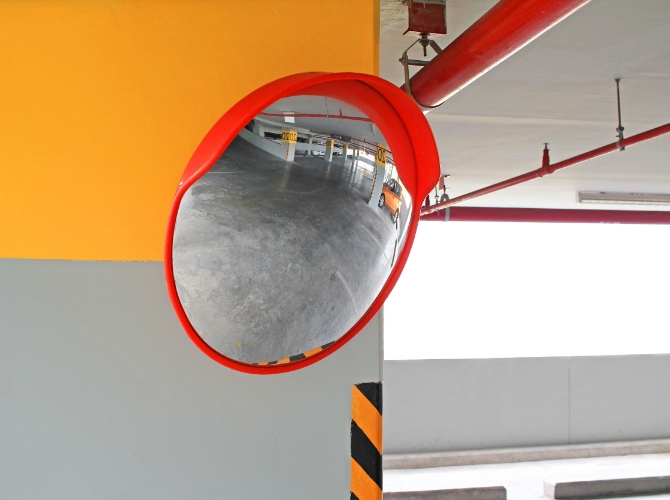
Out here the traffic you cannot see is moving at open-road speed, and the gateway you are easing out of was laid out around a shelter belt that has been there longer than the driveway. Group One New Zealand supplies and installs convex safety mirrors around Darfield, with crews travelling out from our Islington base in Christchurch, 35 km east. Sydney Chappell founded the New Zealand company in 2026. Tell us which gateway it is and we will come and look at it from the driver’s seat.
Pulling out onto an open road
Darfield serves the Malvern district’s arable and pastoral country, and Fonterra’s milk processing plant sits on its edge, so the vehicle movements here are heavy, regular and often on a schedule. Tankers, stock units, grain trucks and contractors’ floats all commit to a turn well before the driver has a clear view.
The positions we get asked about:
- A farm or lifestyle-block entrance onto a rural road, with a hedge, a shelter belt or a rise hiding the approach
- A plant or depot gateway where tankers turn in and out through the day
- A yard exit where a truck has to cross a lane to line up
- The turning area beside a shed, where machinery reverses across a walking route
- Aisle or doorway crossings inside a shed where a forklift and staff share the same corner
Roughly half the property base around town is lifestyle blocks, so a good share of the work is entrances that were fine as a farm track and are now used several times a day by people who are not farming.
Call 027 424 0600 to Request a Free Quote
Industries We Serve
We proudly serve clients across a range of sectors, including:

Hospitals

Aviation Surfaces

Schools

Sporting Surfaces

Factory Safety Lines

Body Corporate
Getting a crew to a rural gateway
Everything travels out with the crew from Islington in one trip: ladder, post, auger, levels. That is why we ask early about ground conditions where a post might go, whether there is anything already standing worth mounting to, and when the gateway is quiet enough to work in.
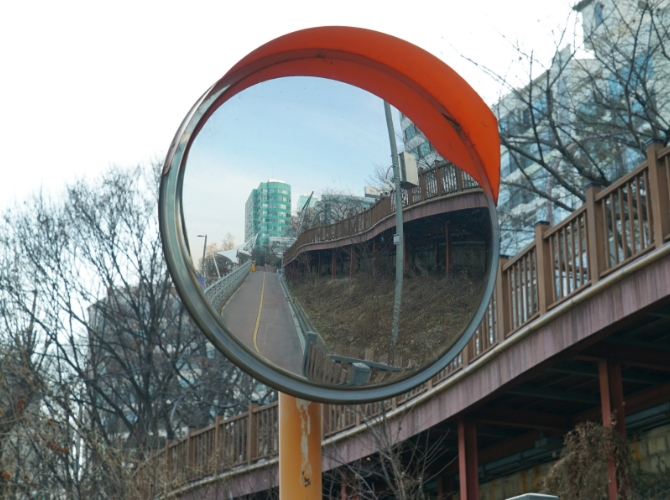
The assessment happens from the driver’s eye position, in a vehicle. A mirror aimed for a ute reads differently from a tractor cab and differently again from a tanker. On a gateway closed off with , the vehicle stops in the same spot each time, and that spot is where the mirror gets sighted from. The mirror then goes onto an existing post, a shed corner, a wall or a pole, or onto a new post we dig and set. Aiming is the last job: tilt it, get back in the vehicle, look again, adjust until the approach is actually covered. Our crews run the region from Amberley in the north to Timaru in the south, and west towards the foothills.
How big, how high, which way
Diameter follows viewing distance, and on a rural gateway that distance is long. A driver needing to see well up a straight road before pulling out needs a much larger face than a car park would ever justify, otherwise the approaching truck reads as a speck that seems further off than it is.
Height follows the vehicle and the ground. High enough to clear a parked trailer and to suit a cab, low enough to be showing road rather than the top of a hedge.
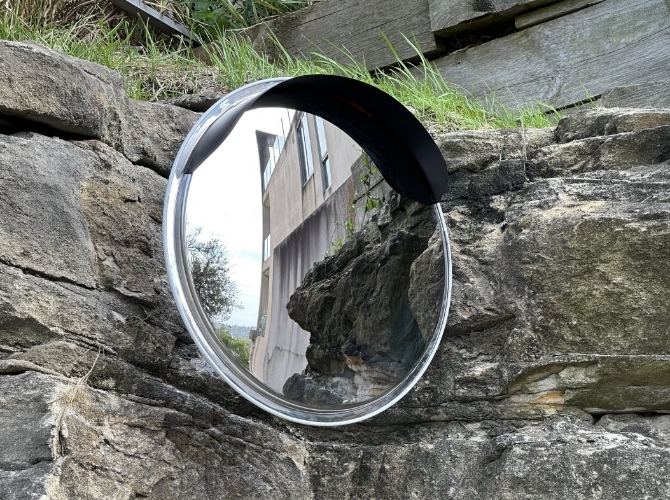
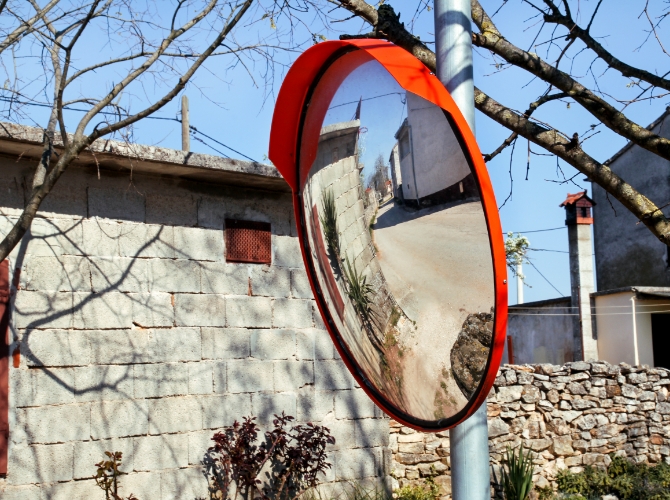
Orientation comes last and it is decided on site. A face pointed into a low morning or evening sun goes white at the hour the tanker or the school bus goes past, which is usually the case for a hooded mirror on an open gateway rather than an unhooded one.
Buying the mirror is the easy part
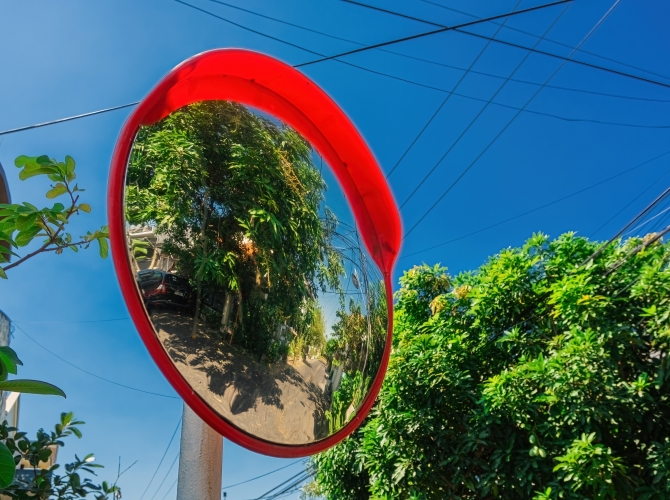
Any national supplier will courier a convex mirror to a rural address, and the hardware they send is generally sound. What no delivery includes is the decision about which side of the gateway it belongs on, how far back from the road, at what height, facing which way, and what will hold it. Get that wrong and the mirror is up, the blind spot is untouched, and everyone stops treating the exit as dangerous. Choosing the position, mounting it and aiming it is the job. The face is just the part that comes in a carton.
Under the nor’west arch: making the mount hold
Darfield is known as the township under the nor’west arch, and the dry Foehn wind that comes with it can lift the temperature by several degrees an hour. That wind is the reason mount specification matters more here than the price of the face.
A large convex face is a sail. In a gust it puts real load into the bracket and the post, so on an exposed gateway we size the post depth and the bracket for the wind the face will catch rather than for the weight it has to carry. A mirror that has been worked a few degrees out of alignment over a season still looks like a working mirror from the ground, which is the worst failure mode there is.
Materials follow the same logic. Stainless steel faces will not break and take the weather without clouding, which suits an exposed outdoor gateway. Polycarbonate absorbs an impact without shattering and belongs at forklift height or anywhere a load can swing. Acrylic gives the sharpest image and is best kept indoors or under cover. Hooded formats handle glare and driven rain outdoors; a half dome suits a T-junction in a shed, a full dome a four-way crossing. Mounts go on existing posts, walls and poles or a new galvanised post, with corrosion protected brackets and aluminium or stainless fixings.
Need Professional Line Marking or Safety Products?
Contact Group One today – reliable, accredited, and available 24/7.

Client Testimonials


5.0 Stars / 21 + reviews
The team from Group One were exceptional.
They arrived on time, did a fantastic job and made our childcare centre carpark look like new . Thankyou
Prompt and efficient service.
Very professional and experienced. Syd always answers his phone otherwise calls you back. Highly recommended.
Highly recommended.
Competitive price, quality work and even helped me put up the customer parking signs. Went above and beyond. Thanks very much, Syd and Blake.
Great job and no complaints!
Wonderful to work with and helping us get our line marking completed. Would definitely use again and refer to others.
Highly Recommend Group 1 Linemarking!
We recently hired Group 1 Linemarking for a few of our residential strata projects, and the results exceeded our expectations. The team was punctual, professional, and clearly experienced. The line marking was crisp, precise, and done exactly to spec. Communication throughout the process was smooth, and they were flexible with scheduling, which made things a lot easier on our end. If you need reliable, high-quality line marking services, I wouldn’t hesitate to recommend Group 1. Great job!
Working with Syd and his team is always a pleasure
The quality of work is always to a high standard. The Group One team is always professional, they apply a high standard for safety ensuring their SWMS is tailored for the job and their equipment is serviced and well maintained. I highly recommend Group One and if you use them you won’t be disappointed.
Selwyn District Council, fences and boundaries
The mirror rarely raises a consent question. What it is mounted to sometimes does.
Selwyn District Council states that any fence more than 2 metres tall will require a building consent and may require a resource consent, and lists fences or walls higher than 2.5 metres as needing building consent. The Council also notes that construction and maintenance of boundary fences is generally governed by the Fencing Act and sits outside its jurisdiction, and the Selwyn District Plan carries urban fencing rules (4.13 and 4.17) covering height and visibility.
On a rural gateway, the more practical question is usually where your boundary actually runs, because the best position for a mirror is sometimes a post that is not on your land. Sort the boundary and, where relevant, the council position first; we install to whatever is agreed.
What the quote follows
Pricing is on quote and follows a site visit, for the good reason that nobody can specify a rural gateway from a photo. What moves it:
- How many mirrors the site needs, and whether one face answers two approaches
- Diameter, which on these jobs is driven up by the viewing distance
- Whether there is a sound structure to mount to, or a post has to be dug
- Post and bracket specification for the exposure
- Indoor or outdoor, and the corrosion grade of the fixings
- Access, and how long the gateway can be occupied
Contact us for bespoke pricing. The quote is written, in New Zealand dollars, and comes after someone has stood in the gateway.
Call 027 424 0600 to Request a Free Quote




Knocks, re-aims and a changed gateway
Machinery catches posts. Ring us and we come back out, straighten it and re-aim it.
Gateways also change. A new shed goes up, the stack moves, a second entrance opens and the traffic reverses direction, and a mirror that was right last season is now pointed at a hedge. We come back, look again from the driver’s seat, and re-angle or relocate it. We guarantee all the work we do.
Group One New Zealand, started here in 2026
There is no point being coy about how new the New Zealand company is. Sydney Chappell started Group One New Zealand in 2026, we are a small team, so you know you’ll get the very best, and the crews that reach Malvern gateways work out of Islington in Christchurch. The longer trading history sits on the other side of the Tasman, and the company states it plainly: “Although Group 1 Line Marking has just started here in New Zealand, as a group we have been operating in Australia for almost 25 years.” The rest of the range is on our page.
Call 027 424 0600 to Request a Free Quote
Get someone out to look
One caution before anyone books a mirror. If the trouble at your gateway is the speed of what comes past rather than the sight line, a mirror will not fix it, because it tells you something is coming without telling you how fast, and we would rather say that standing at the gate than after a post is in the ground.
Phone us on 027 424 0600 or email info@groupone.co.nz, 7am to 3pm Monday to Friday. Group One New Zealand, Unit 1, 37 Foremans Road, Islington, Christchurch 8042. NZBN 9429053752833.
Call 027 424 0600 to Request a Free Quote
Comprehensive Line Marking & Safety Services
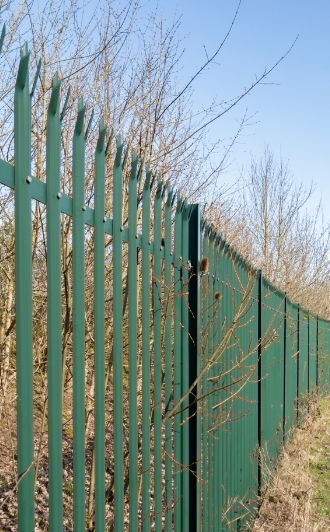
Safety and Palisade Fencing
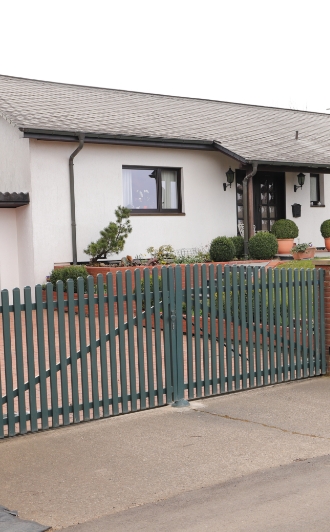
Safety and palisade fencing is the steel perimeter that goes...
More Details
Areas We Serve
- Convex Safety Mirrors Amberley
- Convex Safety Mirrors Ashburton
- Convex Safety Mirrors Christchurch
- Convex Safety Mirrors Darfield
- Convex Safety Mirrors Kaiapoi
- Convex Safety Mirrors Methven
- Convex Safety Mirrors Rangiora
- Convex Safety Mirrors Rolleston
- Convex Safety Mirrors Timaru
Other Services Available in Darfield
Questions from farm and plant gateways
Do you need permission to put up a convex mirror?
On your own land, on your own building or an existing compliant structure, usually not. It depends on what carries it. In this district the numbers to know are Selwyn District Council’s building consent requirement for fences over 2 metres, which may also need a resource consent, and its 2.5 metre line for fences and walls. Boundary fences fall under the Fencing Act rather than the Council. If the mirror needs to see into the road corridor, check with the council before it goes up.
What is the purpose of a convex safety mirror?
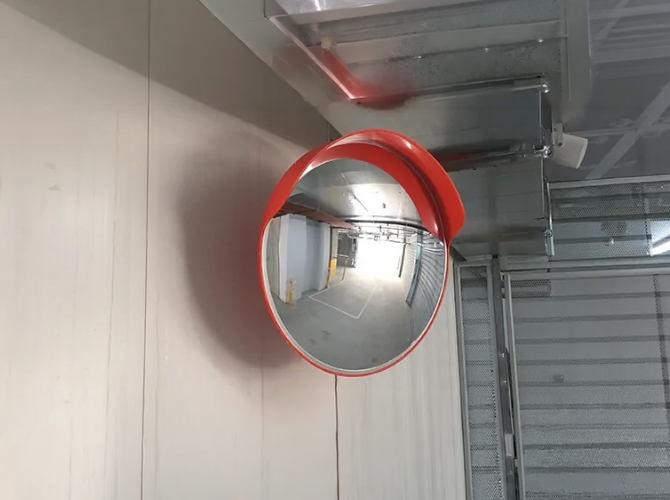
The curved face spreads the reflection wide, so one mirror covers an arc that a flat mirror of the same size never could. At a gateway that means seeing a truck coming from behind a shelter belt in time to wait, rather than committing and finding out.
What are the disadvantages of convex mirrors?
The curve that widens the view compresses distance. Vehicles look smaller and further away than they really are, and speed is very hard to judge off a convex face. Sharpness also drops toward the edge. On an open road where traffic is moving quickly that trade-off is real, and it is worth talking through on site rather than after the mirror is up.
Will it stay put in a nor'wester?
That is what the post and bracket specification is for. It is also worth a look after the first big blow of the season, and if the view from the driver’s seat has shifted, we will come and re-aim it.
Get Started with Professional Line Marking Solutions

Get a Free Consultation
Speak with our experts to discuss your line marking requirements and get a tailored solution.
Schedule Now
Need Help Choosing?
Our team provides advice on the right line marking services and materials for your site.
Find Your Solution
Talk to an Expert
Have questions or want a quote? Connect with our experienced team today.
Contact Us