 Available 24 Hours a Day, 7 Days A Week
  027 424 0600
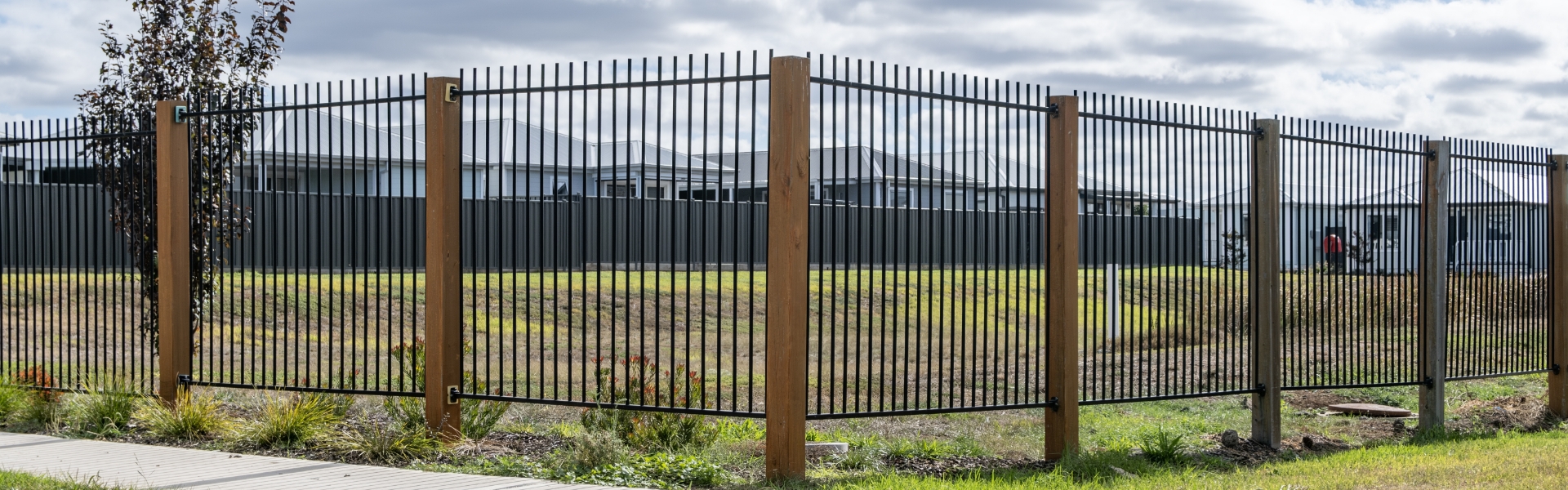
Safety and Palisade Fencing Kaiapoi

Available 24 Hours a Day, 7 Days A Week

100% Client Satisfaction

Full Range of Premier Services

High-Quality Products
Get A Free Quote
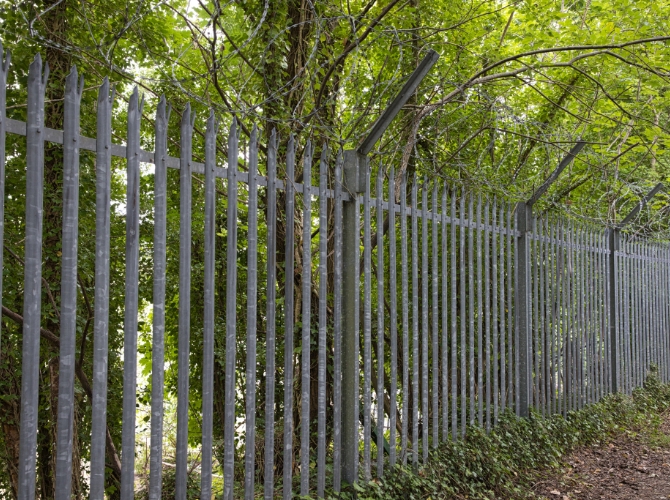
How deep the posts go matters as much as what you bolt to them. Kaiapoi sits behind the Waimakariri and Kaiapoi River stopbanks, on ground much of which was rebuilt after the earthquakes, and district projections point to less annual rainfall overall while storms arrive more often and hit harder. Group One New Zealand designs, manufactures and installs safety and palisade fencing across Kaiapoi, with crews travelling up from the Islington base in Christchurch, about 20 minutes away. Sydney Chappell started the New Zealand company in 2026. Tell us where the line runs and what the ground is doing, and we will come and look at it.
Footings, ground and the thing nobody quotes for
A perimeter fence is a row of levers. Every gust that hits the pales is transferred down the post into whatever is holding it, so the footing is doing more work than the steel above it.
There is no standard depth we can give you over the phone, and anyone who does is guessing. Post depth and footing diameter come off the finished height of the fence, the exposure of the line, the gate loads at either end, and what the ground is actually made of once the borer goes in. Modern subdivision fill, older river-flat ground and a compacted yard surface all behave differently, and on a site like this the difference shows up within a few years rather than a few decades.
Drainage sits alongside it. Storms that arrive more frequently and more severely put water through the fence line, not just over it. Where a run crosses a low point or a swale we design for the water to pass rather than dam against the fence, because a fence acting as a weir is a fence being pushed over slowly.
Phone us on 027 424 0600, 7am to 3pm Monday to Friday. A crew comes out, checks the line and the ground, and puts a written quote together from what is there.
Call 027 424 0600 to Request a Free Quote
Industries We Serve
We proudly serve clients across a range of sectors, including:

Hospitals

Aviation Surfaces

Schools

Sporting Surfaces

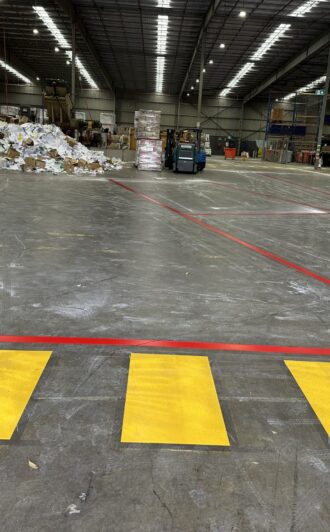
Factory Safety Lines

Body Corporate
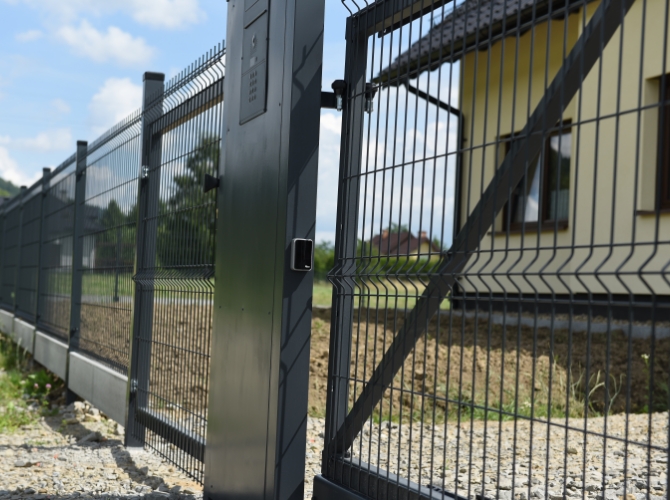
Perimeters for light-industrial units, yards and frontages
Kaiapoi’s commercial stock runs to industrial units of roughly 70 to 400 square metres, retail frontages and offices, which is a very specific fencing brief: secure the yard and the plant, keep the frontage looking like somewhere customers walk in.
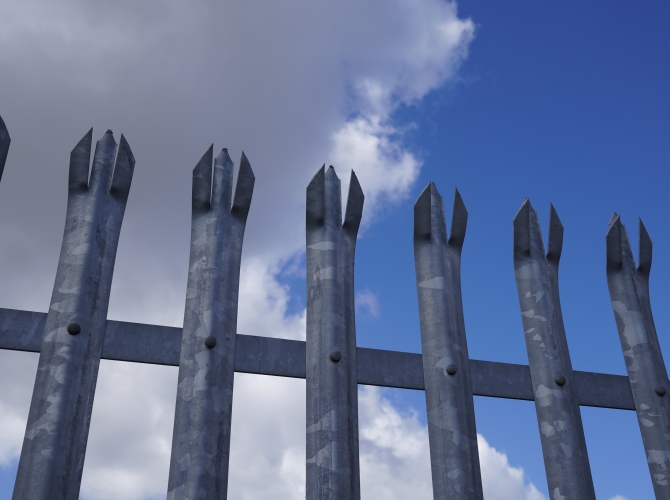
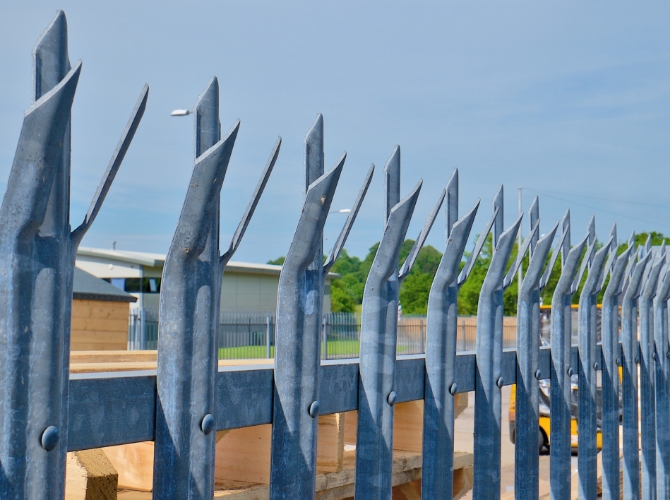
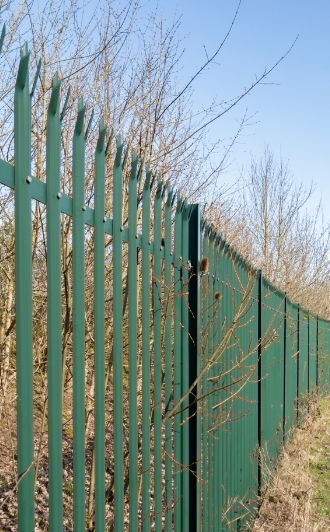
Steel palisade handles the yard side. Vertical pales bolt to horizontal rails on concreted posts, the rolled pale profile resists climbing, and the spacing keeps the yard visible from the road rather than screening it. Pale tops are specified rounded where the fence faces a footpath, or pointed where the brief asks for it.
358 anti-climb mesh is the usual answer on the frontage side. The aperture is too tight to take a foothold, and the mesh reads as almost transparent from a short distance, so a customer-facing boundary does not have to look like a compound.
Safety barriers are the third product and answer a different risk entirely: stopping a fall rather than securing a boundary. Loading docks, dock levellers and any edge with a drop of a metre or more.
Hire panels, or a fence that stays
Two products share the words safety fencing. One is temporary: mesh panels on portable feet, hired by the week around a build, an excavation or an event, then collected. The other is permanent, concreted in and specified to outlast the building behind it. Group One New Zealand builds the permanent kind, made for one site and installed to stay put.
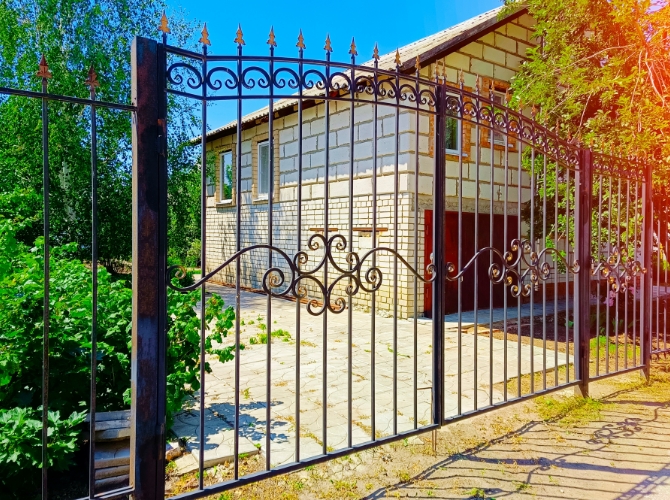
What Waimakariri District Council will want to know
The Council keeps a deliberately narrow role. It becomes involved only where a fence needs a building consent or a resource consent, which is also likely to require the affected neighbour’s written approval, or where the fence adjoins Council land. A resource consent is likely for any fence on a road boundary or an internal boundary, so it is worth a call before the design is fixed. Nationally, a building consent is not required for fences or hoardings up to 2.5 metres high.
Pool barriers are the exception to everything above. They need a building consent, and one Waimakariri detail catches people on installation day: the gate must not be able to be raised so that the ground clearance exceeds 100 mm. That is a hinge and hardware decision, made at design rather than fixed afterwards.
Confirm the current requirements with Waimakariri District Council for your address before work starts, and we build to what they allow.
Design, manufacture, installation
The first visit does the heavy lifting: boundary, ground, borer access, gate positions, and where water goes when it rains hard. Design turns that into heights, pale spacing, post size, footing depth and gate hardware. Manufacture happens off site. Installation is posts, concrete, rails and pales, then gates hung and adjusted until they run under their own weight.
We guarantee all the work we do, backed by a full after-sales service. On a gate, that guarantee is worth more than on anything else we install, because gates are the part with moving components.
Need Professional Line Marking or Safety Products?
Contact Group One today – reliable, accredited, and available 24/7.

Client Testimonials


5.0 Stars / 21 + reviews
The team from Group One were exceptional.
They arrived on time, did a fantastic job and made our childcare centre carpark look like new . Thankyou
Prompt and efficient service.
Very professional and experienced. Syd always answers his phone otherwise calls you back. Highly recommended.
Highly recommended.
Competitive price, quality work and even helped me put up the customer parking signs. Went above and beyond. Thanks very much, Syd and Blake.
Great job and no complaints!
Wonderful to work with and helping us get our line marking completed. Would definitely use again and refer to others.
Highly Recommend Group 1 Linemarking!
We recently hired Group 1 Linemarking for a few of our residential strata projects, and the results exceeded our expectations. The team was punctual, professional, and clearly experienced. The line marking was crisp, precise, and done exactly to spec. Communication throughout the process was smooth, and they were flexible with scheduling, which made things a lot easier on our end. If you need reliable, high-quality line marking services, I wouldn’t hesitate to recommend Group 1. Great job!
Working with Syd and his team is always a pleasure
The quality of work is always to a high standard. The Group One team is always professional, they apply a high standard for safety ensuring their SWMS is tailored for the job and their equipment is serviced and well maintained. I highly recommend Group One and if you use them you won’t be disappointed.
How the quote is put together
Pricing is on quote. What actually moves it:
- Perimeter length, plus corners and level changes along the run
- Finished height, which drives post size, footing depth and the consent question
- Ground conditions along the line, and whether drainage crosses it
- Gates: pedestrian or vehicle, swing or slide, manual or automated
- Finish: galvanised only, or galvanised and powder coated
We work in steel, aluminium and stainless steel, and on a perimeter run hot-dip galvanising after fabrication is what buys the decades, because it coats the inside of the section as well as the outside.
The team behind the fence: Group One New Zealand
There are few enough of us that whoever walks your boundary is the one who later stands over the auger, and on ground that has been remediated and rebuilt that is the entire point. Footing depth on made ground is a judgement made at the hole, not on a spreadsheet in advance. Group One New Zealand was started by Sydney Chappell in 2026, and crews reach Kaiapoi from the Islington base by crossing the Waimakariri, close enough that measuring up and installing are two unhurried trips instead of one rushed day. Light-industrial units, yard frontages and office boundaries here tend to be modest in length, and a small outfit can afford to do a modest length properly rather than treating it as filler between larger jobs. Steel comes off our own benches, galvanised before it goes anywhere near a stopbank. The longer record is Australian, and the company puts it like this: “Although Group 1 Line Marking has just started here in New Zealand, as a group we have been operating in Australia for almost 25 years.” Everything we make is set out on the page.
Call 027 424 0600 to Request a Free Quote




Get a fence line priced
Kaiapoi keeps adding houses and commercial space on rebuilt land, which means a lot of new boundaries where nobody has yet tested what the ground does. We would rather find that out with a borer at quoting stage than with a leaning fence in year three.
Phone us on 027 424 0600 or email info@groupone.co.nz, 7am to 3pm Monday to Friday. Have the site address, a rough boundary length, the height you want, and anything you know about the ground or drainage. Group One New Zealand, Unit 1, 37 Foremans Road, Islington, Christchurch 8042. NZBN 9429053752833.
Call 027 424 0600 to Request a Free Quote
Comprehensive Line Marking & Safety Services
Safety and Palisade Fencing
Safety and palisade fencing is the steel perimeter that goes...
More Details
Areas We Serve
- Safety and Palisade Fencing Amberley
- Safety and Palisade Fencing Ashburton
- Safety and Palisade Fencing Christchurch
- Safety and Palisade Fencing Darfield
- Safety and Palisade Fencing Kaiapoi
- Safety and Palisade Fencing Methven
- Safety and Palisade Fencing Rangiora
- Safety and Palisade Fencing Rolleston
- Safety and Palisade Fencing Timaru
Other Services Available in Kaiapoi
Questions we get from Kaiapoi sites
How deep should a fence post go?
It depends on the fence, not the town. Finished height, wind exposure, gate loads and the ground itself all feed into it, which is why depth is a design output rather than a rule of thumb. We set it after seeing the site and knowing the height you want.
Does my neighbour have to pay for half the fence?
Under the Fencing Act 1978 adjoining owners share the cost of an adequate boundary fence. If agreement is not forthcoming, a Fencing Notice is served and the neighbour has 21 days to respond before work begins.
What is the legal fence height between neighbours?
The Fencing Act asks whether the fence is adequate rather than setting a number. Consents are the separate question: nationally no building consent up to 2.5 metres, with a resource consent likely on a road or internal boundary here.
Our pool gate keeps getting flagged. What is the actual rule?
The gate must not be able to be raised so ground clearance goes over 100 mm. It usually comes down to hinge type and the gap left at the bottom, and it is far cheaper to design for than to retrofit.
Will a steel fence rust on ground this damp?
Hot-dip galvanising after fabrication is the answer to that, because it protects the inside of every section. The ground line is where any fence is tested, and it is where the coating specification earns its money.
What does palisade fencing cost per metre?
We quote per site rather than per metre. Length, height, ground, drainage, gates and finish all move the figure, and a metre through soft fill is not a metre across a compacted yard.
Get Started with Professional Line Marking Solutions

Get a Free Consultation
Speak with our experts to discuss your line marking requirements and get a tailored solution.
Schedule Now
Need Help Choosing?
Our team provides advice on the right line marking services and materials for your site.
Find Your Solution
Talk to an Expert
Have questions or want a quote? Connect with our experienced team today.
Contact Us