 Available 24 Hours a Day, 7 Days A Week
  027 424 0600
Convex Safety Mirrors Kaiapoi

Available 24 Hours a Day, 7 Days A Week

100% Client Satisfaction

Full Range of Premier Services

High-Quality Products
Get A Free Quote
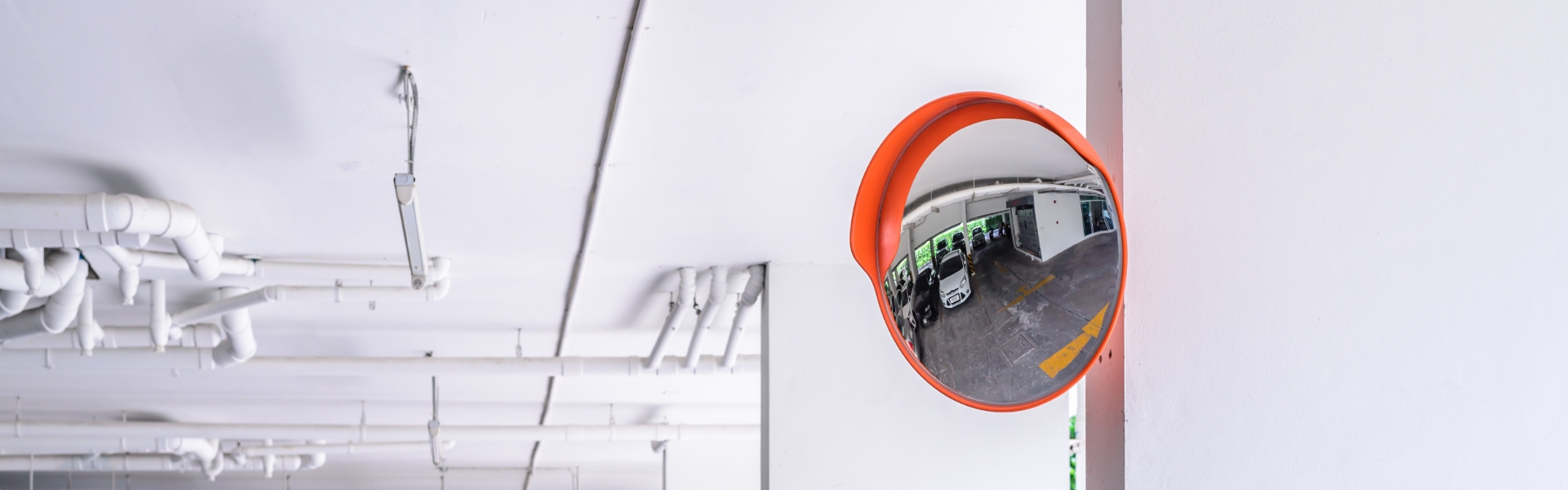
Four units, four roller doors, and one access lane that everybody reverses into. If that describes your yard, one mirror on the right corner usually does more for it than anything else you could put there. Group One New Zealand supplies and installs convex safety mirrors across Kaiapoi, with crews travelling up from our Islington base in Christchurch, about 20 minutes south. Sydney Chappell founded the New Zealand company in 2026. Tell us how the lane runs and we will come and look at it.
One lane, several tenancies, and everyone reversing
Kaiapoi rebuilt after the earthquakes, so much of its commercial base is modern and compact: industrial units of roughly 70 to 400 square metres, retail frontages, offices. That size of unit tends to come in blocks, which means several businesses sharing one narrow yard, and a courier van, a forklift and a customer’s car all using the same strip of concrete at once.
Where the mirrors go on sites like that:
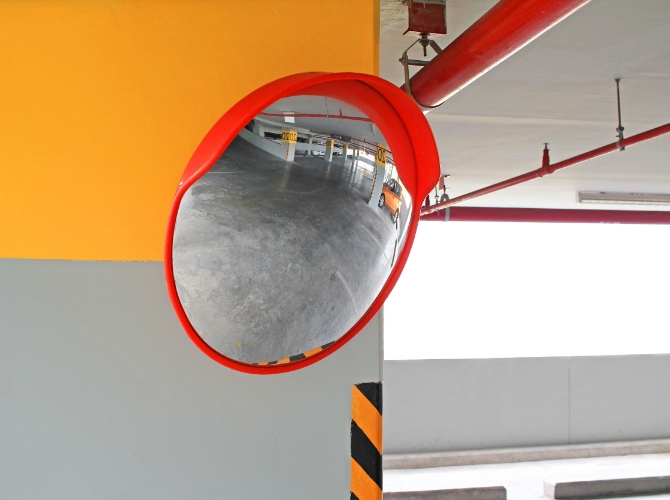
- The corner where the access lane meets the street, hidden by the end unit’s wall
- A roller door opening straight onto the lane, with no view either way until the truck is out
- The turning head at the back of a block, where reversing vehicles meet each other
- A staff or customer door opening onto a route trucks reverse along
- Aisle intersections inside a unit where forklifts and people cross
- The bin or pallet corner, where a stack blocks the only sight line there was
The town’s growth adds a second kind of job. New commuter subdivisions feed onto roads that were laid out for a smaller Kaiapoi, and a business entrance that was easy to pull out of five years ago now waits for a steady stream of traffic that arrives from behind a fence line.
Call 027 424 0600 to Request a Free Quote
Industries We Serve
We proudly serve clients across a range of sectors, including:

Hospitals

Aviation Surfaces

Schools

Sporting Surfaces

Factory Safety Lines

Body Corporate
What a site visit looks like on a multi-unit estate
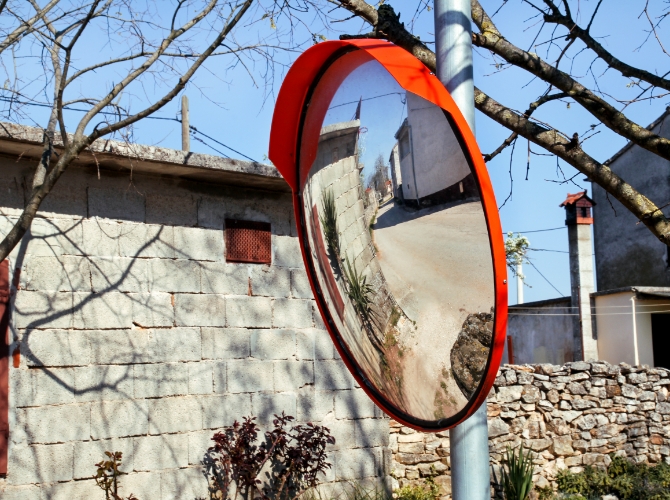
The crew brings everything from Islington in one trip: ladder, post, auger, levels. So the first conversation is about access and about who controls what. On a shared yard the best mount is often on the end wall or a boundary structure that belongs to the landlord rather than to you, and that is easier sorted before the van is loaded than on the day.
On site we work from the driver’s eye position rather than from where the problem is described. A mirror set to suit a car in the lane can be useless from a truck cab three metres higher. Where the yard is closed with , the waiting position at the gate is the view to work from. Then it goes onto whatever is already standing, a wall, a column, a gate post, an existing pole, or onto a new post we dig and set. Aiming is the last job and it is done from a vehicle, not from the ladder. Our crews cover the region from Amberley in the north to Timaru in the south, and west towards the foothills.
One mirror, two roller doors: getting the position right
The prize on a small shared yard is a single face that answers more than one problem. Sometimes that is achievable, and a mirror on the corner of the end unit covers both the lane and the street approach. Sometimes it is not, and pretending otherwise leaves two half-covered blind spots instead of one solved one.
Viewing distance sets the diameter. Short lane, modest face. A driver checking 40 or 50 metres up the road before pulling out needs a much bigger one before an approaching vehicle reads properly.
Mounting height has to clear what parks in the lane, which on these sites changes daily. We set it for the yard as it is used, not as it is drawn.
Then the angle. A face pointed into a low morning or evening sun goes white at the hours the vans are moving, so orientation and the choice of a hooded face get made together, on the ground, with someone sitting in a cab.
Why the box on the doorstep is only half the job
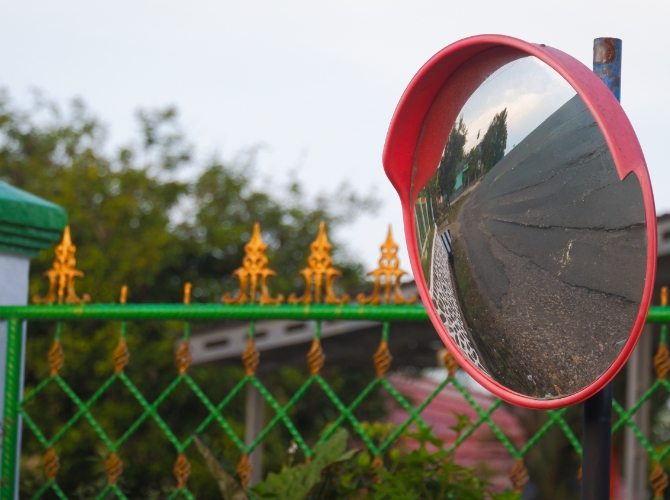
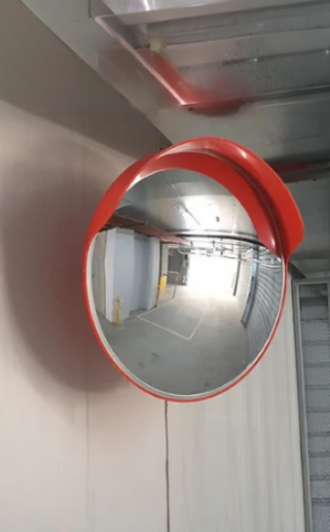
A convex mirror can be couriered to your unit tomorrow, and there is nothing wrong with the hardware. What comes in the carton is a face, a bracket and fixings. What does not come is the call on which corner it belongs to, how far back, at what height, facing which way, and what structure will actually hold it. Those decisions are the difference between removing a blind spot and hanging a mirror above one. Siting, mounting and aiming is the work; the mirror is the part that arrives by van.
Faces and mounts for a small-unit yard
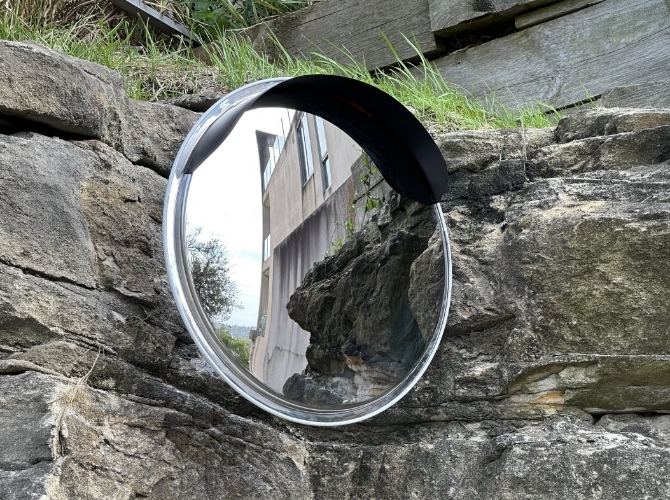
Acrylic gives the sharpest image and suits inside a unit or a sheltered position under the eaves. Polycarbonate takes a knock without shattering, which is what you want at forklift height or beside a loading face. Stainless steel does not break at all and belongs where pallets, stock movements or interference make hard knocks likely.
Hooded faces suit outdoor positions dealing with glare and driven rain. A half dome answers a T-junction where the lane meets a turning head; a full dome covers a four-way crossing inside a unit.
Mounts go onto walls, columns, existing posts and poles, or onto a new post set into the yard. Brackets and fixings are corrosion protected, with aluminium or stainless hardware where the mirror stays outside through frosts and nor’west gales.
Need Professional Line Marking or Safety Products?
Contact Group One today – reliable, accredited, and available 24/7.

Client Testimonials


5.0 Stars / 21 + reviews
The team from Group One were exceptional.
They arrived on time, did a fantastic job and made our childcare centre carpark look like new . Thankyou
Prompt and efficient service.
Very professional and experienced. Syd always answers his phone otherwise calls you back. Highly recommended.
Highly recommended.
Competitive price, quality work and even helped me put up the customer parking signs. Went above and beyond. Thanks very much, Syd and Blake.
Great job and no complaints!
Wonderful to work with and helping us get our line marking completed. Would definitely use again and refer to others.
Highly Recommend Group 1 Linemarking!
We recently hired Group 1 Linemarking for a few of our residential strata projects, and the results exceeded our expectations. The team was punctual, professional, and clearly experienced. The line marking was crisp, precise, and done exactly to spec. Communication throughout the process was smooth, and they were flexible with scheduling, which made things a lot easier on our end. If you need reliable, high-quality line marking services, I wouldn’t hesitate to recommend Group 1. Great job!
Working with Syd and his team is always a pleasure
The quality of work is always to a high standard. The Group One team is always professional, they apply a high standard for safety ensuring their SWMS is tailored for the job and their equipment is serviced and well maintained. I highly recommend Group One and if you use them you won’t be disappointed.
Consents, shared boundaries and Waimakariri District Council
Two questions come before the mirror on a leased unit: who owns the structure it mounts to, and whether that structure has a consent question attached.
Waimakariri District Council becomes involved in fencing only where a building or resource consent is needed, or where the fence adjoins Council land. It advises that a resource consent is likely for any fence on a road boundary or an internal boundary. Nationally, fences and hoardings up to 2.5 metres do not need a building consent, though district plans commonly bring in a resource consent above about 2 metres. Boundary fences also sit under the Fencing Act 1978, which requires a fencing notice to the neighbour and 21 days for a response before work begins.
Most yard mirrors never touch any of that, because they mount on a building the tenant or owner already controls. Where the ideal position is a boundary or a road frontage, check with the council first and we will install to what is agreed.
What the quote is made of
Pricing is on quote and comes after the site visit. What moves it:
- The number of mirrors, and whether one position genuinely covers two approaches
- Face diameter, set by the viewing distance
- Whether there is a sound structure to mount to, or a post has to be dug and set
- Indoor or outdoor, and the corrosion grade of the fixings
- Hooded or open face
- Access, and whether the lane can be blocked briefly or the work has to fit between deliveries
Contact us for bespoke pricing. Quotes are written, in New Zealand dollars, and follow someone walking the yard.
Call 027 424 0600 to Request a Free Quote




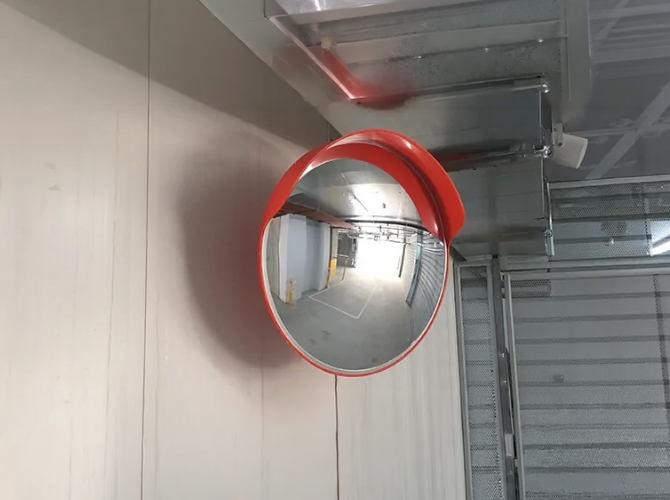
Knocks, re-aims and a changing tenancy mix
A shared lane is a knocking environment. Trailers clip posts, forklifts catch brackets, and a mirror that has been nudged still looks fine from the ground while showing you nothing useful. Ring us and we come back, straighten it and re-aim it.
Tenancies turn over as well, and each new occupant uses the yard slightly differently. A stack goes where the sight line used to be, or the flow reverses so vehicles now enter from the other end. Same answer: we come back out, look again from the driver’s seat, and re-angle or relocate. We guarantee all the work we do.
The size of the team at Group One New Zealand
A shared yard with four roller doors on it is a small piece of work, and it does not get handed down a chain here. Sydney Chappell founded Group One New Zealand in 2026; we are a small team, so you know you’ll get the very best, and whoever measures the sight line between two tenancies is who you get back when the tenancy mix changes. In the company’s own words: “Although Group 1 Line Marking has just started here in New Zealand, as a group we have been operating in Australia for almost 25 years.” The wider range is set out on our page.
Call 027 424 0600 to Request a Free Quote

Book the assessment
One thing is worth sorting before the van is loaded: on a block of leased units, the person who has had the near miss is rarely the person who can approve the mount. If the right position turns out to be the end wall or a boundary structure, that is the owner’s or the property manager’s call, and knowing who signs it off at quote stage saves everybody a second visit.
Phone us on 027 424 0600 or email info@groupone.co.nz, 7am to 3pm Monday to Friday. Group One New Zealand, Unit 1, 37 Foremans Road, Islington, Christchurch 8042. NZBN 9429053752833.
Call 027 424 0600 to Request a Free Quote
Comprehensive Line Marking & Safety Services
Safety and Palisade Fencing
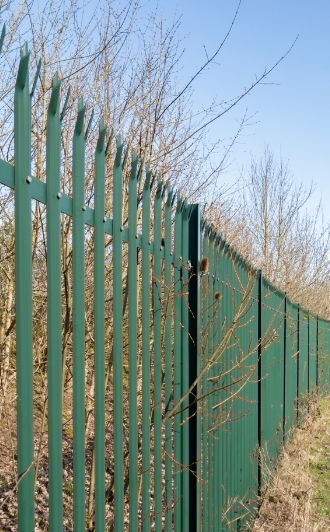
Safety and palisade fencing is the steel perimeter that goes...
More Details
Areas We Serve
- Convex Safety Mirrors Amberley
- Convex Safety Mirrors Ashburton
- Convex Safety Mirrors Christchurch
- Convex Safety Mirrors Darfield
- Convex Safety Mirrors Kaiapoi
- Convex Safety Mirrors Methven
- Convex Safety Mirrors Rangiora
- Convex Safety Mirrors Rolleston
- Convex Safety Mirrors Timaru
Other Services Available in Kaiapoi
Common questions on shared sites
Do you need permission to put up a convex mirror?
On your own building, inside your own boundary, usually not. On a leased unit the first permission is the landlord’s, because the mount is often their structure. After that it depends on what carries it: Waimakariri District Council gets involved where a building or resource consent is required or where a fence adjoins Council land, resource consent is likely on a road or internal boundary, and the national exemption for fences and hoardings runs to 2.5 metres.
What is the purpose of a convex safety mirror?
The curved face spreads the reflection outward, so a single mirror shows a far wider arc than a flat one of the same diameter. On a shared lane that means a driver can see what is coming out of the next unit’s door before committing, instead of edging out and hoping.
What are the disadvantages of convex mirrors?
The same curve compresses distance. Vehicles look smaller and further away than they are, and closing speed is hard to judge. Detail drops off toward the edge of the face too. So a mirror tells you whether something is there, not how much time you have, and drivers still need to creep out and look.
Can you deal with the landlord or property manager?
Yes. It helps if we know at the quote stage who signs off the mount, because on a multi-tenant block that is often not the person who called us.
Get Started with Professional Line Marking Solutions

Get a Free Consultation
Speak with our experts to discuss your line marking requirements and get a tailored solution.
Schedule Now
Need Help Choosing?
Our team provides advice on the right line marking services and materials for your site.
Find Your Solution
Talk to an Expert
Have questions or want a quote? Connect with our experienced team today.
Contact Us