 Available 24 Hours a Day, 7 Days A Week
  027 424 0600

Bollards Amberley

Available 24 Hours a Day, 7 Days A Week

100% Client Satisfaction

Full Range of Premier Services

High-Quality Products
Get A Free Quote

mobility scooter to get through without a detour. Bollards in Amberley are mostly asked to solve that pair of problems at once. Group One New Zealand designs, manufactures and installs them, travelling up State Highway 1 from our Islington base in Christchurch, and Sydney Chappell started the New Zealand company in 2026. Tell us the entrance you are dealing with and we will come and set the positions out on the ground.
Removable bollards, and what they are good at
Hurunui District Council’s own Amberley Eastern Reserve Master Concept Plan specifies a removable bollard or post and chain system at the reserve’s west pedestrian entrance. It is a neat summary of what removable bollards are for: keep vehicles out day to day, let the mower, the maintenance ute or the event truck in when they are genuinely needed.
On a private site the same logic applies to a service lane, a rear car park or a shared accessway. The choice comes down to how often the gap opens:
- Removable. The post lifts out of a socket cast into the ground, and the socket caps off flush so nothing is left to trip over. Best where access is occasional and the post can be stored somewhere sensible.
- Fold-down. Hinged at the base, locked upright, dropped flat when needed. Better where the gap opens weekly or daily, because there is nothing to carry or lose.
- Fixed. Footed permanently, and the only option worth using where a vehicle actually has to be stopped rather than discouraged.
A removable bollard is not a weaker bollard. The socket still needs a proper footing, and it still needs to be set where a vehicle would otherwise travel.
Call 027 424 0600 to Request a Free Quote
Industries We Serve
We proudly serve clients across a range of sectors, including:

Hospitals

Aviation Surfaces

Schools

Sporting Surfaces

Factory Safety Lines

Body Corporate

Keeping people and vehicles apart
Amberley skews older than most Canterbury towns, with a median age of 52.7 at the 2023 census, and a 250-home retirement village is being developed on 37 acres in the centre of town. That changes what an entrance has to do. Walking frames, mobility scooters and prams need a clear path through, not a squeeze between a post and a parked car.
Auckland Transport publishes the New Zealand guidance most people work from: at least 1.8 metres of clearance between bollards and the kerb, and at least 1.2 metres between bollards where a run crosses an entranceway, which is the gap that keeps a wheelchair or a mobility scooter moving. Those are Auckland Transport’s figures, not a Hurunui District Council rule. We check them against your own site, because a gap that clears a scooter also has to stop the vehicle you were worried about.
What installing them involves
The site visit comes first. We measure the entrance or the run, work out what is being protected and from which direction, and mark each position against the vehicles and foot traffic that actually use it.
Nothing gets dug until services are located and the boundary confirmed. On lifestyle blocks and older town sections, water and power runs are often nowhere near where you would expect.
In-ground bollards then need a hole taken past the base course into ground that will hold, the post set plumb, and concrete poured around it and usually inside it. Depth follows the diameter and height of the bollard and what the ground turns out to be. Removable bollards get their socket set the same way. Where a slab cannot be broken into, a surface-mount base plate bolts down instead.
The surface goes back last: asphalt patched, concrete made good around the footing, seal or pavers reinstated.
Want it quoted? Phone 027 424 0600 or email info@groupone.co.nz and we will book a site visit.

Ordering a bollard versus having one installed
Buying steel is straightforward, and in a town this size it usually means ordering it in. What no supplier can do from a warehouse is decide where the post belongs on your entrance, how wide to leave the gap for the people who have to walk through it, whether the ground under the mark will hold a footing at all, how deep that footing has to go, and how the surface gets closed up afterwards. Those are site decisions, made with a tape measure in hand. The product is the cheap half of the answer.
What the quote depends on
Pricing is on quote, worked out per site once we have seen it. What moves the number:
- Type, diameter, height and finish of bollard
- Removable, fold-down or fixed
- How many go in, and whether sockets are needed
- In-ground footing or surface-mount base plate
- The surface being cut: concrete, asphalt, gravel or kerb
- Access, and when the area can be closed to traffic
- Reinstatement afterwards
Galvanised steel is the default for working entrances and rural sites. Powder coating suits a frontage the public walks past, particularly where a strong colour makes the post easier to see. Stainless steel goes where the entrance has to look the part.
Need Professional Line Marking or Safety Products?
Contact Group One today – reliable, accredited, and available 24/7.

Client Testimonials


5.0 Stars / 21 + reviews
The team from Group One were exceptional.
They arrived on time, did a fantastic job and made our childcare centre carpark look like new . Thankyou
Prompt and efficient service.
Very professional and experienced. Syd always answers his phone otherwise calls you back. Highly recommended.
Highly recommended.
Competitive price, quality work and even helped me put up the customer parking signs. Went above and beyond. Thanks very much, Syd and Blake.
Great job and no complaints!
Wonderful to work with and helping us get our line marking completed. Would definitely use again and refer to others.
Highly Recommend Group 1 Linemarking!
We recently hired Group 1 Linemarking for a few of our residential strata projects, and the results exceeded our expectations. The team was punctual, professional, and clearly experienced. The line marking was crisp, precise, and done exactly to spec. Communication throughout the process was smooth, and they were flexible with scheduling, which made things a lot easier on our end. If you need reliable, high-quality line marking services, I wouldn’t hesitate to recommend Group 1. Great job!
Working with Syd and his team is always a pleasure
The quality of work is always to a high standard. The Group One team is always professional, they apply a high standard for safety ensuring their SWMS is tailored for the job and their equipment is serviced and well maintained. I highly recommend Group One and if you use them you won’t be disappointed.

Consents: what applies, and what to ask the council
Bollards inside your own boundary are generally yours to place, and we raise anything that touches the road boundary, a vehicle crossing or council land at the site visit rather than afterwards.
On heights, the national position is the one to start from. A building consent is not required for fences or hoardings up to 2.5 metres high, district plans made under the Resource Management Act may still require a resource consent above roughly 2 metres, and pool fencing sits outside that exemption entirely. We have not found a published Hurunui-specific fence or bollard height rule, so rather than guess at one, confirm it directly with Hurunui District Council for your address. Hurunui District Council has its seat in Amberley itself, which makes that an easy call to make.
Group One New Zealand on the Amberley run
Sydney Chappell founded Group One New Zealand in 2026. We are a small team, so you know you’ll get the very best, and we guarantee all the work we do. Amberley marks the northern end of the area our crews cover, which runs down to Timaru at the other end, so North Canterbury work gets planned as full days rather than quick stops. Design, manufacture and installation are all ours, and the full range sits on our page.
Call 027 424 0600 to Request a Free Quote




Book a site visit
One measurement is worth taking before you ring: the narrowest point of the opening people actually have to get through, with whatever normally parks there sitting where it usually sits. A photo taken from where the delivery driver stops is the other half of it. Between them they tell us more about where posts can and cannot go than any description of the property will.
Phone 027 424 0600 or email info@groupone.co.nz, 7am to 3pm Monday to Friday. Group One New Zealand, Unit 1, 37 Foremans Road, Islington, Christchurch 8042. NZBN 9429053752833.
Call 027 424 0600 to Request a Free Quote
Comprehensive Line Marking & Safety Services
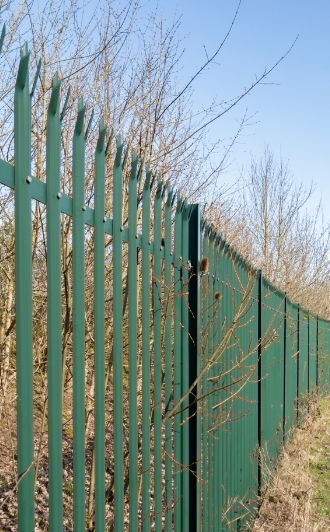
Safety and Palisade Fencing
Safety and palisade fencing is the steel perimeter that goes...
More Details
Areas We Serve
- Bollards Amberley
- Bollards Ashburton
- Bollards Christchurch
- Bollards Darfield
- Bollards Kaiapoi
- Bollards Methven
- Bollards Rangiora
- Bollards Rolleston
- Bollards Timaru
Other Services Available in Amberley
- Automatic Gates Amberley
- Commercial Gates Amberley
- Convex Safety Mirrors Amberley
- Custom Gates Amberley
- Driveway Gates Amberley
- Gate Access Systems Amberley
- Industrial Gates Amberley
- Line Marking Amberley
- Safety and Palisade Fencing Amberley
- Security Gates Amberley
- Speed Humps Amberley
- Wheel Stops Amberley
Questions we get asked
How much does it cost to have bollards installed?
On quote. The bollard is predictable; the ground is not. Whether we are coring an existing slab, setting a socket, or working around services decides most of the figure, which is why the visit comes first.
How deep should bollards be installed?
Past the base course, into ground that will carry the load, with the depth following the size of the post. There is no single number that fits a driveway bollard and a heavy protective post on a commercial frontage.
Can bollards be removed easily?
Removable ones, yes, that is the entire point of them, and the socket caps off flush when the post is out. Fold-down ones drop flat and lock upright. A fixed bollard has to be cut and its footing broken out, so choose the type against how often the access really opens.
Do you cover the smaller settlements around Hurunui?
Amberley sits at the top of our regular run and we cover the surrounding area from the same base. Give us the address and we will confirm it when we book the visit.
Get Started with Professional Line Marking Solutions

Get a Free Consultation
Speak with our experts to discuss your line marking requirements and get a tailored solution.
Schedule Now
Need Help Choosing?
Our team provides advice on the right line marking services and materials for your site.
Find Your Solution
Talk to an Expert
Have questions or want a quote? Connect with our experienced team today.
Contact Us