 Available 24 Hours a Day, 7 Days A Week
  027 424 0600
Driveway Gates

Available 24 Hours a Day, 7 Days A Week

100% Client Satisfaction

Full Range of Premier Services

High-Quality Products
Request a Free Quote

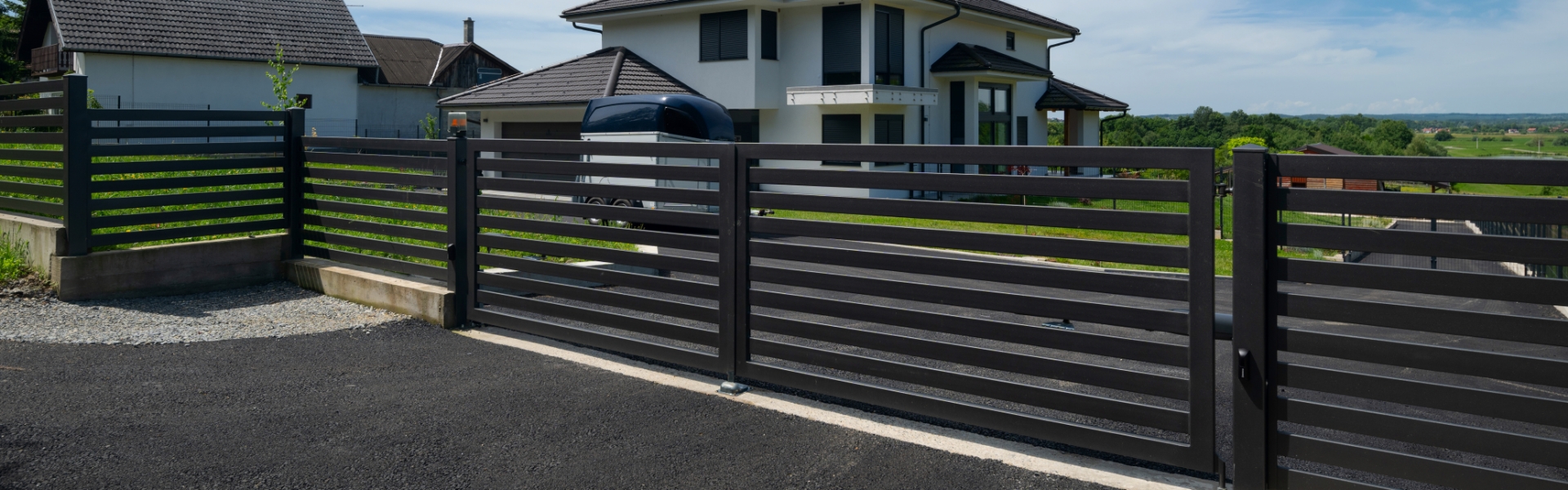
Driveway gates close the one opening in your boundary that everything else has to come through. They go on lifestyle-block entrances off a rural road, on suburban front boundaries where the fence line steps in around a car pad, at the head of a shared right of way, and across the entry to a yard where the fence is already doing its job everywhere except the gap. Some are bought for security, some to keep dogs and children off the road, and plenty go in simply because a house has been re-fenced and the gap now looks unfinished. Group One New Zealand designs, manufactures and installs them to the driveway they are going on, which is a different purchase from carrying a stock gate home from a building merchant and hoping the opening matches.
Swing or sliding: your driveway decides, not your preference
This is the first question and it is usually settled by the ground rather than by taste.
Swing gates hang on posts and open like a pair of doors. They suit a level or near level entrance with room for the leaves to travel. What catches people out is the arc: a leaf needs clear ground through its whole swing, so a rising driveway, a bank, a letterbox or a parked car in the wrong spot all rule out an opening direction. Single leaf works on a narrow entry, a pair on anything wide, because two shorter leaves need far less depth than one long one.
Sliding gates run sideways across the opening, either on a bottom track or cantilevered off rollers set back on the fence line. They need clear run-off space beside the driveway equal to roughly the width of the opening. They are the answer where the ground slopes, where there is no room to swing, or where the driveway is short enough that a swinging leaf would sit over the parking space. Cantilever design suits ground that collects gravel, mud or snow, because there is no track on the ground to block.
Wide openings, heavy leaves and awkward ground are all workable. If your property or commercial site is irregular, tricky, lacking in space or hard to reach, or you have a very specific idea in mind, that is exactly the sort of job worth talking through on site.
Call 027 424 0600 to Request a Free Quote

Timber, steel, aluminium and stainless steel
Our range of materials covers wood, steel, aluminium and stainless steel, and the choice changes the weight, the maintenance and the look more than it changes the price.
- Timber gives a solid, warm frontage that suits a rural entrance or a period house. It is the heaviest option for a given size and it wants recoating on a cycle, so posts and hinges have to be specified for the load.
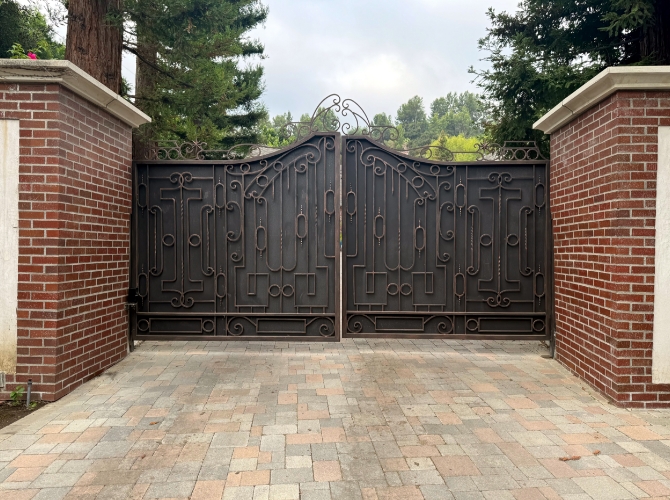
- Steel is the workhorse: strongest for its section, takes any infill from vertical bar to solid sheet, and holds up for decades once galvanised and powder coated.
- Aluminium is the light one. Less mass on the hinges and no rust, which makes it a good match for an automated gate and for a long single leaf.
- Stainless steel goes in where salt air or washdown would work on anything else, or where a brushed finish is part of the design.
Infill decides privacy and wind load together. A slatted or louvred gate screens the driveway but catches the nor’wester like a sail, which matters for post size and hinge selection. An open picket or vertical bar gate lets weather through and shows the house.
What Group One New Zealand puts into a gate
All our gates are 100% New Zealand made and installed. Sydney Chappell founded the New Zealand company in 2026, and the fabrication happens at Unit 1, 37 Foremans Road, Islington, Christchurch 8042, before the same crew takes it out to your driveway. Because we manufacture and install your gates ourselves, there are significant savings to be made when choosing the Group 1 team. Every gate our team builds comes with a comprehensive warranty and is backed by a full after-sales service.
We are a small team, so you know you’ll get the very best, and the driveways we reach run from Amberley in the north to Timaru in the south, and west towards the Canterbury foothills. To get a gate started, phone us on 027 424 0600 or email info@groupone.co.nz, 7am to 3pm Monday to Friday.
Call 027 424 0600 to Request a Free Quote
Industries We Serve
We proudly serve clients across a range of sectors, including:

Hospitals

Aviation Surfaces

Schools

Sporting Surfaces

Factory Safety Lines

Body Corporate

Measured on your driveway, then built to those numbers
Design comes first, and it starts at your place. We’ll come out and take a look at the site and discuss ideas with you about the best solution for your situation. That visit records the opening width, the fall across it, the ground surface, the fence line either side, where the leaf can stand open and what is available for power if the gate is going to be automated.
Manufacture happens in the workshop: frame, infill, posts, hinges or track, and the finish. Nothing is cut to a standard size and adjusted on site.
Installation is the day the posts go in. Post footings do most of the work on a swing gate and are dug to suit the leaf weight and the ground, and a sliding gate gets its track or its cantilever rollers set dead level. The gate is hung, the latch or lock is fitted and adjusted, and you get shown how to close it properly before we leave.
Manual now, automatic later
Plenty of driveway gates go in manual and get an opener added afterwards, and that is a much easier job when the gate was built with it in mind. Post size, leaf weight, hinge type and a conduit run under the driveway are all cheap decisions at the design stage and expensive ones later.
Our gates are solar powered as well, which saves you energy costs, and our range of safety devices and alternative opening methods allows us to have automatic gates on sloped ground as well as flat level. For heavier custom leaves we can also provide larger commercial motors. The full picture sits on the automatic gates page.
What moves the price
Gates are quoted per driveway, not per metre off a list. What the number follows:
- The opening width, and whether it is one leaf or two
- Swing or slide, and the track, rollers or cantilever hardware that goes with it
- Material and infill, and how much of the leaf is solid
- Post footings, and what the ground is (soil, gravel, existing concrete)
- Finish: galvanising, powder coating, staining or paint
- Automation, safety devices, locks and access hardware if they are part of the build
Where driveway gates go in
Driveway gates are measured, made and hung across Canterbury. The local pages:
- Driveway Gates Amberley
- Driveway Gates Ashburton
- Driveway Gates Christchurch
- Driveway Gates Darfield
- Driveway Gates Kaiapoi
- Driveway Gates Methven
- Driveway Gates Rangiora
- Driveway Gates Rolleston
Book a measure-up
Nearly every awkward driveway gate we are called out to fix was ordered from a width alone. The fall across the opening, the run-off space beside it, what the posts are going into and where a leaf can safely stand open are what a measure-up settles, and none of them show up in a photo. Half an hour on site ahead of the build saves the adjustments afterwards.
Phone us on 027 424 0600 or email info@groupone.co.nz, 7am to 3pm Monday to Friday. Group One New Zealand, Unit 1, 37 Foremans Road, Islington, Christchurch 8042. NZBN 9429053752833.
Call 027 424 0600 to Request a Free Quote
Need Professional Line Marking or Safety Products?
Contact Group One today – reliable, accredited, and available 24/7.

Client Testimonials


5.0 Stars / 21 + reviews
The team from Group One were exceptional.
They arrived on time, did a fantastic job and made our childcare centre carpark look like new . Thankyou
Prompt and efficient service.
Very professional and experienced. Syd always answers his phone otherwise calls you back. Highly recommended.
Highly recommended.
Competitive price, quality work and even helped me put up the customer parking signs. Went above and beyond. Thanks very much, Syd and Blake.
Great job and no complaints!
Wonderful to work with and helping us get our line marking completed. Would definitely use again and refer to others.
Highly Recommend Group 1 Linemarking!
We recently hired Group 1 Linemarking for a few of our residential strata projects, and the results exceeded our expectations. The team was punctual, professional, and clearly experienced. The line marking was crisp, precise, and done exactly to spec. Communication throughout the process was smooth, and they were flexible with scheduling, which made things a lot easier on our end. If you need reliable, high-quality line marking services, I wouldn’t hesitate to recommend Group 1. Great job!
Working with Syd and his team is always a pleasure
The quality of work is always to a high standard. The Group One team is always professional, they apply a high standard for safety ensuring their SWMS is tailored for the job and their equipment is serviced and well maintained. I highly recommend Group One and if you use them you won't be disappointed.
What people ask before ordering
Is a cheap gate from a merchant a false economy?
Not always. A stocked gate is fine when your opening happens to match a standard size, the ground is level and you are happy with the sizes and finishes on the shelf. Once your opening falls between sizes, or the driveway has a fall, or you want the gate to match a fence you already own, a made-to-measure gate stops being the expensive option.
Which is the lowest maintenance material?
Aluminium, with stainless steel behind it. Both stay put with a wash rather than a recoat. Timber asks the most and gives back the look nothing else does.
Can you build a driveway gate to match my existing fence?
Yes. Bring photos and the fence dimensions to the site visit and the gate gets built to that profile, spacing and finish.
Do you make pedestrian gates as well?
Yes, and it is worth ordering the pair together. A matching side gate built at the same time keeps the frontage consistent and saves a second set-up on site.
How wide should a driveway gate be?
Wide enough for the vehicles that actually use it, including the trailer, the horse float or the delivery truck, plus room to turn in from the road. On a tight entry off a main road that turning geometry often decides the width before anything else does.
Comprehensive Line Marking & Safety Services
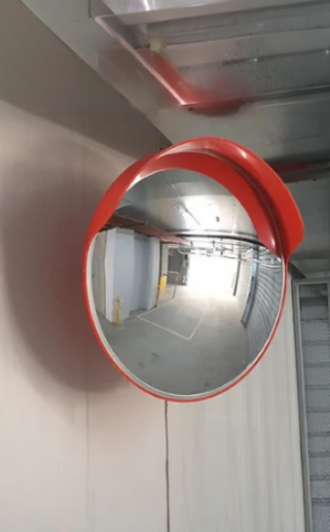
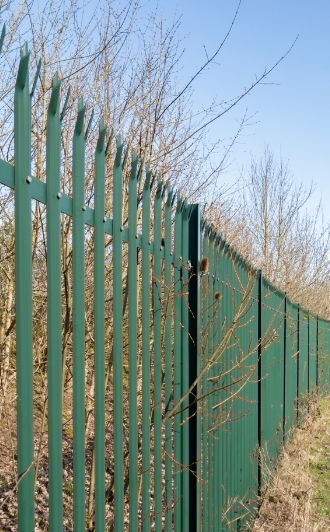
Safety and Palisade Fencing
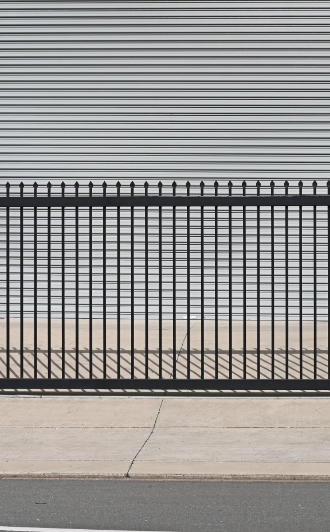
Safety and palisade fencing is the steel perimeter that goes...
More Details
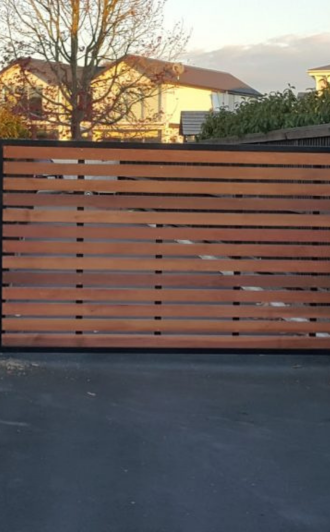
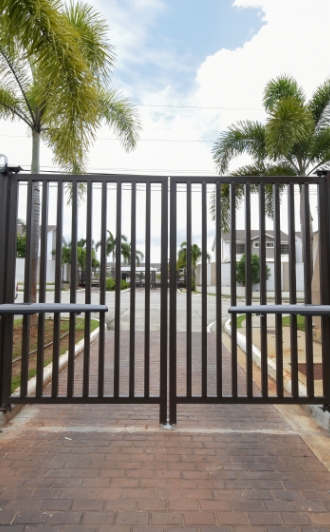
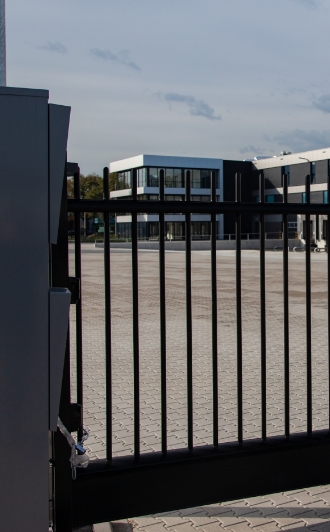
Sliding and Electric Gates
Group One provides professional sliding and electric gate solutions...
More Details
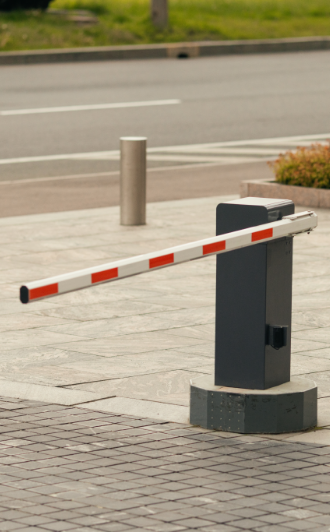
Barrier Arms & Boom Gates
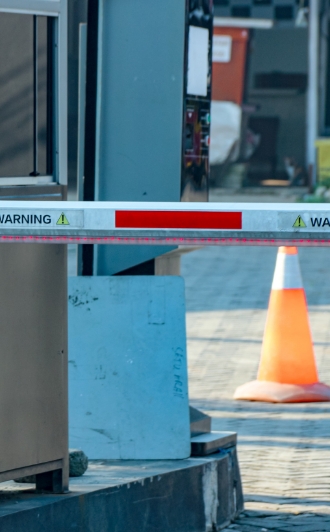
Control vehicle access with reliable barrier arm and boom gate...
More Details
Get Started with Professional Line Marking Solutions

Get a Free Consultation
Speak with our experts to discuss your line marking requirements and get a tailored solution.
Schedule Now
Need Help Choosing?
Our team provides advice on the right line marking services and materials for your site.
Find Your Solution
Talk to an Expert
Have questions or want a quote? Connect with our experienced team today.
Contact Us