 Available 24 Hours a Day, 7 Days A Week
  027 424 0600
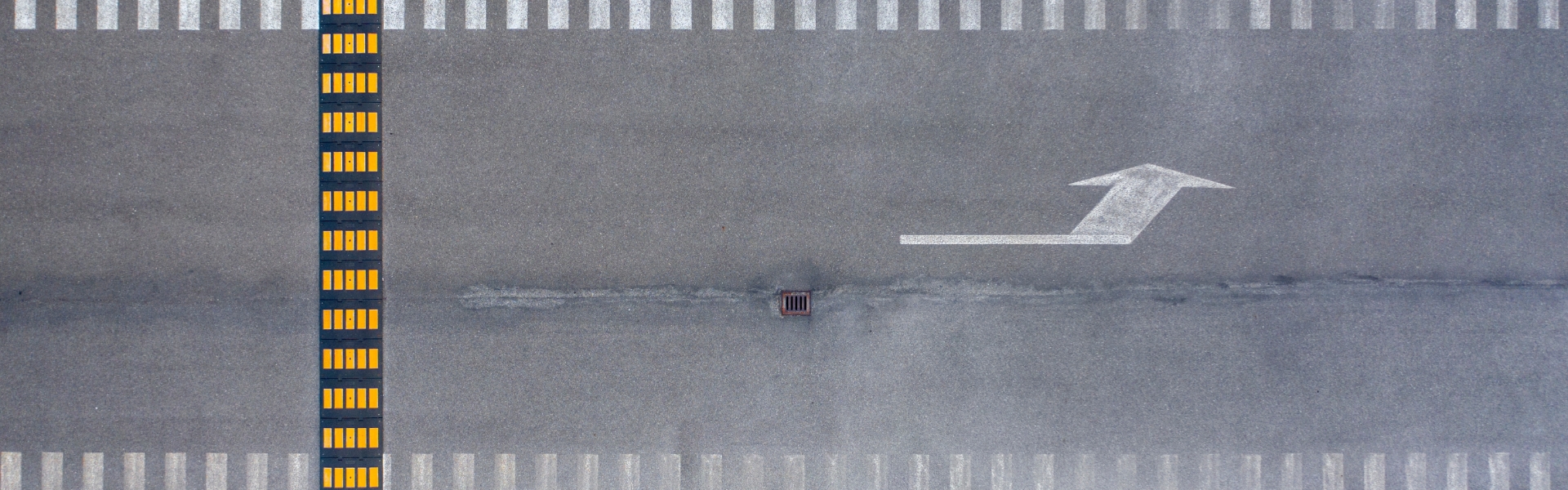
Speed Humps

Available 24 Hours a Day, 7 Days A Week

100% Client Satisfaction

Full Range of Premier Services

High-Quality Products
Request a Free Quote

Speed humps are raised sections built across a traffic surface to make drivers slow down. They turn up on residential streets, outside schools, in retail and hospital car parks, along apartment and body-corporate access lanes, through industrial yards where trucks and people share the ground, and on private roads and long driveways that visitors treat as open road. Most people reading about them are not traffic engineers. They are a property manager fielding complaints about speeding through a car park, a board member at a school, or a resident wondering who they have to ask. The answer to that last question depends entirely on who owns the surface, which is where this guide starts.
Humps, bumps and cushions
The words get used interchangeably and they describe different things.
A speed hump is long and rounded, so a vehicle rides up and over it. That length is the point: it slows traffic without throwing the car, and humps are typically designed to bring vehicles down to somewhere around 25 to 40 km/h depending on the profile chosen.
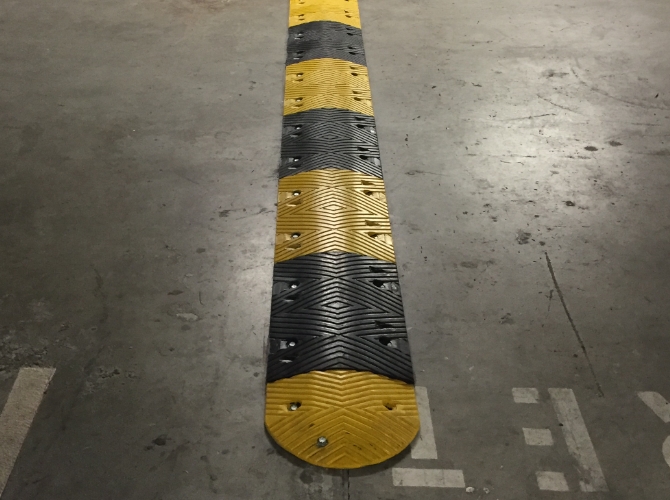
A speed bump is short and abrupt. It is the kind found in car parks and private lanes, and it forces near walking pace because there is no comfortable way to cross it at speed. Useful where you genuinely want vehicles crawling, uncomfortable anywhere else.
Speed cushions are humps built in sections with gaps between them, so a wide-axle vehicle such as a bus or a fire appliance can straddle them while a car cannot.
Ordering a bump where the situation called for a hump produces exactly the complaints the installation was meant to end.
Call 027 424 0600 to Request a Free Quote
How Group One New Zealand comes into it
Sydney Chappell founded Group One New Zealand in 2026 and the business works out of Unit 1, 37 Foremans Road, Islington, Christchurch 8042. Speed humps sit alongside the rest of our traffic and car park work: line marking, wheel stops, bollards and gates. We are a small team, so you know you’ll get the very best, everyone in our team has a vast amount of industry experience behind them to apply to each project undertaken, and we guarantee all the work we do. Crews run from Amberley in the north to Timaru in the south and west towards the Canterbury foothills.
We supply and install on private property, and we will tell you plainly when a hump is not the right control for the problem in front of you. To get that conversation started, phone us on 027 424 0600 or email info@groupone.co.nz, 7am to 3pm Monday to Friday.
What a hump actually achieves
A hump does one thing: it makes speed uncomfortable. Everything else follows from that. Slower vehicles give drivers more time to see somebody stepping out between parked cars, and a crash at lower speed does less harm than the same crash at higher speed. That is the whole case for them, and it is a strong one in the places where speed is the risk.
They also carry costs worth knowing before you commit:
- Noise. Braking, crossing and accelerating away is audible, which matters when the hump sits outside somebody’s bedroom window.
- Emergency and service vehicles. Ambulances, fire appliances and rubbish trucks all cross more slowly, and a poorly placed hump can delay them.
- Drainage. A hump laid across the fall dams water behind it unless the profile and placement allow for it.
- Wear. Vehicles brake and accelerate at the same two points forever.
Industries We Serve
We proudly serve clients across a range of sectors, including:

Hospitals

Aviation Surfaces

Schools

Sporting Surfaces

Factory Safety Lines

Body Corporate

Where humps belong, and where they do not
Humps work where the traffic is local, the speeds are low to start with, and there are people on foot. Car parks, service lanes, school grounds, apartment basements and industrial yards are all natural fits.
They are a poor answer on a steep grade, immediately after a blind corner, across a driveway entrance, or on an emergency access route. On a long straight where drivers accelerate hard between obstacles, a single hump often just relocates the problem. Sometimes the better control is a narrowing, a raised crossing, marked walkways or a bollard line.
Who decides
This is the part people get wrong most often, and it is simple once separated into two cases.
On a public road, including the street outside your property, the decision belongs to the road controlling authority. In Canterbury that is your local council, and for a state highway it is the transport agency. Humps on public roads go through the authority’s own traffic calming process, with design standards, consultation with affected residents, and a decision made on crash and speed data. You can request one. You cannot install one, and neither can we.
On land you own or manage, the decision is yours. A private car park, a yard, a body-corporate lane or a private road is your surface to control, subject to any consent conditions, body-corporate rules or easement rights over the access. That is the work we do.
Call 027 424 0600 to Request a Free Quote

Choosing a profile
For private sites the practical choice is between modular rubber units bolted down to an existing surface and a hump formed in asphalt or concrete as part of the surface itself.
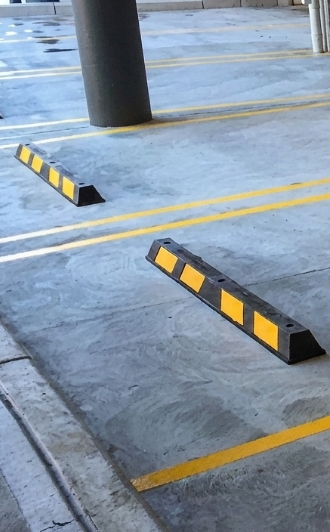
- Bolt-down rubber sections come in standard heights and lengths, are usually finished black and yellow for visibility, and can be lifted and refitted if the layout changes. They install in a day and suit an existing car park.
- Formed humps are built into the surface, so nothing sticks out to catch a sweeper or a snow blade, and they last as long as the pavement does. They make sense during construction or resurfacing.
- Cushions and split units go in where a wider vehicle has to be allowed through.
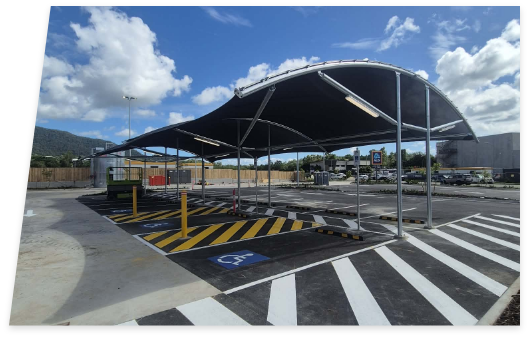
Whichever profile is chosen, a hump has to be seen before it is felt. Approach markings, hatching on the hump face and signage are part of the installation, which is why marking and humps usually get done in the same visit.
Set out, supplied and installed
Design starts on site. We’ll come out and take a look at the site and discuss ideas with you about the best solution for your situation: the speeds you are actually seeing, where people walk, where vehicles need to keep momentum, and how the water runs.
Supply follows the layout, whether that is modular units to a schedule or the materials for a formed hump, along with the markings and signage that go with them.
Installation is the set-out, the fixing or forming, the markings and the sign posts. On an existing car park most jobs are done in sections so the site stays open.
What it costs
Pricing is on quote. What it follows: how many humps and what profile, the surface they are fixing into or being formed in, the length and width of the crossing, the approach markings and signage, whether existing humps have to come out, and access and timing on a site that has to keep operating.
Call 027 424 0600 to Request a Free Quote
Need Professional Line Marking or Safety Products?
Contact Group One today – reliable, accredited, and available 24/7.

Same crews, same towns
Speed control often gets looked at alongside the entrance itself. Security gate work, town by town:
- Security Gates Amberley
- Security Gates Ashburton
- Security Gates Christchurch
- Security Gates Darfield
- Security Gates Kaiapoi
- Security Gates Methven
- Security Gates Rangiora
- Security Gates Rolleston
Get the right control chosen first
A hump is not always the answer, and installing one where the real problem is sight lines, layout or pedestrian routes just adds noise and maintenance to a site that still has the original issue. If the speeding is happening on the street rather than on your land, the request goes to your council, and no supplier can shortcut that. Where the ground is yours, the useful first step is having someone look at how vehicles actually move through it.
Phone us on 027 424 0600 or email info@groupone.co.nz, 7am to 3pm Monday to Friday. Group One New Zealand, Unit 1, 37 Foremans Road, Islington, Christchurch 8042. NZBN 9429053752833.
Call 027 424 0600 to Request a Free Quote

Client Testimonials


5.0 Stars / 21 + reviews
The team from Group One were exceptional.
They arrived on time, did a fantastic job and made our childcare centre carpark look like new . Thankyou
Prompt and efficient service.
Very professional and experienced. Syd always answers his phone otherwise calls you back. Highly recommended.
Highly recommended.
Competitive price, quality work and even helped me put up the customer parking signs. Went above and beyond. Thanks very much, Syd and Blake.
Great job and no complaints!
Wonderful to work with and helping us get our line marking completed. Would definitely use again and refer to others.
Highly Recommend Group 1 Linemarking!
We recently hired Group 1 Linemarking for a few of our residential strata projects, and the results exceeded our expectations. The team was punctual, professional, and clearly experienced. The line marking was crisp, precise, and done exactly to spec. Communication throughout the process was smooth, and they were flexible with scheduling, which made things a lot easier on our end. If you need reliable, high-quality line marking services, I wouldn’t hesitate to recommend Group 1. Great job!
Working with Syd and his team is always a pleasure
The quality of work is always to a high standard. The Group One team is always professional, they apply a high standard for safety ensuring their SWMS is tailored for the job and their equipment is serviced and well maintained. I highly recommend Group One and if you use them you won't be disappointed.
Questions people ask
Is it speed bumps or humps?
Both words are correct, for different things. Humps are the long, rounded ones. Bumps are the short, abrupt ones.
What is a speed hump?
A raised section built across the traffic surface, long enough that a vehicle rides over it rather than being jolted, designed to hold traffic to a low speed.
What is the purpose of humps?
To reduce vehicle speed where people and vehicles share space, so drivers have more time to react.
Is it humps or bumps?
If it is long and gentle it is a hump. If it is short and sharp it is a bump. Car parks usually get bumps; streets and access roads usually get humps.
What is a type 2 speed hump?
Numbered hump types come from particular design standards and council schedules rather than from a single national catalogue, so the label means different profiles in different documents. On a private site what matters is the height, length and profile you specify. On a public road the road controlling authority names the type it will accept.
What do speed humps mean for drivers?
Slow down before you reach it, not on it. Braking on the hump itself is where the noise, the wear and the discomfort come from.
Comprehensive Line Marking & Safety Services
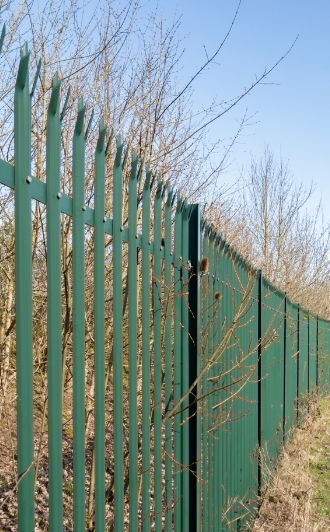
Safety and Palisade Fencing
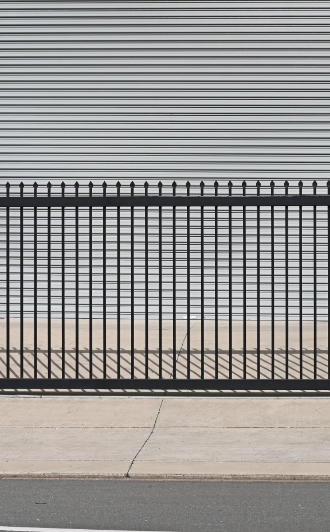
Safety and palisade fencing is the steel perimeter that goes...
More Details
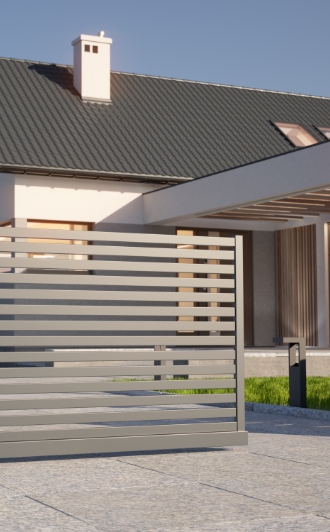
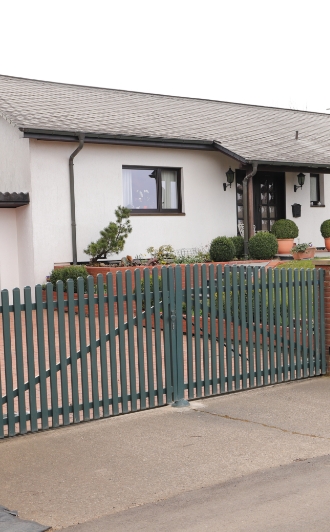
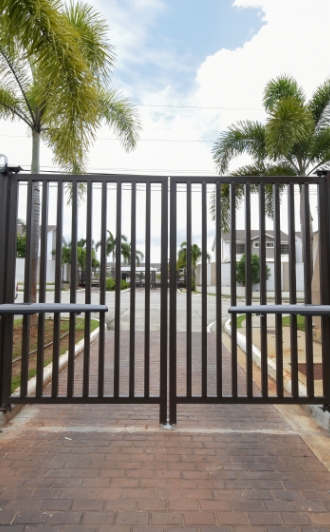
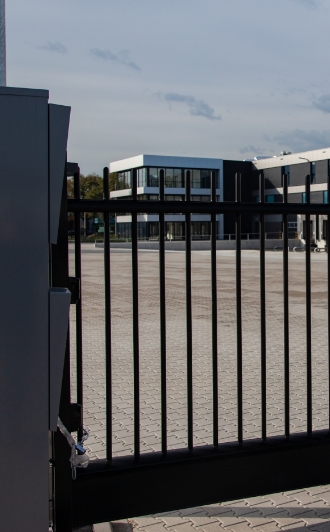
Sliding and Electric Gates
Group One provides professional sliding and electric gate solutions...
More Details
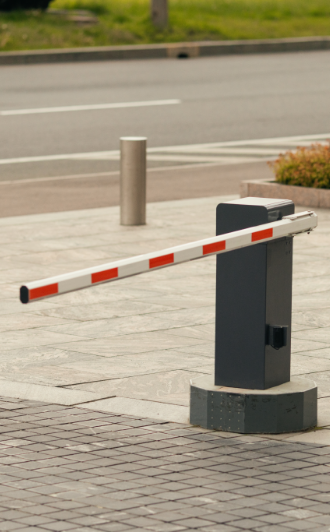
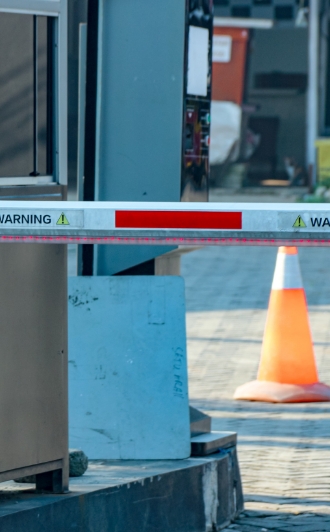
Barrier Arms & Boom Gates
Control vehicle access with reliable barrier arm and boom gate...
More Details
Get Started with Professional Line Marking Solutions

Get a Free Consultation
Speak with our experts to discuss your line marking requirements and get a tailored solution.
Schedule Now
Need Help Choosing?
Our team provides advice on the right line marking services and materials for your site.
Find Your Solution
Talk to an Expert
Have questions or want a quote? Connect with our experienced team today.
Contact Us